Living in West Virginia has taught me many things about weather, especially how quickly it can change when you live near the mountains.
Back in New York, most storms announced themselves with long stretches of gray clouds, weather alerts, and a steady build-up of wind that gave me enough time to prepare or at least to close a window. Here, the wind sometimes arrives without warning, sweeping across the hills with a strength that can catch you completely off guard.
I’m still learning how to read the sky here, and even after a few seasons, I find myself surprised by how fast the air can shift.
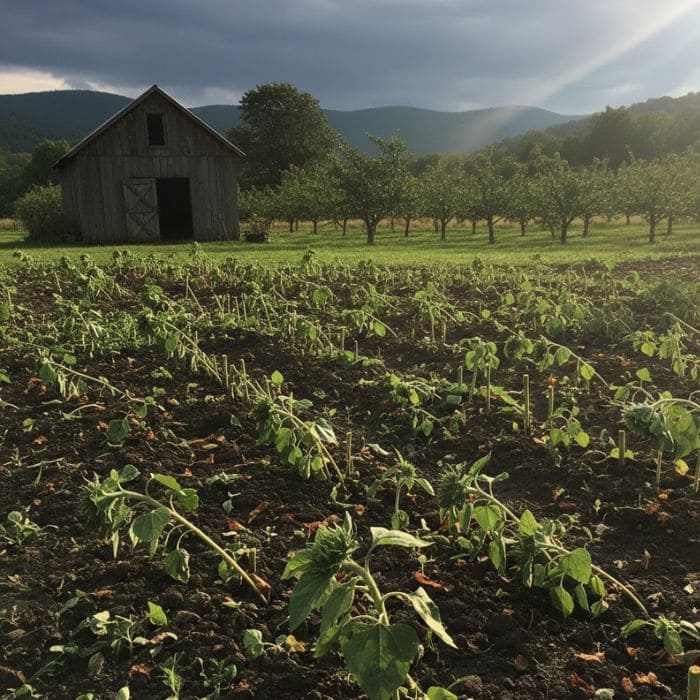
One afternoon, a sudden mountain windstorm rushed across our property before I had the chance to understand what was happening.
The gusts felt sharp and wild, strong enough to rattle the barn door and bend the young fruit trees in the orchard. I didn’t think about the sunflowers at first because they were only four weeks old, still in their early stages of growing, and far from blooming.
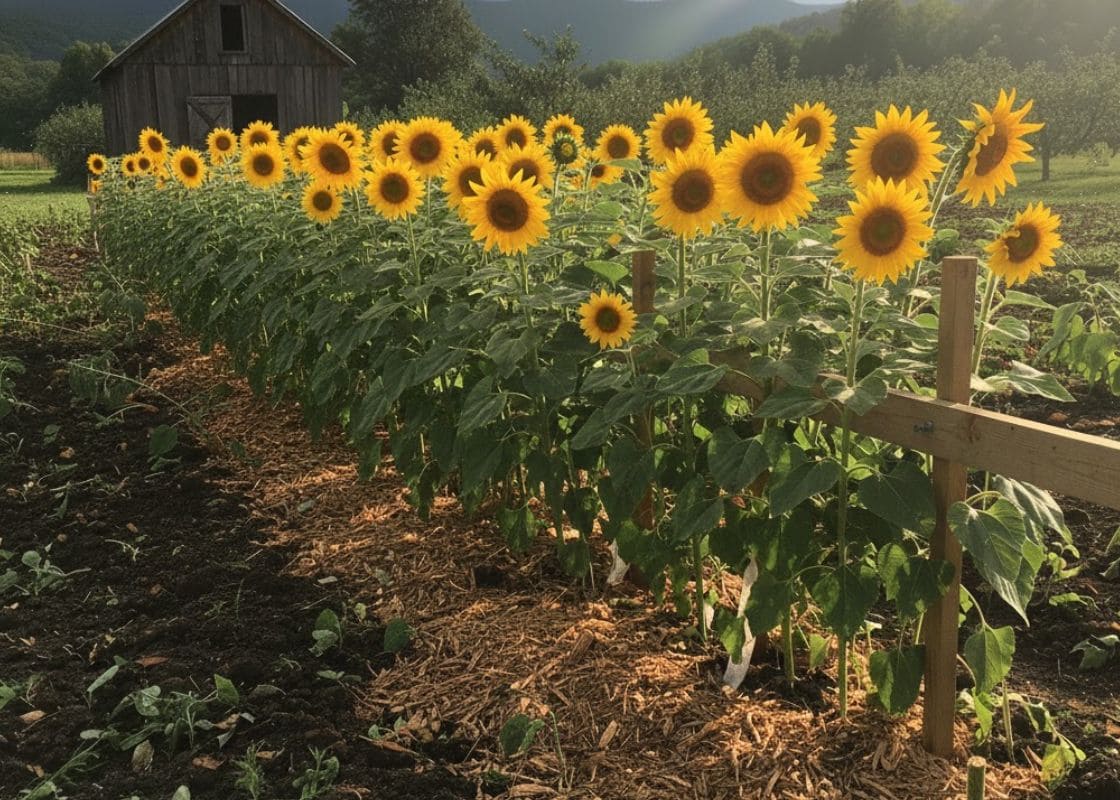
I planted them as a small surprise for Ryan since he loves sunflowers and always gives them to me on his birthday, so tending to that row had become one of my happiest daily tasks.
When the storm calmed enough for me to walk outside, I hurried toward the sunflower bed, hoping they were strong enough to handle a burst of wind.
But as soon as I reached them, I felt a heaviness in my chest. More than half of the young stems had snapped near the base, folded over as if the weight of the wind had pushed them beyond their limit.
Some lay flat on the soil, while others bent at painful angles that made it clear they could not stand again. I had not built a trellis or support system because they were still young, and I simply did not imagine the wind could be that forceful.
Still, in the middle of the damage, I noticed a few plants that somehow held their ground. Their stems leaned but did not snap, and the leaves trembled in the fading wind.
Finding Supplies and Building What I Could With What I Had
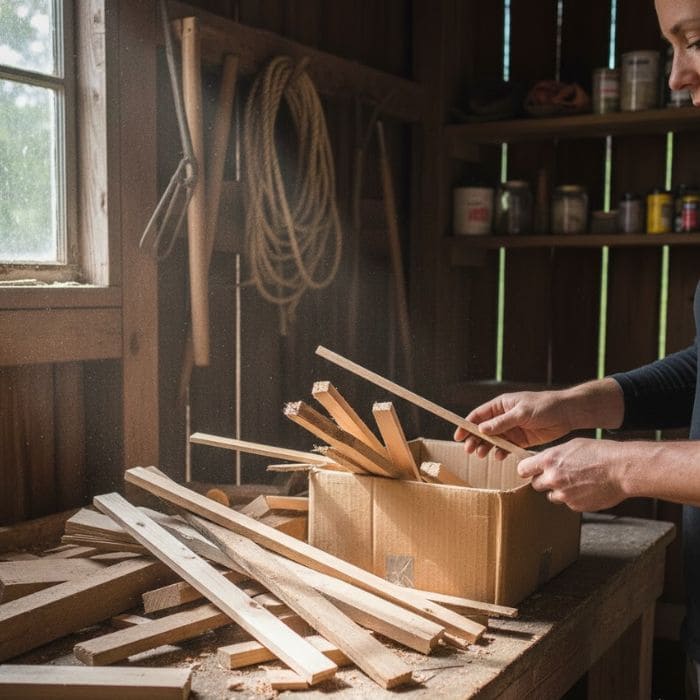
I walked toward the shed, feeling a mix of disappointment and determination. The shed near the barn has become a kind of treasure chest for me because it always holds something useful, even if I don’t know what I’m looking for.
That day, I found a small pile of scrap wood in the corner, left over from an older repair project. The pieces were rough and uneven but they were strong enough to become simple supports.
Here’s how I built the support system step by step, using only what I had:
1. Choosing the wood pieces
I picked long, narrow scraps that were roughly 1 to 1.5 inches wide and anywhere from 24 to 30 inches long, enough to support the young sunflower stems without towering over them.
2. Sanding the ends slightly
I used a scrap of sandpaper to smooth the ends so the pieces wouldn’t splinter when pushed into the soil. The surface didn’t need to be perfect, just safe enough for me to handle and stable enough for the ground.
3. Sharpening one end of each piece
Using a small hand saw, I shaped one end into a gentle point so the wood could slide into the soil easier. It wasn’t a perfect stake, but it worked well for the purpose.
4. Placing the supports in the soil
I pressed each wooden piece into the ground about 6 to 8 inches deep, placing them slightly behind the surviving sunflowers so the stems could lean against the support, not push away from it.
5. Tying the stems gently
I cut thin strips of old cotton fabric, which is soft and won’t harm the delicate stems, and tied each sunflower loosely to its wooden support.
I used a figure-eight tie so the plants had room to move without being rubbed or squeezed.
6. Strengthening the entire row
After securing each plant individually, I added a long piece of scrap wood horizontally across the back of the row, about 10 inches above the soil, attaching it to the vertical supports with simple screws.
This created a light framework that helped stabilize the entire row rather than each plant standing alone.
7. Adding mulch and water
Once the structure was complete, I added a thin layer of mulch to help the soil hold moisture and watered all the plants slowly at the base.
The water helped settle the soil around the supports and gave the plants a softer space to recover.
Learning Strength From Fragile Things
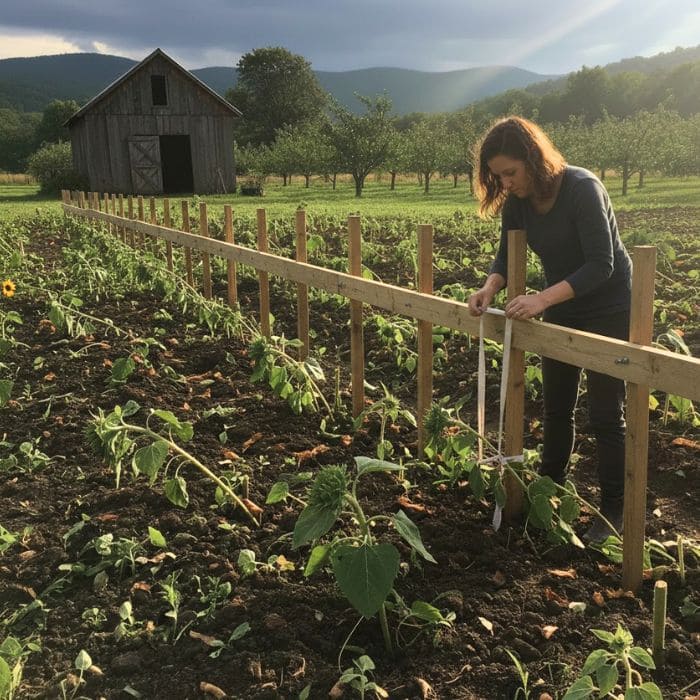
As I stood there looking at the row, a mix of sadness and gratitude filled me because the windstorm had taken so much but also left enough for me to rebuild.
The broken stems reminded me how fast things can change in mountain weather, something I never fully understood while living in New York.
But the surviving plants, tied gently against the scrap wood framework, reminded me that even small, young things can adapt when given a little support.
The next morning, the remaining sunflowers stood straighter than I expected, leaning firmly against their new wooden supports, and I felt a quiet sense of hope return.
I know they may not grow as tall or strong as the original plan, but they are still growing, and that is enough.