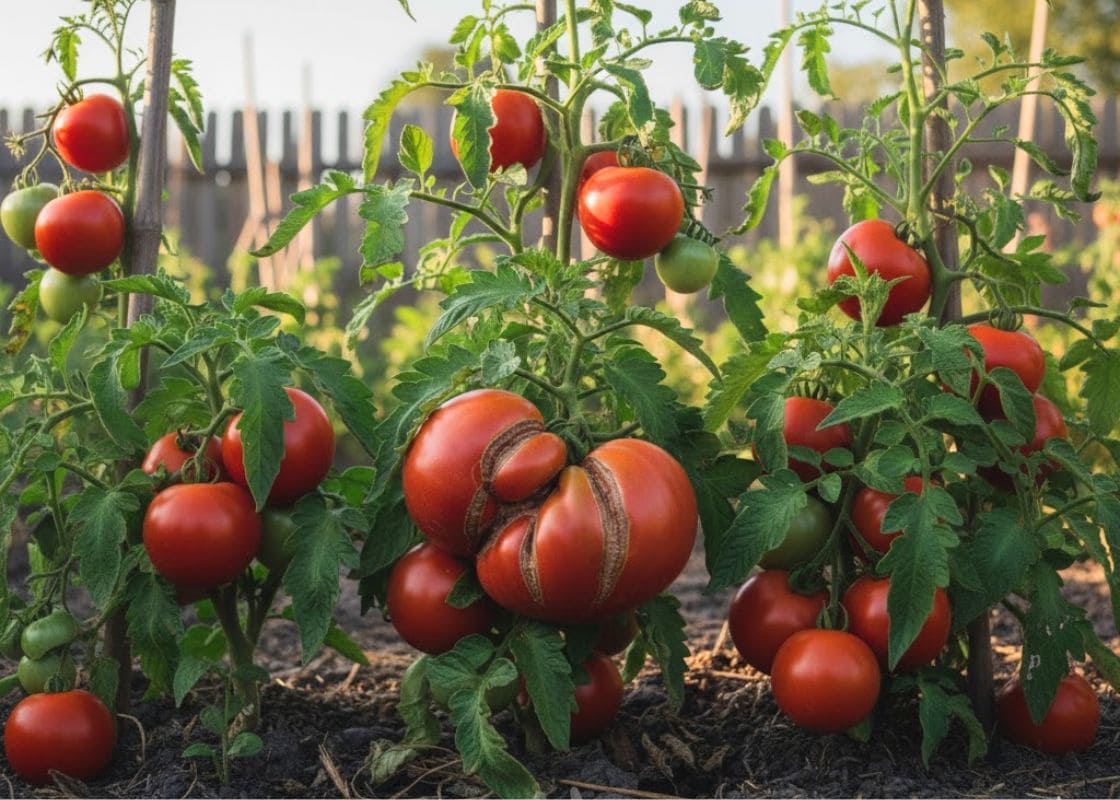
On our small farm, there is always a quiet corner saved just for tomatoes, no matter how busy the season becomes or how many other plants compete for space.
Tomatoes feel familiar to me, almost like a habit I carry from year to year, and I grow them even though they rarely behave the way seed catalogs promise.
Some summers bring a generous harvest, while others feel more modest, but one thing has never changed. Every season, without fail, I find tomatoes that look strange enough to make me pause before placing them in the basket.
At first, I thought these odd tomatoes were signs that something had gone wrong, especially since they stood out so clearly from the smooth, round ones growing nearby.
When I Realized This Wasn’t the First Time
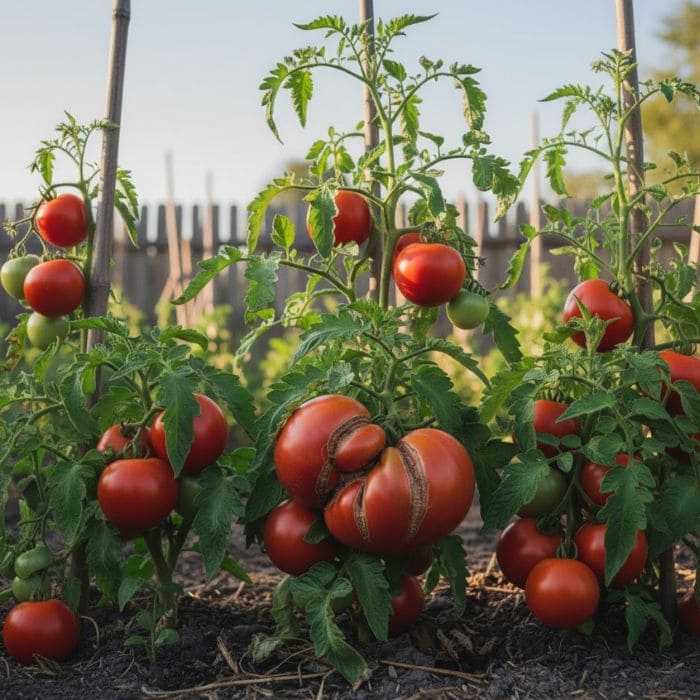
As I kept harvesting, I noticed more tomatoes with similar shapes hiding among the vines, some smaller, some just as bold and uneven. That was when I remembered seeing this before, seasons ago, though never quite this large.
Back then, I didn’t have a name for it, and I didn’t understand why it happened. I only knew that the plants themselves looked healthy, which made the strange fruit even more confusing.
This time, instead of worrying, I decided to document it. I carried the tomato back to the house, set it on the wooden table by the window, and took a few photos from different angles, making sure to capture the deep folds and wide base.
I shared the photos with a few gardening friends and posted them in a small group chat, half amused and half curious about what others might think.
The Question Everyone Asked: Is This Thrips Damage?
Almost immediately, messages started coming back. A few friends asked the same question in different ways, wondering if the strange shape was caused by thrips damage or some kind of pest problem.
It was a fair question, especially because thrips can damage flowers early in the season and sometimes lead to misshapen fruit.
I took a closer look at the plants again after those messages, checking the leaves, stems, and flowers carefully. There were no silvery streaks, no curled leaves, and no signs of heavy pest activity.
That was when I realized that while thrips can sometimes contribute to odd shapes, especially if they damage flowers early, this didn’t feel like the main cause in my garden.
What I was seeing was something gardeners often call catfacing, and the more I thought about the season we had, the more it made sense.
Understanding Catfacing Through the Season We Had
Catfacing happens when tomato flowers experience stress while they are forming, and in my experience, weather plays a bigger role than pests most of the time.
Early in the season, we had several cool nights followed by sudden warm days, which is very common here in West Virginia.
Tomatoes feel those changes deeply, especially before the flowers fully open, and when the flower is stressed, the fruit that develops later carries those marks.
The deep folds, scars, and uneven shapes I saw were signs of that early stress, not signs of rot or danger. The tomato still grew fully, sometimes even larger than normal, but its shape told the story of what the plant lived through.
Thrips might add to the problem in some cases, but in my garden, the timing and the weather lined up much more clearly with catfacing than with insect damage.
How My Natural Gardening Choices Fit Into the Picture
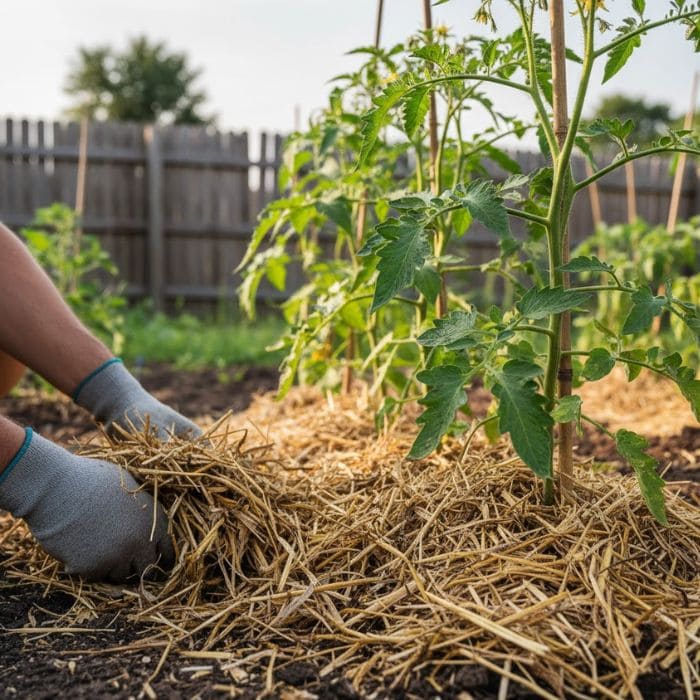
I grow tomatoes the same way I grow everything else, with compost, mulch, and as few outside products as possible. That means the plants sometimes grow quickly after rain, especially when the soil is rich and warm.
Fast growth combined with uneven moisture can stretch developing fruit faster than the skin can adjust, which adds to those dramatic shapes.
Instead of chasing perfection, I focused on keeping the plants steady. I watered more evenly, added mulch to protect the soil from drying out too fast, and made sure the plants had space to breathe.
These changes helped reduce stress, but they never removed the odd tomatoes completely, and I’ve learned that’s part of growing food honestly.
The Question Everyone Asks: Did I Actually Eat Them?
This is usually where people hesitate, and I understand why. Tomatoes with deep scars and strange shapes can make anyone pause, especially if they are used to produce that looks polished and identical.
Yes, I ate them.
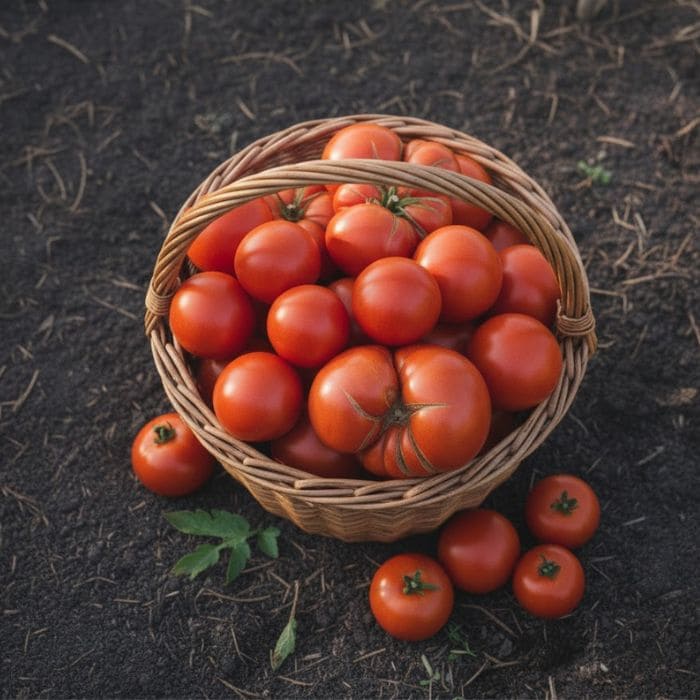
I washed them well, trimmed away any rough cracks, and sliced them open. Inside, they looked exactly like any other tomato, full of juice and seeds, with that familiar fresh smell.
I cooked them into sauces, added them to soups, and sometimes ate them fresh with nothing more than a pinch of salt. They tasted just as rich and sweet as the smooth ones.
However, I don’t eat every tomato without thought. If one feels deeply mushy, smells sour, or shows signs of mold, it goes straight to the compost pile.
Shape alone has never been my reason to waste food. Gardening has taught me to trust my senses more than appearances, and that lesson feels valuable beyond the garden itself.