When I was still living in New York, strawberries were something I bought with hesitation rather than joy.
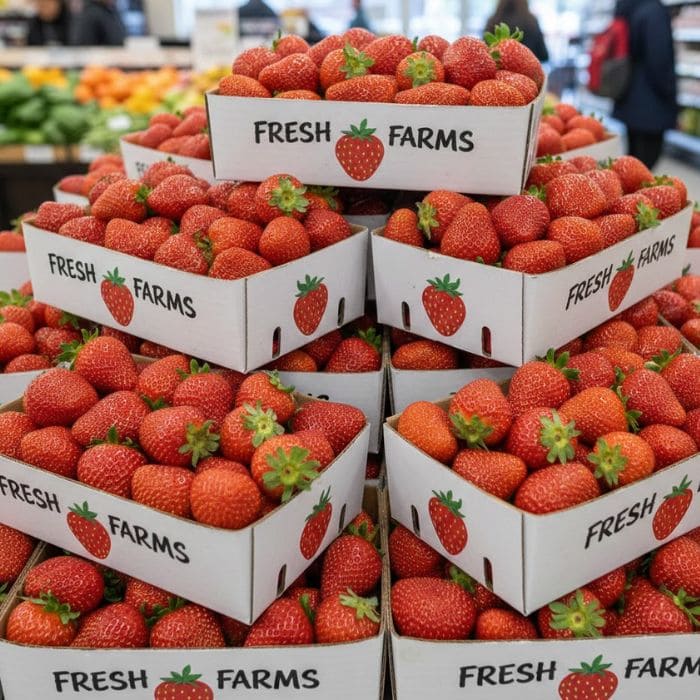
Every time I walked through the supermarket, especially in early spring, I would slow down near the produce section and look at those small plastic boxes stacked neatly on cold shelves.
The price often read $6.99 or even $8.99 for a single pound, and sometimes more when they were labeled organic. I would pick up a box, turn it over, and wonder how something so delicate could cost so much and still taste so flat by the time it reached my kitchen.
I remember standing there more than once, thinking that if I ever had the chance to grow strawberries myself, I would do it, not only to save money, but to feel that simple pleasure of picking something sweet straight from the plant.
A Book I Read Five Years Ago That Stayed With Me
About five years ago, during one of those winters when I spent more time reading than gardening, I came across a small book about natural soil improvement and gentle growing methods.
It wasn’t a famous book, and it didn’t promise miracles, but one chapter talked about using rice husk to improve soil structure for plants that dislike heavy, wet ground. Strawberries were mentioned briefly, almost in passing, but that idea stayed with me longer than I expected.
At the time, I filed it away as interesting but unrealistic for my situation. Living in the city, I didn’t have access to rice husk or garden beds to test the idea.
Still, the concept made sense to me, and I remembered how the author described rice husks as light, airy, and slow to break down, all things strawberries tend to appreciate.
Years later, after moving here and finally planting strawberries of my own, that small memory came back to me at exactly the right moment.
My Early Strawberry Beds and the Feeling That Something Was Missing
Once I started growing strawberries on our farm, I realized quickly that they were more sensitive than they looked.
The plants grew leaves well enough, but the fruit often stayed smaller than I hoped, and after rain, some berries touched the soil and spoiled before I could pick them. The bed sometimes felt too heavy, holding water longer than it should, especially after spring storms.
I used compost, paid attention to spacing, and tried straw mulch like many people do, but the results were always just okay, never truly satisfying.
That was when I remembered the book I had read years earlier and the quiet idea about rice husk that never fully left my mind.
The First Time I Added Rice Husk to My Strawberry Bed
I started carefully, not wanting to change everything at once.
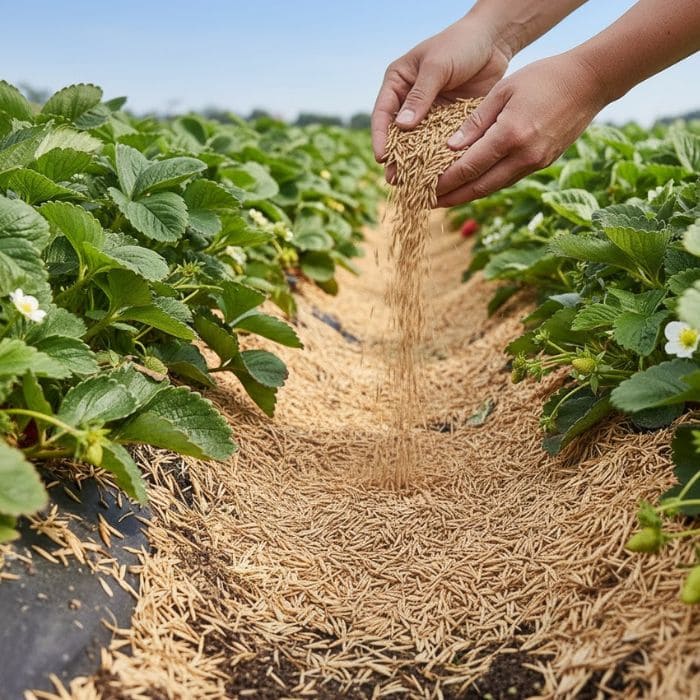
I mixed rice husk into the top 6 to 8 inches of soil, using roughly one part rice husk to three parts soil, and even before planting, the difference was clear in my hands. The soil felt lighter, easier to loosen, and less likely to clump together after watering.
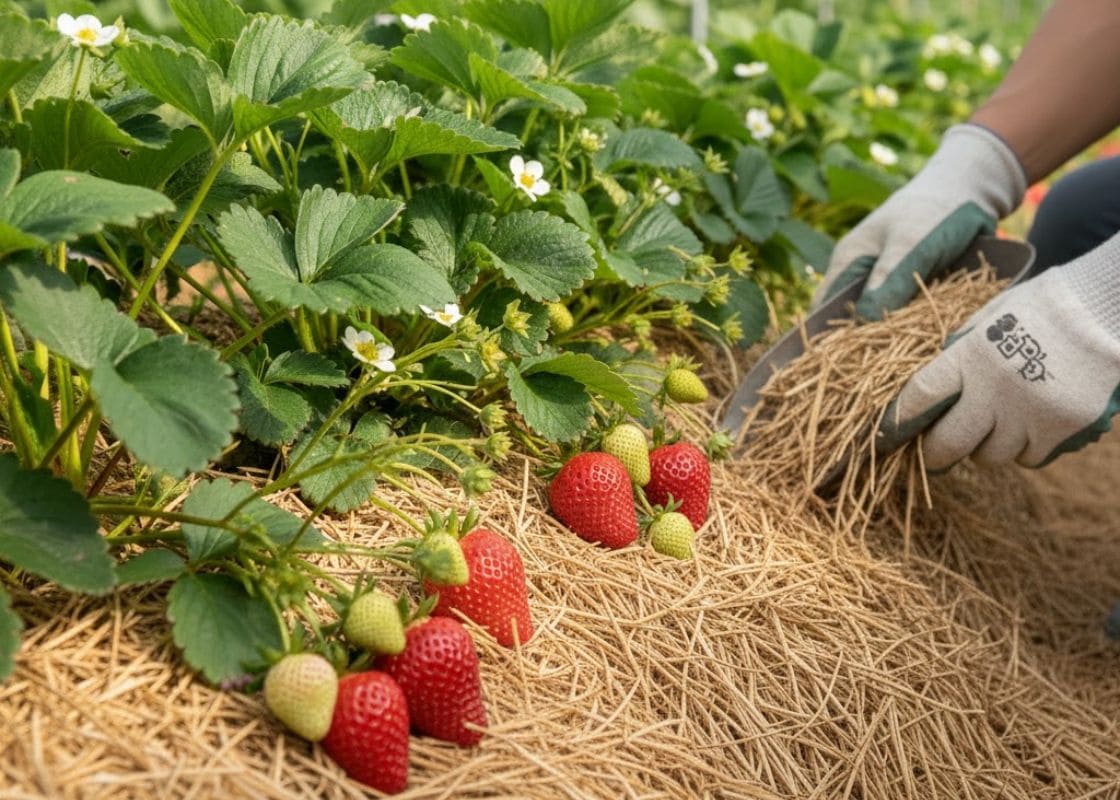
After planting the strawberries, I added a thin layer of rice husk on top as mulch, being careful to keep it away from the crowns.
I didn’t pile it high. I just let it sit lightly on the surface, enough to protect the soil without smothering the plants.
What Changed in the Bed Over Time
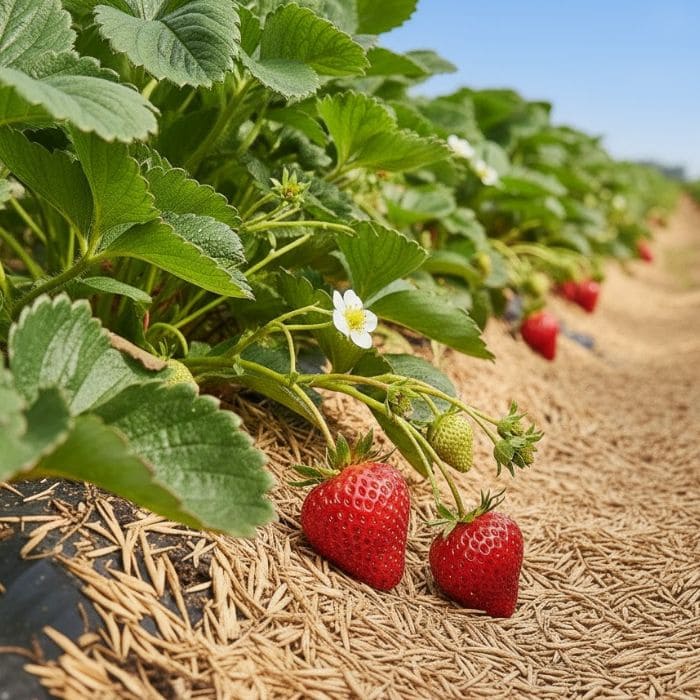
Within a few weeks, the bed behaved differently. After rain, water moved through instead of pooling. On warm days, the soil stayed cooler, and when I checked beneath the mulch, it smelled fresh rather than heavy.
The strawberry plants stood more upright, sent out healthier runners, and produced flowers that didn’t drop as easily.
The biggest change showed up in the fruit itself. The berries stayed cleaner, rarely touching wet soil, and they dried faster after rain.
Rot became uncommon instead of expected, and the size of the strawberries improved slowly but steadily throughout the season.
A Few Gentle Notes From My Own Experience
Over the years, I’ve learned a few things about using rice husk with strawberries, and these are habits rather than rules.
I never bury rice husk too deeply on its own, because it works best when mixed with soil rather than layered thickly underneath.
I also avoid packing it down, letting it stay loose so air can move freely. Each season, I refresh the bed lightly instead of adding large amounts all at once, and I always keep the crowns exposed so they stay dry and healthy.
Rice husk doesn’t replace compost, but it balances it, especially in beds that tend to hold too much moisture.
The Harvest That Finally Felt Like the One I Dreamed Of
The first season I fully used rice husk, the strawberry harvest felt completely different. I picked bowls of berries instead of handfuls, often returning to the bed day after day as new fruit ripened.
The strawberries were sweeter, more evenly sized, and far more abundant than anything I had grown before.
For the first time, I had enough to share freely, freeze for later, and still enjoy fresh whenever I wanted.
Every time I carried a bowl back to the house, I thought about those supermarket prices in New York and smiled, knowing that this was exactly what I had wished for back then.