Last Sunday began like many winter mornings here, quiet and cold, with the kind of stillness that makes everything feel paused. The temperature was low enough that frost still held on to shaded ground, and small patches of snow lingered where the sun rarely reached.
I didn’t wake up expecting to find anything new. In winter, I usually walk through the garden more out of habit than hope, checking beds, looking for damage, and reminding myself that spring will come in its own time.
I pulled on my boots and stepped outside, the ground firm under my feet, the air sharp but clean.
The oak tree near the edge of the garden stood bare and strong, its branches stretched wide like they were holding the sky in place. That tree has always felt like a quiet anchor in the garden, steady and unchanged through every season.
The First Glimpse That Didn’t Register Right Away
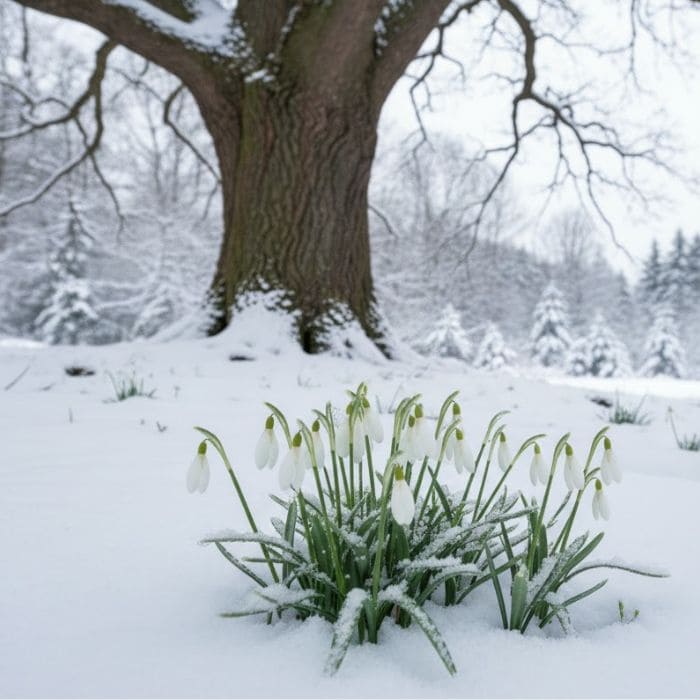
As I moved closer to the oak tree, something pale flickered near the ground, but my mind didn’t register it immediately.
At first, I assumed it was frost catching the light or maybe small bits of snow reflecting against the dark soil. Winter trains you to expect stillness, not growth, and my eyes were not prepared to see anything living.
It wasn’t until I slowed down and looked again that I noticed the shapes were upright, not flat like melting snow.
They stood in small groups, scattered naturally beneath the tree, and once I truly saw them, I couldn’t unsee them. I stopped walking and stood very still, trying to understand what I was looking at.
Kneeling Down and Realizing How Many There Were
I knelt carefully, brushing aside a layer of fallen oak leaves, and that was when the full picture revealed itself.
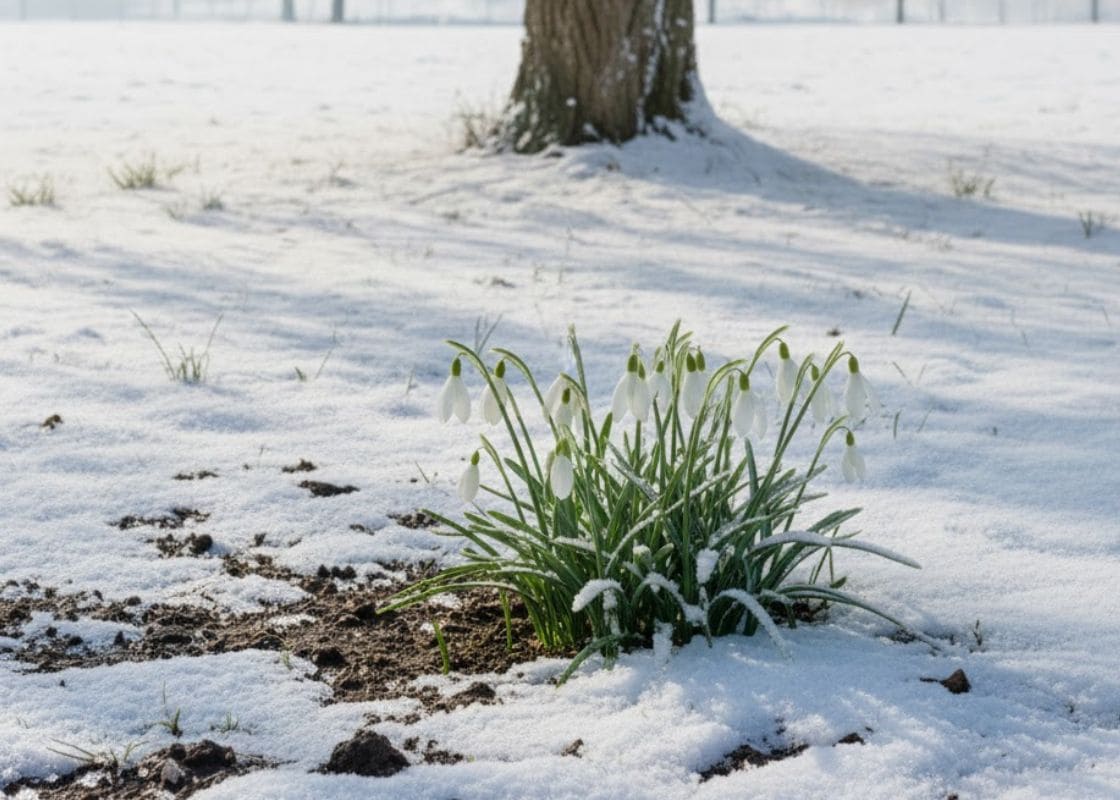
There weren’t just a few flowers. There were dozens, maybe more, rising gently from the soil. Some stood alone, others clustered close together, their stems thin but steady, their white heads bowed slightly as if in quiet thought.
They were growing directly through frost-hardened soil, surrounded by patches of snow, yet they looked untouched by the cold. The contrast between their clean white petals and the dark, damp earth beneath them felt almost unreal.
I remember thinking how strange it was that I had never noticed them before, even though they must have been returning to this exact spot every year.
The Moment of Uncertainty and Curiosity
At first, I believed they must be wildflowers, something temporary that appears only briefly in winter.
I searched my memory for anything I might have learned in school about flowers that bloom in snow, but nothing came clearly to mind. I felt both curious and slightly embarrassed that I didn’t know what they were.
I took out my phone and began taking photos, moving slowly so I wouldn’t disturb them.
I captured the way the flowers leaned gently downward, the way their narrow green leaves emerged like folded blades, and how the snow rested just inches away without harming them.
Finding the Name and Learning What Snowdrops Are
Back inside, with my boots by the door and a cup of tea warming my hands, I searched online using the photos. It didn’t take long before the same name appeared again and again.
Snowdrops.
The name felt right immediately, simple and honest, describing exactly what they were doing. Snowdrops are among the earliest flowering plants of the year, often blooming while winter still holds the land tightly.
Their scientific name, Galanthus, means “milk flower,” which made sense once I looked closely at the color and texture of the petals.
They grow from small bulbs hidden underground, sometimes for decades, quietly returning each year without demanding attention.
Looking Closely at the Flowers Themselves
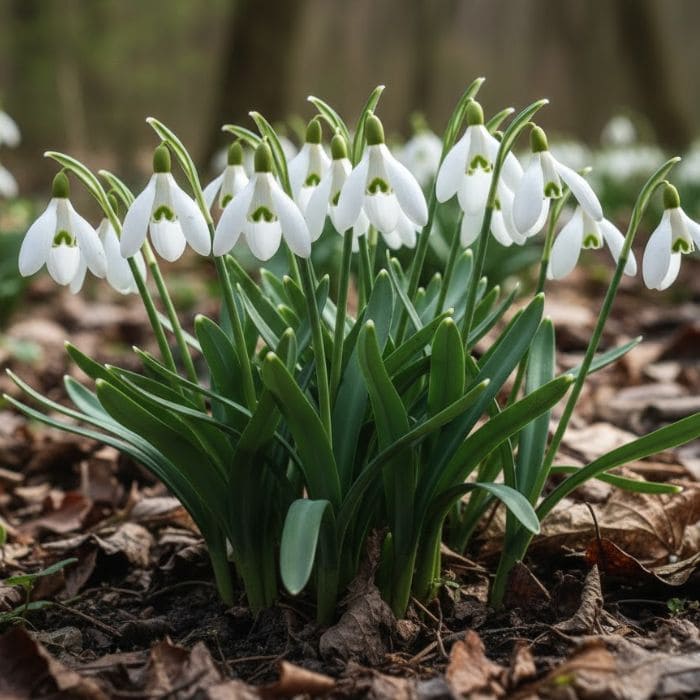
Once I knew what they were, I went back outside and looked again with new eyes.
Each snowdrop flower hangs from a slender green stem, usually about 4 to 6 inches tall, though some in my garden were slightly taller. The flower droops gently, protecting its inner parts from frost and snow.
The outer petals are pure white and smooth, shaped like soft teardrops, while the inner petals are shorter and often marked with faint green patterns that you only notice when you lean in close.
The leaves are narrow, flat, and slightly glossy, rising straight from the base in pairs, often before the flower fully opens.
Despite their delicate appearance, snowdrops are strong. They produce a natural substance that acts like antifreeze, allowing them to survive freezing temperatures that would damage most other plants.
Why They Thrive Beneath the Oak Tree
The more I learned, the more sense their location made. Snowdrops prefer well-drained soil, light shade, and protection from harsh wind, all of which the oak tree provides.
The fallen leaves create a soft layer that holds moisture without suffocating the bulbs, and the tree canopy shields them from sudden temperature swings.
It’s very likely these snowdrops were planted naturally many years ago, perhaps even before we moved here, spreading slowly over time through underground growth.
Seeing Life Continue When Everything Else Sleeps
What moved me most was not just their beauty, but their timing. These flowers chose to bloom when everything else in the garden looked asleep.
They didn’t wait for warmth or comfort. They trusted the season to change around them.
Standing there beneath the oak tree, I felt a quiet sense of comfort. The snowdrops felt like a reminder that life doesn’t always need perfect conditions.