Every spring, my garden reminds me that no matter how much experience I have, nature always moves at its own speed. The beds fill quickly, seedlings stretch upward overnight, and suddenly everything seems to demand attention at the same time.
Our garden is large, and while that space brings abundance and freedom, it also means I cannot watch every plant every single day.
Some vegetables forgive that easily, others do not. And lettuce is the one that surprises me most.
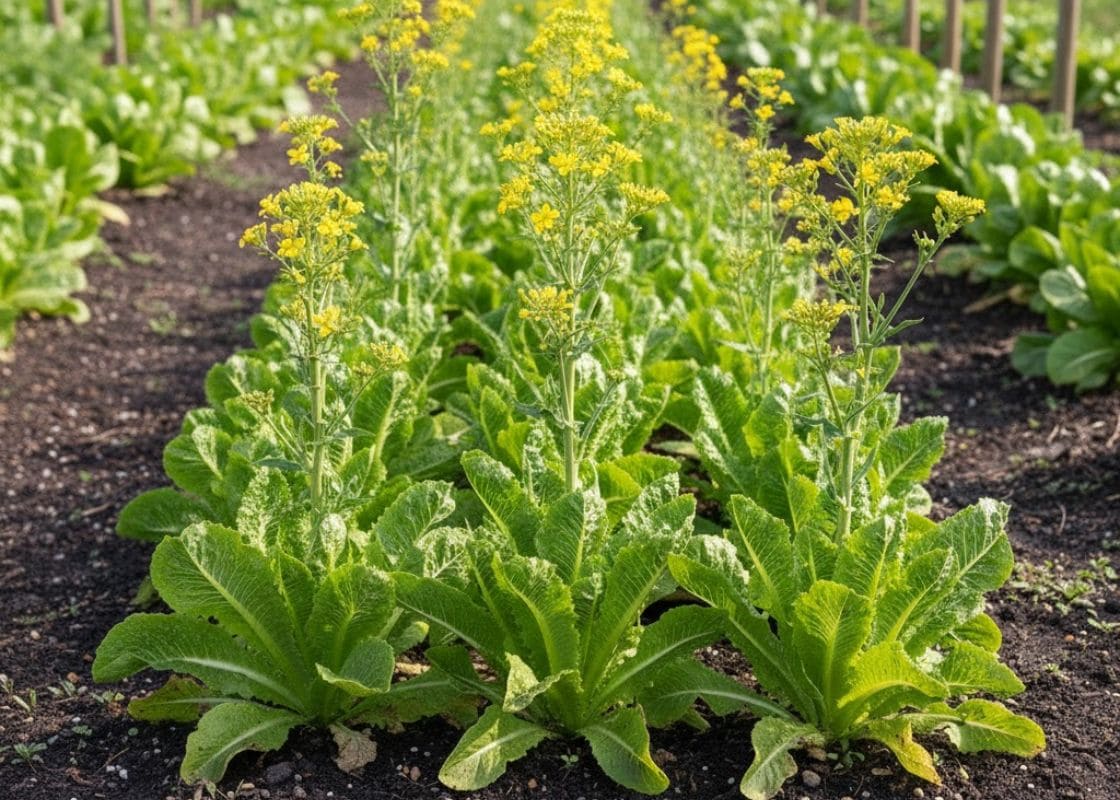
It grows faster than I expect, faster than my schedule allows, and sometimes faster than my family can eat it. I have learned that one warm week in spring can turn a neat bed of tender greens into tall, flowering plants almost overnight.
More than once, I have walked past a lettuce bed thinking I would harvest the next morning, only to return and find the plants already reaching upward, sending up thick stems and tiny buds.
For many gardeners, that moment feels like failure. For me, it has become part of the rhythm.
Why Lettuce Bolts So Easily in a Big Garden
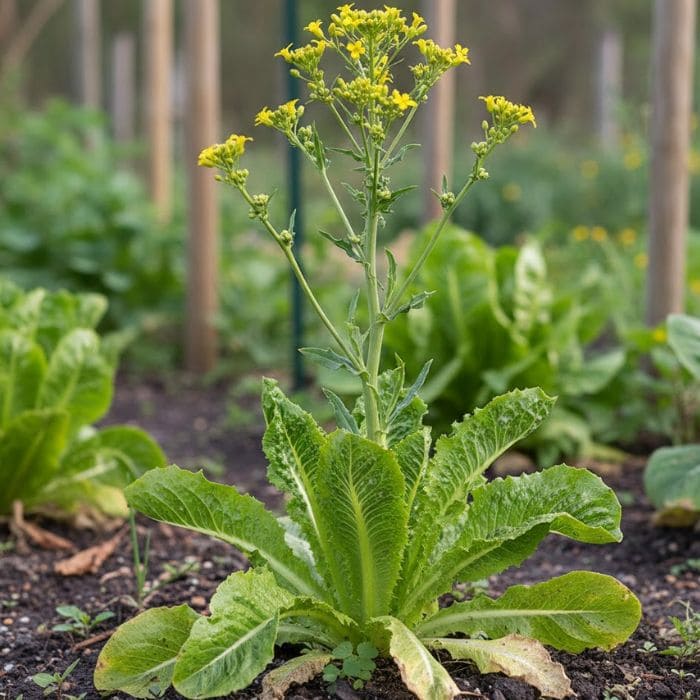
Bolting happens when lettuce senses that conditions are shifting, usually because of rising temperatures, longer daylight hours, or slight stress from inconsistent moisture.
Lettuce is a cool-season plant, and once it decides summer is coming, it moves quickly into seed production. The leaves change texture, the stems thicken, and the plant’s focus shifts away from producing soft greens.
In a large garden, bolting is almost unavoidable. There are days when I am focused on planting trees, repairing beds, or managing other crops, and lettuce quietly makes its own decision without waiting for me.
The First Thing I Look For When Lettuce Has Bolted
When I discover bolted lettuce, I don’t pull it out immediately. I look at where it is in the process. Early bolting still leaves many usable leaves, especially near the base of the plant, where the texture remains softer and the bitterness has not fully developed.
Even when the stem has grown tall, the outer leaves often hold value if harvested early in the morning, when the plant is cool and full of moisture.
I usually cut the plant rather than pulling it, separating the leaves by size and age. The younger, smaller leaves go into one bowl, while the larger, tougher leaves go into another.
This simple sorting step helps later in the kitchen, because not all bolted lettuce should be used the same way.
The Truth About Bitterness and Why It’s Not the Enemy
Yes, bolted lettuce can taste bitter, but bitterness is not a sign that the plant is bad. It is simply the plant’s natural response to protecting itself as it moves toward seed production.
That bitterness becomes stronger in heat, sunlight, and dehydration, which is why timing matters so much.
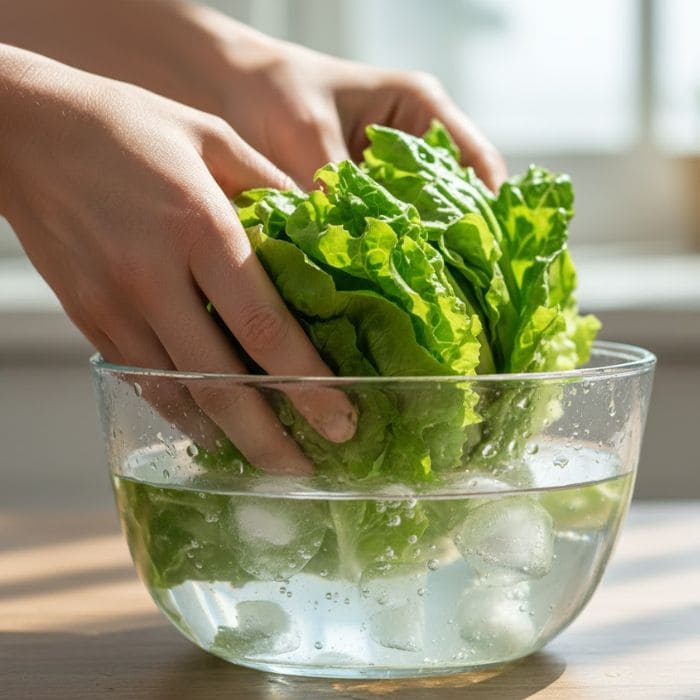
One of the easiest ways to soften bitterness is harvesting early in the day, followed by soaking the leaves in very cold water for 20 to 30 minutes.
This rehydrates the leaves and draws out some of the sharper compounds. After soaking, I dry them gently and decide how they will be used.
What Evan Learned From an Old Cooking Book
Years ago, Evan came across a cooking book that focused on using overlooked greens, the kind people often throw away because they don’t taste mild anymore.
One idea from that book stayed with him. Bitterness is not meant to be removed completely. It is meant to be balanced.
Heat, fat, salt, and acid can turn bitterness into depth.
We tested that idea slowly, first with small batches, then with confidence, and bolted lettuce became one of the best examples of how true that principle really is.
How We Actually Cook Bolted Lettuce at Home
We rarely eat bolted lettuce raw, not because it cannot be eaten that way, but because it shines more when treated as a cooking green.
One of our most common methods is a gentle sauté. Evan heats olive oil slowly, adds garlic, and then adds the lettuce just long enough for it to wilt.
The key is not to overcook it. A splash of lemon juice or vinegar at the end lifts the flavor, and suddenly the bitterness feels intentional rather than sharp.

Bolted lettuce also works beautifully in soups. When added near the end of cooking, it softens without disappearing, adding a mild, earthy note that blends well with beans, potatoes, or broth-based dishes.
Evan often says it behaves more like spinach or escarole once heat is applied, and I’ve found that comparison very accurate.
We also chop it finely and mix it into scrambled eggs, grain bowls, or warm rice dishes, where the bitterness becomes a background flavor rather than the focus.
However, if the leaves are extremely tough, sun-burned, or overly bitter even after soaking, we compost them or leave the plant standing to flower.
Lettuce flowers feed pollinators, and the seeds that follow become next season’s promise. Of course, nothing feels wasted.
Why Eating Bolted Lettuce Makes Sense in a Big Garden
In a garden this size, perfection is unrealistic. Plants will grow faster than expected. Some will be missed. Some will surprise you.
Learning how to use food at different stages matters more than harvesting everything at the exact right moment.
Bolted lettuce feeds us, feeds insects, and produces seeds, all at the same time. That feels like success to me, even if it doesn’t match the picture of a perfect salad.