Every year, sometime in early December, my phone starts lighting up in a very familiar way. Messages come in from old coworkers in New York, people I once shared office lunches, deadlines, and late evenings with.
The question is almost always the same, sometimes written casually, sometimes with excitement, and sometimes with a little disbelief. “Do you really have Christmas trees on your farm now?”
They remember the version of me who spent winters under office lights, not among evergreens and frost. So when I tell them that yes, I grow Christmas trees, and yes, I can send one to them, they usually pause before replying. I can feel the surprise through the screen.
Sending them a tree has become a quiet tradition for me, not because it is easy, but because it feels like a bridge between two very different lives.
Why Canaan Fir Is the Tree That Thrives Here
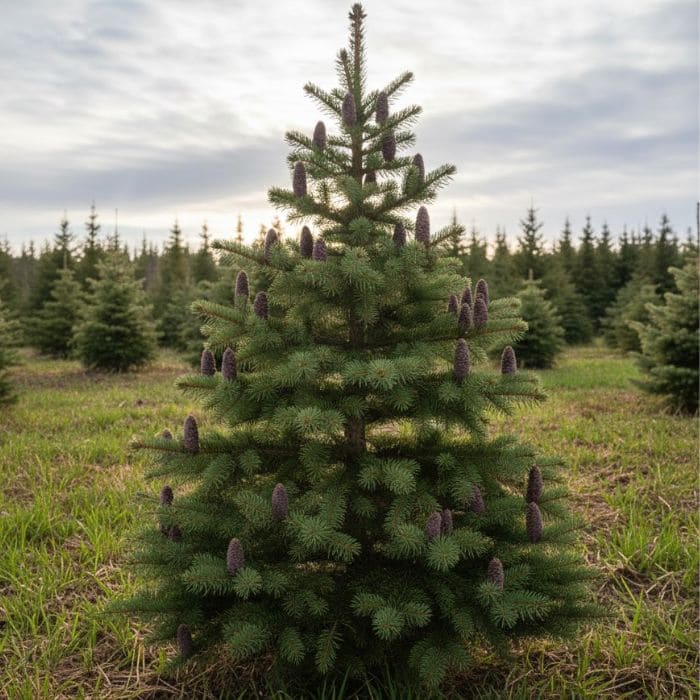
In West Virginia, not every Christmas tree grows well, especially if you want a tree that stays healthy without heavy chemical inputs. After years of observing what thrives naturally in our climate, I chose Canaan Fir, a tree that feels perfectly suited to this land.
Canaan Fir is considered native to the Appalachian region, especially parts of West Virginia.
It is closely related to Fraser Fir, but it is more adaptable and resilient, especially in areas with fluctuating temperatures and varied soil conditions. Where Fraser Fir struggles outside very specific environments, Canaan Fir adjusts.
These trees grow best in cool summers, cold winters, and well-drained soil, all of which West Virginia offers naturally. They tolerate slightly heavier soils than some other firs and handle moisture better without developing root problems as quickly.
What Canaan Fir Looks and Feels Like as a Christmas Tree
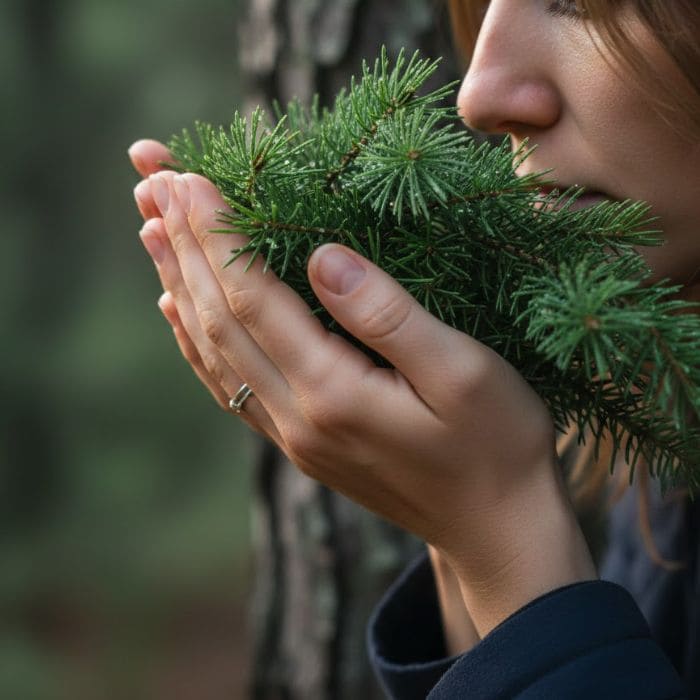
Canaan Fir has a balanced, full shape with naturally layered branches that don’t require aggressive pruning to look good. The needles are soft, flattened, and dark green with a silvery underside, which gives the tree depth and color even in low winter light.
One of the reasons my friends love receiving these trees is the scent. Canaan Fir has a clean, mild evergreen fragrance, noticeable without being overpowering. It fills a room quietly, not sharply, and lingers without needing ornaments or lights to enhance it.
The needles are also well-known for excellent needle retention, which matters a lot when a tree is traveling or staying indoors for weeks.
Even after being cut, a properly cared-for Canaan Fir holds its needles far longer than many popular varieties.
How Canaan Fir Compares to Other Popular Christmas Trees
Many people are familiar with Douglas Fir, which has a strong citrus-like scent and very soft needles, but Douglas Fir tends to lose needles quickly once cut, especially in dry indoor environments. It also prefers different growing conditions than what much of West Virginia offers.
Fraser Fir, often considered the gold standard for Christmas trees, has beautiful structure and great needle retention, but it is far more demanding.
Fraser Fir needs specific elevation, soil drainage, and temperature ranges to thrive. In many parts of West Virginia, it struggles without significant intervention.
Balsam Fir has a classic fragrance but softer branches that don’t always support heavier ornaments well, and it can be more susceptible to disease in damp conditions.
Canaan Fir sits comfortably between all of these. It has the structure of Fraser Fir, the resilience of Balsam Fir, and better adaptability than both, making it a natural choice for this region.
How I Care for My Canaan Firs Before Christmas
Choosing the Right Spot Before a Tree Is Ever Planted
Before I plant a single Canaan Fir, I spend time simply walking the land. I learned early on that trees remember where they are planted, even years later.
One spring, I rushed and planted two young firs in a lower section of the field because it looked open and convenient. After the first heavy rain, water sat there for almost two days, and by mid-summer those two trees lagged behind the rest, with lighter needles and slower growth.
That was my lesson. Now, I watch how water moves after storms, where frost lingers longest, and which areas get gentle morning sun without harsh afternoon heat.
Canaan Firs like cool air and well-drained soil, so I choose slightly raised ground whenever possible. Even a few inches of elevation has made a noticeable difference over time.
Planting With Patience, Not Speed
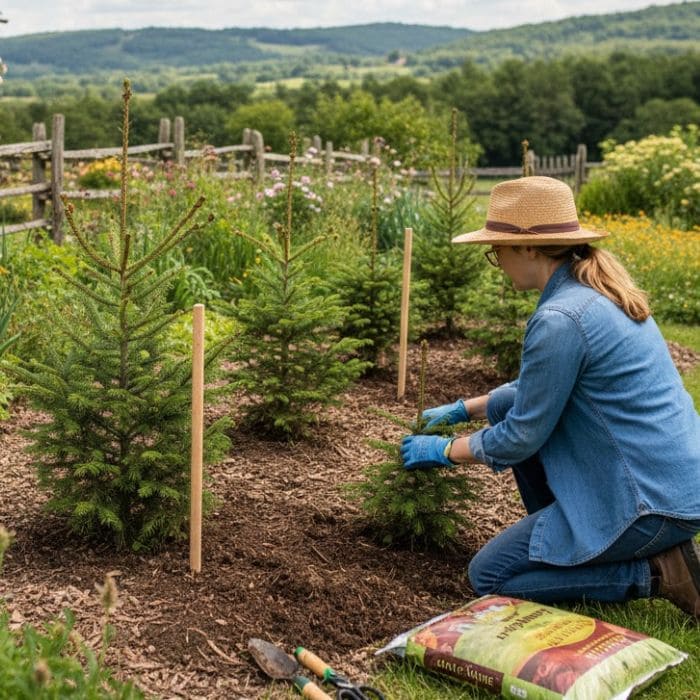
I plant Canaan Firs in early spring or early fall, when the soil is workable and temperatures are mild enough to reduce transplant shock. Each tree is spaced 6 to 8 feet apart, even though it always feels like too much room at first.
I used to feel tempted to plant closer, thinking fuller rows would look better sooner, but Ryan reminded me that we weren’t growing them for speed.
That spacing allows air to move freely between branches, which has saved us from disease problems more than once.
When planting, I dig the hole wider than it is deep and let the roots spread naturally. I don’t pack the soil down hard, because compacted soil suffocates roots over time. After planting, I water deeply once, then step back and let the tree settle in.
Mulching Carefully to Protect, Not Suffocate
Mulching is one of those things that seems simple until you do it wrong. One year, I piled mulch too close to the trunk of a young fir, thinking I was protecting it from cold. By early summer, the bark at the base looked damp and unhealthy.
Since then, I keep mulch several inches away from the trunk, using shredded bark or leaf mulch in a thin, even layer. The goal is to regulate soil temperature and hold moisture, not trap it against the tree.
I refresh mulch once a year, usually in late spring, after the soil has warmed.
Watering Through the First Critical Years
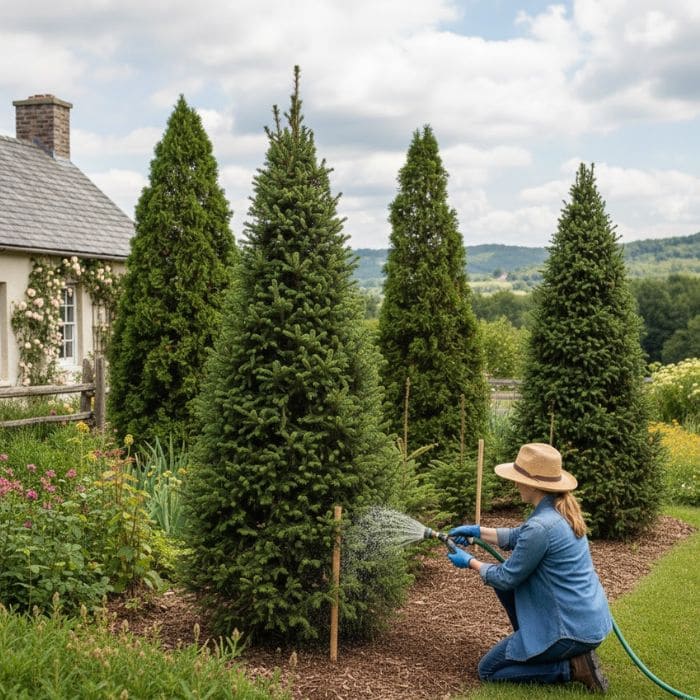
During the first two to three years, young Canaan Firs need consistent care while they establish deep roots. I water deeply during dry spells, especially in late summer when rainfall can become unpredictable here.
I learned the hard way that frequent shallow watering does more harm than good. One particularly hot summer, I watered lightly every day, and the trees became dependent on surface moisture.
The following year, I switched to deeper watering less often, and growth improved noticeably. Now, once the trees are established, they require very little intervention.
Annual Pruning for Natural Shape
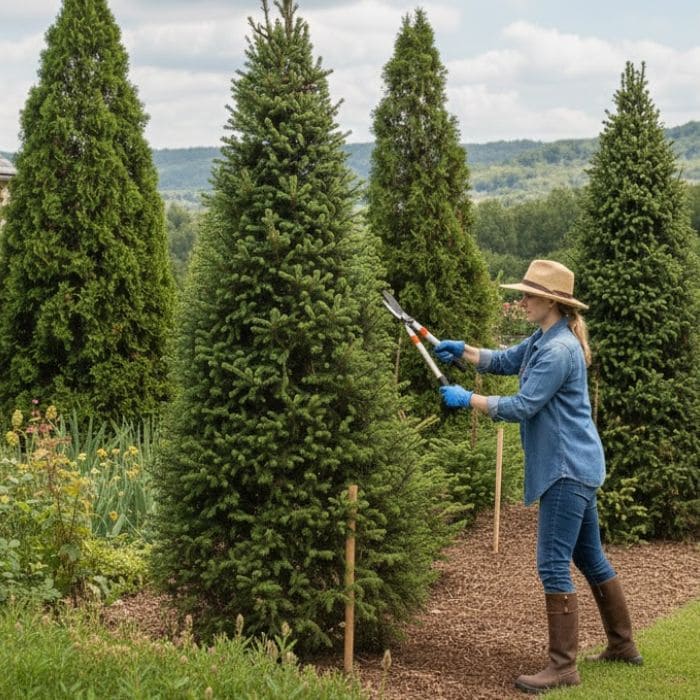
Pruning is something I approach slowly and thoughtfully. I prune once a year, usually in late spring or early summer, when new growth has started to firm up.
I remember one season when I got overly ambitious, trying to shape a tree too perfectly. By the next year, that tree looked stiff and unnatural compared to the others.
Since then, my rule is simple. I remove only what disrupts balance and encourage a strong central leader, letting the tree decide the rest.
Late-season pruning is something I avoid completely, because fresh growth needs time to harden before winter.
Monitoring for Stress and Disease Naturally
I walk through the fir garden regularly, often without tools, just paying attention. One year, I noticed a patch of trees where the needles looked slightly dull, not brown, just tired.
At first, I thought it might be a nutrient issue, so I adjusted soil care and waited. When that didn’t help, Ryan suggested we check airflow instead.
We realized that a nearby hedge had grown dense enough to block wind movement. Our first attempt was thinning the hedge, but improvement was slow. The second step was removing mulch buildup around the base that had been holding too much moisture.
Within weeks, the trees recovered. That experience taught me not to jump to conclusions and to address problems in layers, one change at a time.
Because the trees are spaced well and grown without heavy chemicals, issues are rare, but when something feels off, I’ve learned to trust slow adjustments over quick fixes.
Preparing the Trees for Christmas Season
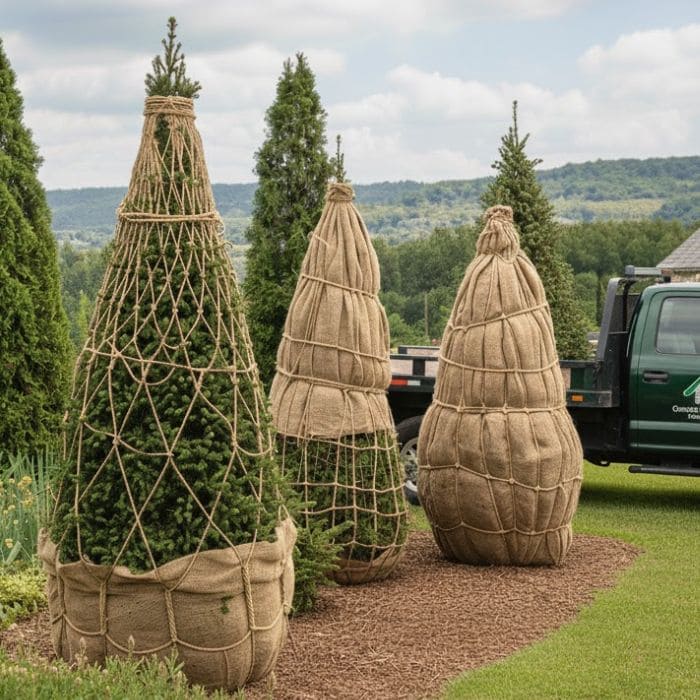
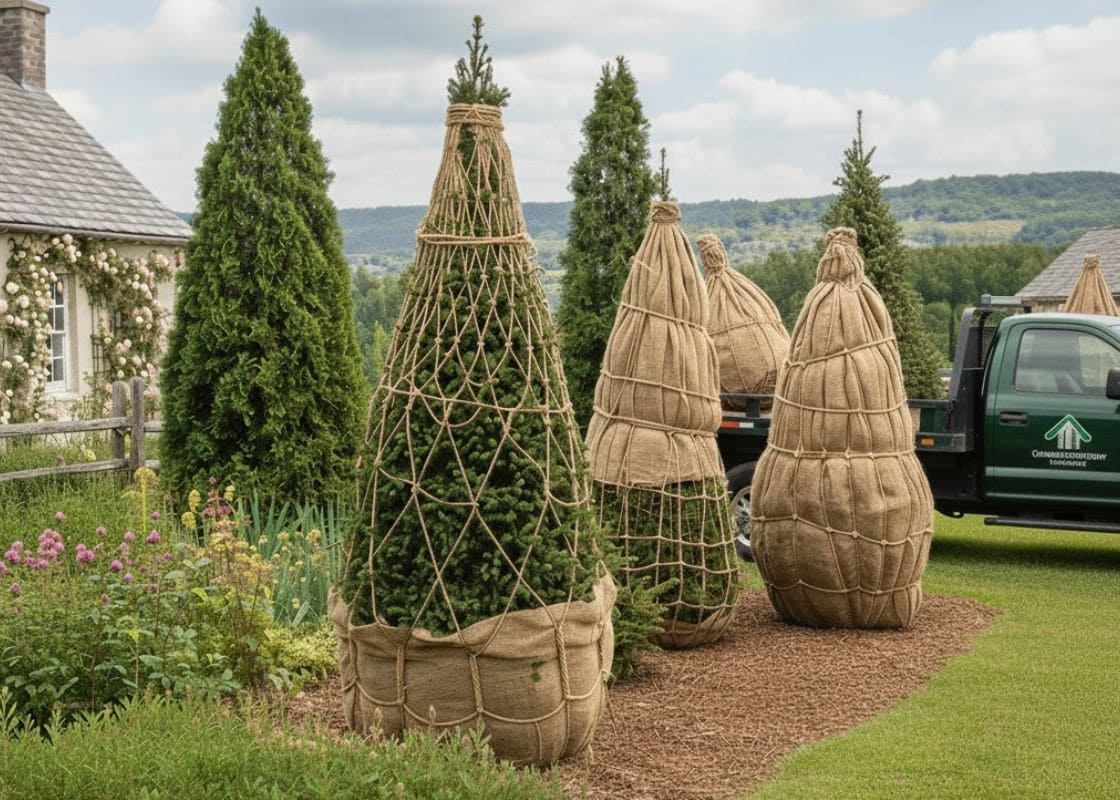
As winter approaches, I begin selecting which trees are ready. Not every tree is chosen, and that restraint matters. I look for balanced shape, healthy needle retention, and a strong trunk that will support ornaments.
Trees are cut early in the morning, when temperatures are low and moisture levels are highest. Ryan usually helps with this part, steady and careful, because we both know this is the final step in years of care.
The tree goes straight into water after cutting, without delay. Before sending it out, I gently shake it outdoors and inspect it closely. Cleanliness, freshness, and respect for the tree matter to me.
Every Canaan Fir I send carries years of attention, small mistakes, corrections, and patience. When my friends tell me weeks later that their tree still smells fresh or hasn’t dropped needles, I know they’re seeing the result of all those quiet decisions made long before December.