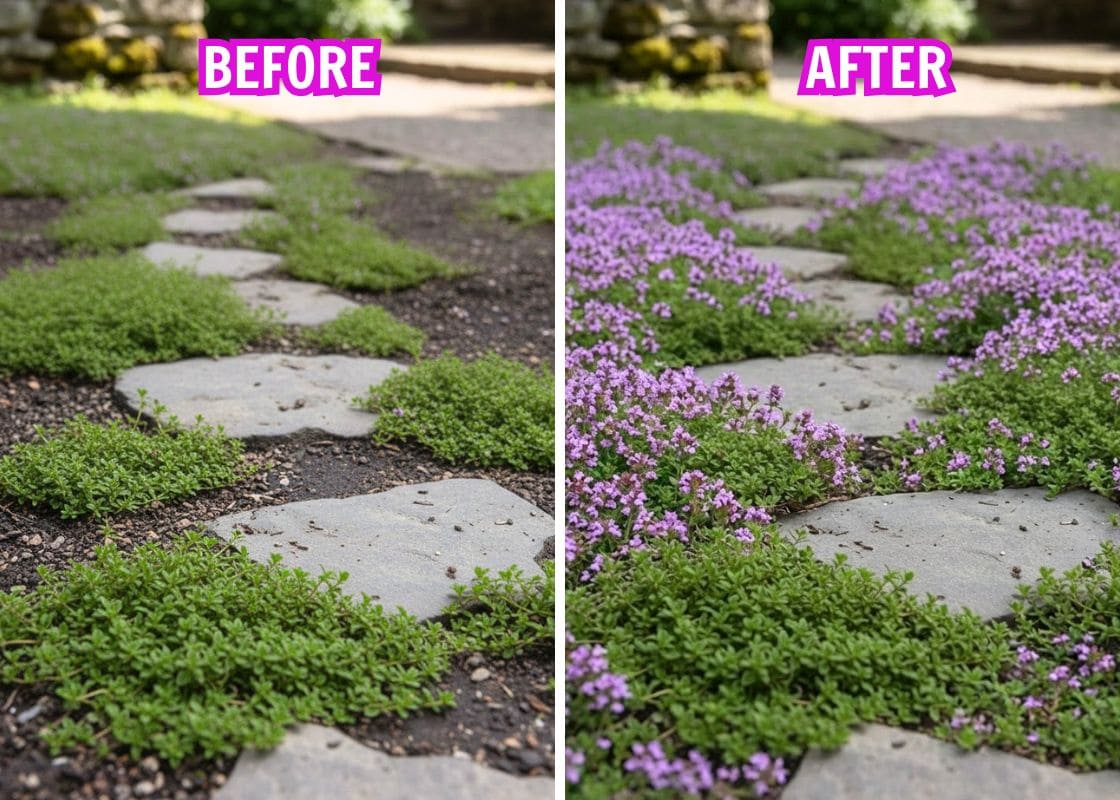
There’s something incredibly rewarding about gardening, especially when it’s a project that evolves right before your eyes. This year, Ryan and I decided to add a touch of nature to our entrance path by planting Creeping Thyme.
Living here in West Virginia, with its rolling hills and unpredictable weather, we wanted to choose something that could thrive in our environment, withstand the changing seasons, and still look beautiful.
Creeping Thyme seemed like the perfect solution, and in the last few months, we’ve watched our little garden transformation unfold in the most delightful way.
Why Creeping Thyme?
When it came time to pick a plant for our entrance, I wanted something practical, low-maintenance, and of course beautiful.
I’ve always been drawn to plants that are hardy and resilient, especially living in West Virginia where we get everything from sweltering summer heat to cold, snowy winters. Creeping Thyme, a tough perennial, seemed like the perfect choice.
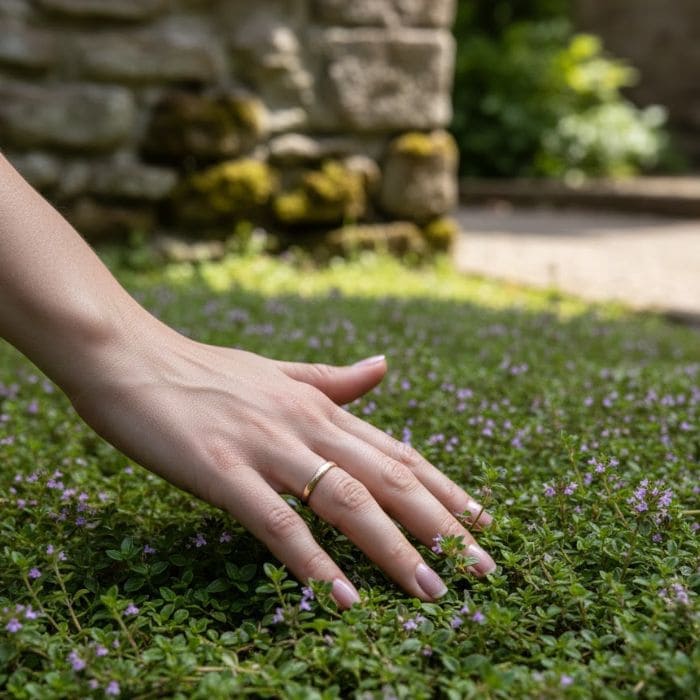
What I love most about Creeping Thyme is its ability to spread easily and create a dense, fragrant carpet. It’s a low-growing ground cover that has tiny purple or pink flowers, which attract pollinators like bees and butterflies.
Specially, it thrives in full sun (perfect for our entrance, which gets plenty of that). It’s also drought-tolerant, which is great since we sometimes go through dry spells in the summer.
But even with its hardy nature, it has an elegant, soft appearance that fits right in with our more natural, rustic garden aesthetic.
But what really sealed the deal for me was the aroma. When you step on Creeping Thyme, it releases this wonderful herbal fragrance, and the thought of walking into that every day just felt like a little piece of nature welcoming us home. It was exactly what I wanted to achieve.
The Planting Process: Month 1

Ryan and I were both excited to get started. We spent a couple of weekends getting the area ready, and it felt like a true partnership.
We chose a sunny spot along the entrance path, and the first step was to prepare the soil. It needed to be loose, well-drained, and able to hold moisture without becoming soggy, so we mixed in some compost to give it the boost it needed.
Creeping Thyme comes in small plugs, so at first, it looked a little sparse. We spaced the plants about 6 to 8 inches apart, knowing they would spread out as they grew.
Once planted, we watered them thoroughly, but we didn’t want to overdo it as Creeping Thyme is drought-tolerant and doesn’t need constant watering once established.
The first month was all about giving them the time and space to adjust. I loved checking in on them every day, even if it was just to see how they were settling in.
The Growth Spurt: Month 2
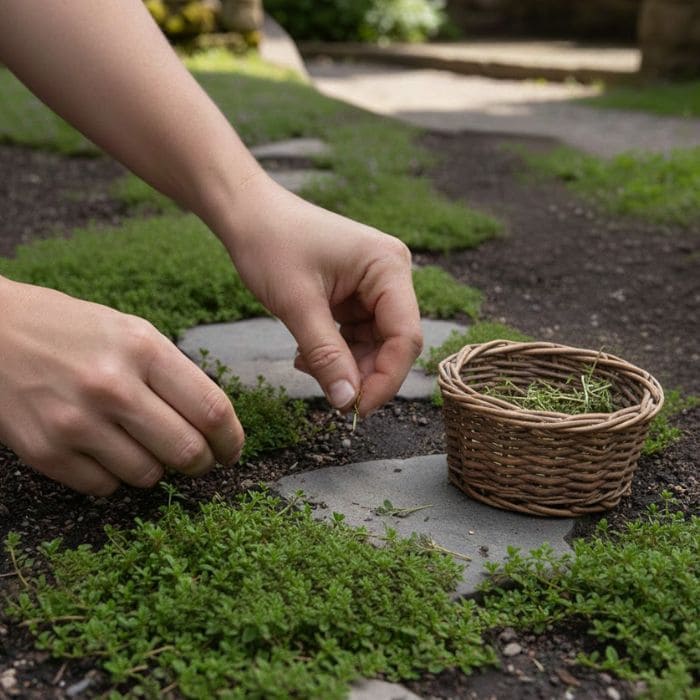
By the second month, I started to see some encouraging signs of life. Creeping Thyme is a slow starter, but once it gets going, it’s hard to stop!
The plants had begun to stretch out a bit more, and tiny shoots of green were emerging along the path. It was subtle at first, but with each passing week, I could see them filling in the gaps between the plugs. It felt like everything was on the right track.
During this time, Ryan and I spent a lot of time outdoors, weeding around the plants and making sure nothing was competing for space.
I looked forward to those evenings when we’d walk down the path together, checking on the progress. It became our little routine, a way for us to enjoy the outdoor space together.
At this stage, the thyme wasn’t flowering yet, but the promise of what it would become was enough to keep me excited.
Full Bloom: Month 3
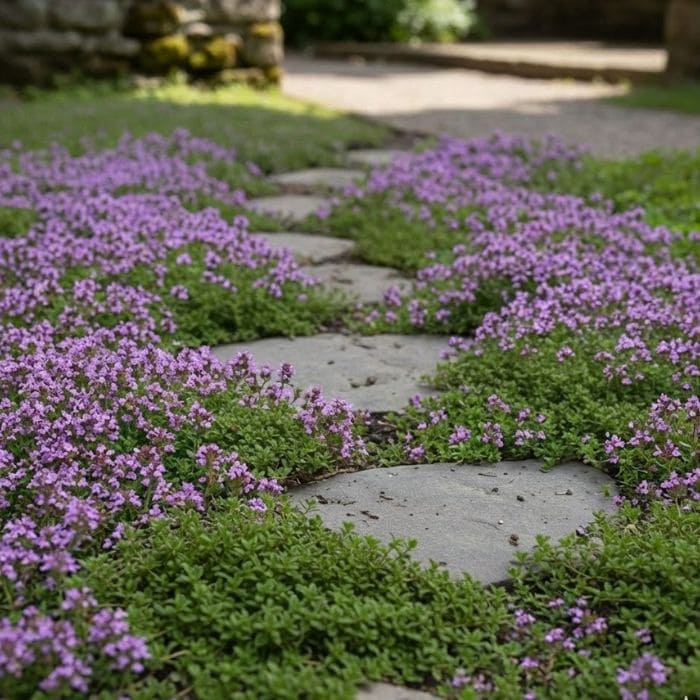
Now, three months in, I can hardly believe how far Creeping Thyme has come. The plants are filling in beautifully, and we’re starting to see a lush, green carpet of leaves stretching across the path.
The tiny flowers have started to bloom little purple bursts of color that attract bees and butterflies, turning our entrance into a mini wildlife haven. It’s such a satisfying feeling to see the path covered in soft, fragrant thyme, with every step releasing that lovely herbal scent.
Moreover, the Creeping Thyme is holding up well despite being walked on. It’s perfect for our entrance path because it doesn’t mind a little foot traffic. In fact, it encourages it!
The path feels like it’s come to life in the most natural way, blending seamlessly into our garden.
The plants are spreading out and thickening up, creating a dense mat of greenery that’ll only continue to grow over time. Ryan and I have been so pleased with how it’s turned out.
How I Cared for My Creeping Thyme
If you’re thinking of planting Creeping Thyme in your own garden, here’s a quick rundown of what I’ve learned about caring for it:
- Sunlight: Creeping Thyme loves full sun, which works perfectly for our entrance. It thrives in areas that get at least 6 hours of sunlight per day.
- Watering: While Creeping Thyme is drought-tolerant, it still needs regular watering when it’s first establishing itself. Once it’s settled, though, it needs very little attention in terms of water. I’ve been amazed at how little maintenance it requires.
- Soil: The thyme prefers well-drained, slightly sandy soil. We made sure the soil was loose and well-draining to avoid any sogginess.
- Maintenance: Creeping Thyme doesn’t need a lot of attention once it’s established. We’ve been trimming it occasionally to keep it neat, and we continue to weed around it to help it grow.
What’s Next?
As the months go by, I’m looking forward to seeing how Creeping Thyme continues to grow and spread. It’s already filling in the path beautifully, and I know that over the next year, it will continue to thrive and mature.
The best part is that as it grows, it will only become more resilient and stronger, creating a lasting, fragrant ground cover that will last through all seasons.
In the future, I may add some other plants around the thyme to add a little variety, but for now, I’m more than happy with how the Creeping Thyme is performing.