I am writing this with steady hands, a calm stomach, and a very clear mind, but that was not the case a week ago.
I am sharing this story as soon as I can because it matters, and because I learned the hard way that confidence in the garden can quietly turn into carelessness if you are not paying attention.
The Plant That Did Not Belong, but Looked Welcome
Last week, I walked out to one of my garden beds in the late afternoon, the light soft and familiar, the kind of moment where everything feels routine.
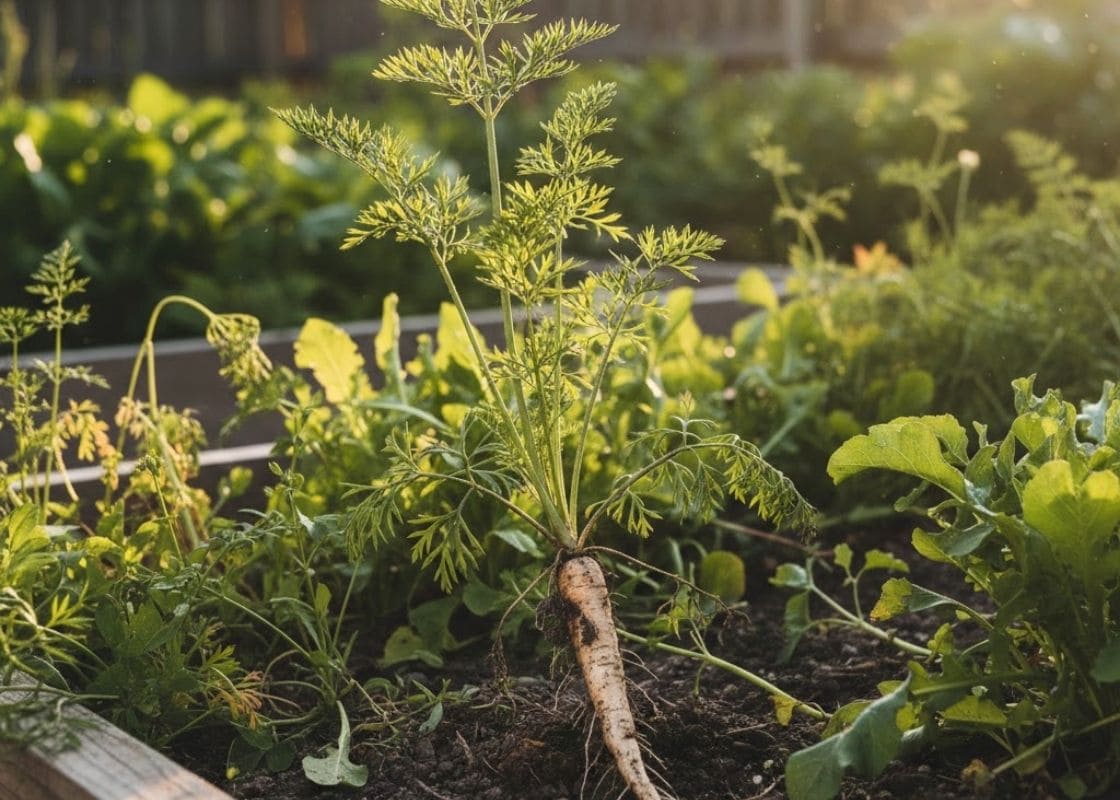
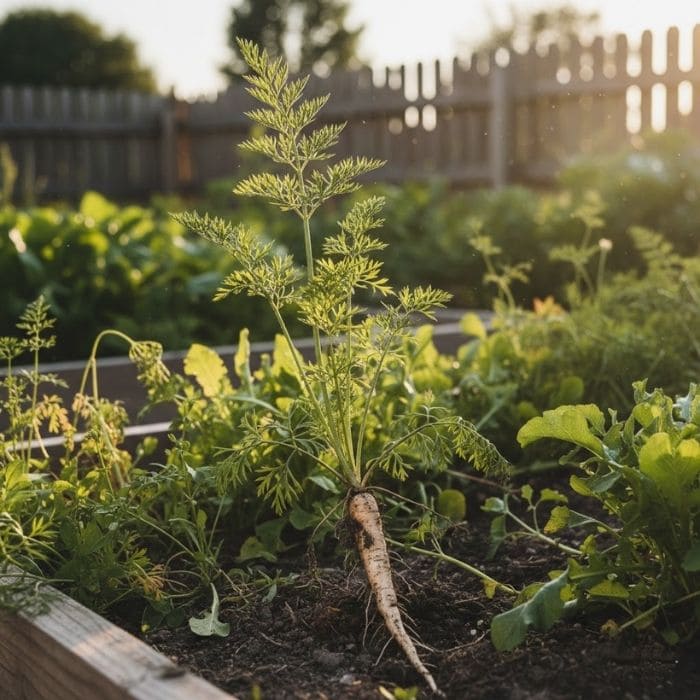
Near the edge of the bed, close to where I had harvested earlier in the season, I noticed a plant I did not remember planting. It stood taller than most of the greens around it, with finely divided, feathery leaves that immediately reminded me of wild carrot.
The leaves were a healthy green, delicate but strong, and the root, when I loosened the soil, came out long and pale, tapered like a thin carrot.
There was nothing about it that looked aggressive or alarming. No bright warning colors, no bitter smell, no damage, and it looked like a gift.
I told myself it was a volunteer. One of those small surprises the garden sometimes gives you when conditions are right.
The Moment I Decided Without Thinking
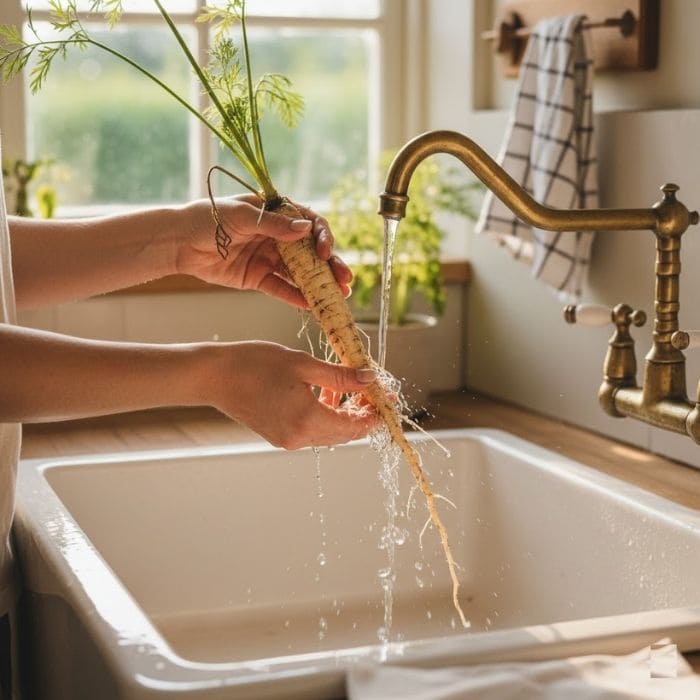
I pulled the plant completely, shook off the soil, and brought it inside. I did not second-guess myself and cross-check. I relied on recognition instead of confirmation, and that was my mistake.
At the sink, I rinsed it carefully, trimmed the root, and sliced a small portion into a salad. The leaves were soft and the root was crisp. The taste was mild, not sweet, not bitter, just neutral enough to feel safe. So I ate a little.
When Ordinary Turned Into Warning
About half an hour later, my stomach began to tighten in a way that felt unfamiliar. This was not the dull discomfort of hunger or the heaviness of overeating.
It was sharp, specific, and insistent. Nausea followed, not overwhelming, but persistent enough that I stopped what I was doing and sat down.
I tried to talk myself out of concern. I told myself it was probably nothing. But the discomfort did not fade, it grew clearer.

At the hospital, I explained exactly what I had eaten and where it came from.
The doctor listened closely and began asking questions I had not thought to ask myself. Were the stems hairy or smooth? Did the plant smell like carrot when broken? Were there any markings on the stem?
When I finished describing it, especially the smooth, hairless stem and the lack of carrot scent, the doctor looked at me and said, very calmly,
“You did the right thing coming in when you did. What you ate was poison hemlock. If you had eaten more, or if you had waited at home to see if the pain passed, this could have been a very different conversation.”
Understanding How I Got It Wrong
Poison hemlock and wild carrot look dangerously similar, especially when you are not expecting danger. I had always known, in theory, that they were often confused. What I did not realize was how easily familiarity could override caution.
Wild carrot usually has fine hairs on the stem, a strong carrot smell when snapped, and later, a darker central flower. Poison hemlock has smooth stems, sometimes with faint markings, no carrot scent, and an almost innocent appearance.
I missed those details because I did not slow down enough to look for them.
Why My Health Is Fine Today
I was lucky. That is the truth as I ate a very small amount. I noticed symptoms early and I went to the hospital immediately. The exposure was light, and my body did not absorb enough toxin to cause serious harm.
The doctor monitored me, treated the symptoms, and kept a close watch until the pain eased. Before I left, they made sure I understood exactly why timing mattered and why guessing in the garden is never safe.
The Part I Feel Responsible to Share
I hesitated before writing this. Part of me felt embarrassed. I garden carefully and pay attention. Or at least, I thought I did. But the more I reflected on it, the clearer it became that this story should not stay private.
I will never eat a plant I did not intentionally plant without absolute certainty. Not recognition and assumption. Certainty, I will check multiple sources, and examine stems, smell roots, and if there is even a moment of doubt, I will leave the plant where it is.