When it comes to orchard trees, nothing beats the satisfaction of watching your hard work pay off with fresh, homegrown fruit. However, not all orchard trees are created equal in terms of growth rate.
If you’re eager to enjoy the fruits of your labor sooner rather than later, choosing fast-growing orchard trees is the way to go.
The trees we’ll discuss here offer quick yields without sacrificing flavor or quality, perfect for those who want to harvest their own fruit in a short period.
Whether you’re looking for a tree that produces apples, peaches, or pears, there’s something here for every backyard garden.
In this guide, I’ve compiled the 12 fastest orchard trees you can grow.
Each one has been selected for its rapid growth rate, fruit-bearing potential, and easy maintenance. Let’s dive into the details of these fruitful wonders.
1. Apple Tree (Malus domestica)
- Scientific Name: Malus domestica
- Sunlight: Full sun
- Water Requirement: Moderate
- Mature Size: 10-30 feet tall, 8-20 feet wide
- When to Harvest: Late summer to fall
- USDA Hardiness Zones: 3-8
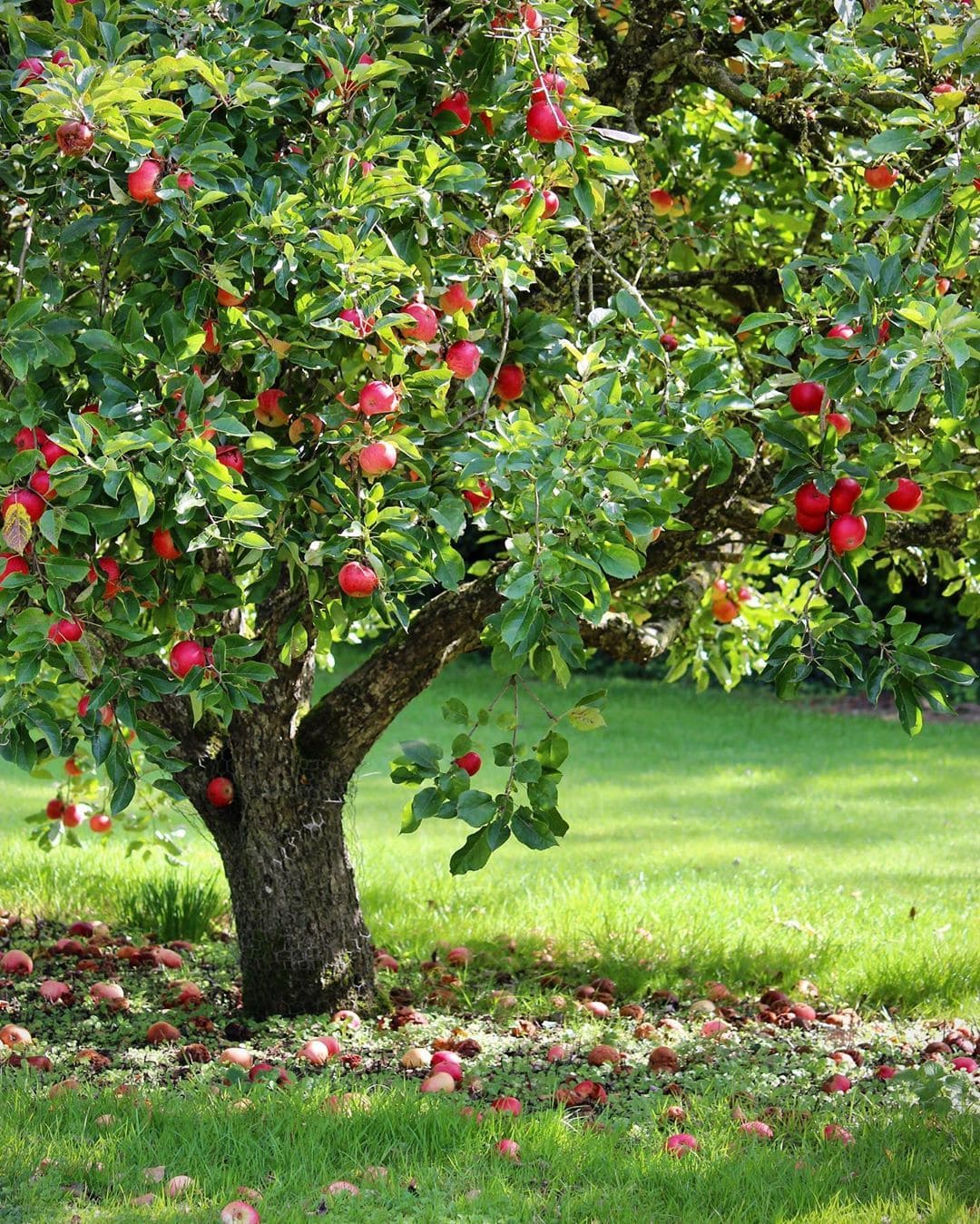
Apple trees are among the fastest-growing orchard trees, especially when planted in well-drained soil with plenty of sunlight.
Depending on the variety, apple trees can start bearing fruit within 2-4 years, although some dwarf varieties may produce sooner.
They thrive in zones 3-8, making them a versatile choice for many climates.
To speed up the growing process, select a variety like the ‘Honeycrisp’ or ‘Gala’ apple, which are known for their quick maturation and excellent yields.
Regular pruning helps maintain shape and promotes better airflow, preventing disease while encouraging quicker fruit production.
Apples are perfect for various uses, from snacking to baking, making them a popular choice for home orchards.
2. Peach Tree (Prunus persica)
- Scientific Name: Prunus persica
- Sunlight: Full sun
- Water Requirement: Moderate to high
- Mature Size: 10-25 feet tall, 8-20 feet wide
- When to Harvest: Late spring to early summer
- USDA Hardiness Zones: 5-9
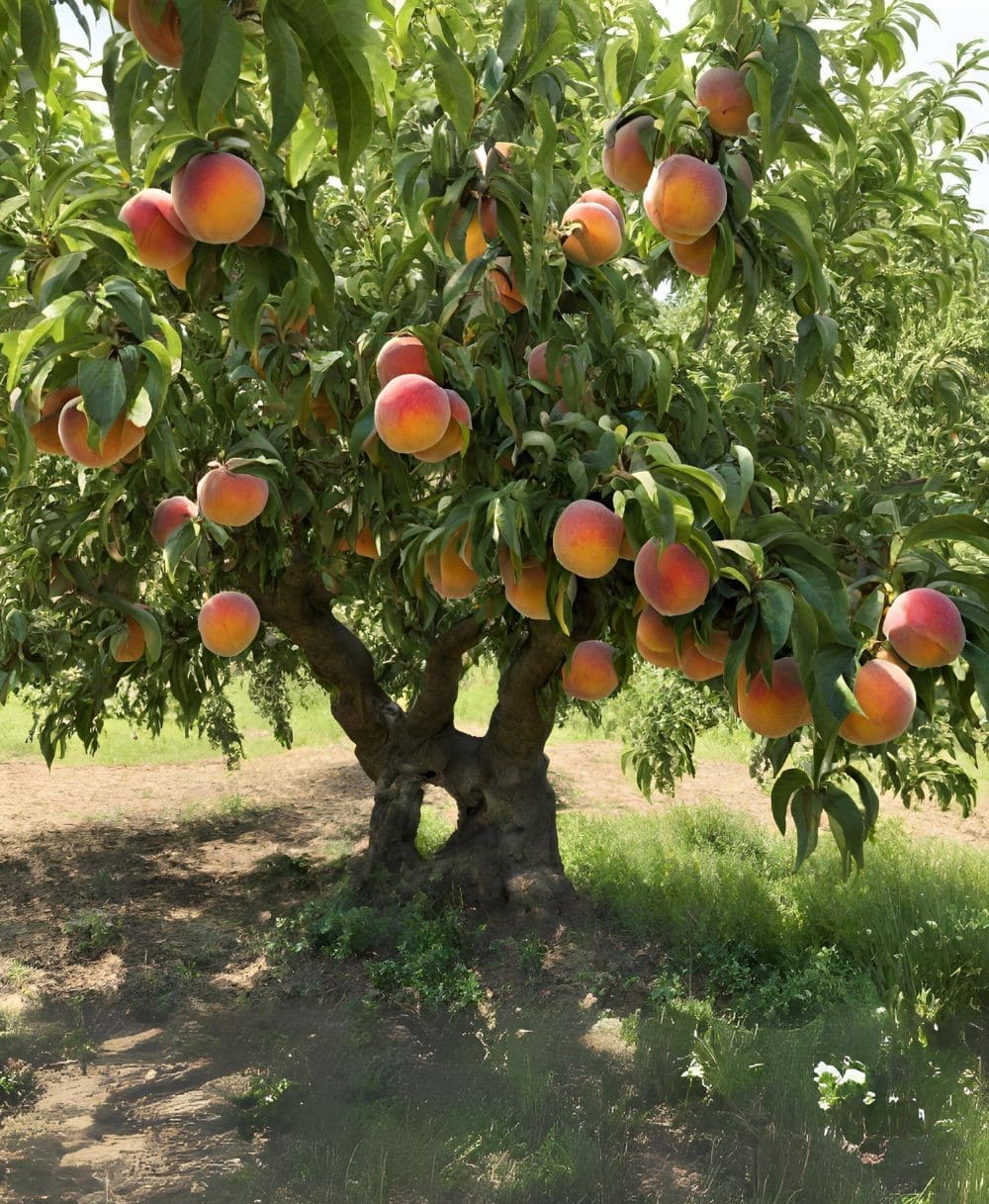
Peach trees are fast-growing and can start bearing fruit within 3-4 years of planting, making them one of the quickest orchard trees.
These trees thrive in warm climates, requiring full sunlight and moderate to high water needs.
‘Elberta’ peaches are a popular, fast-growing variety, often chosen by home gardeners for their sweet, juicy fruits.
Peaches require a well-drained, slightly acidic soil, so consider amending your soil if it’s clay-heavy. Regular pruning helps stimulate healthy growth and improve air circulation.
Additionally, peaches are relatively low-maintenance once established, making them a great choice for beginner gardeners looking for a rapid return.
3. Pear Tree (Pyrus)
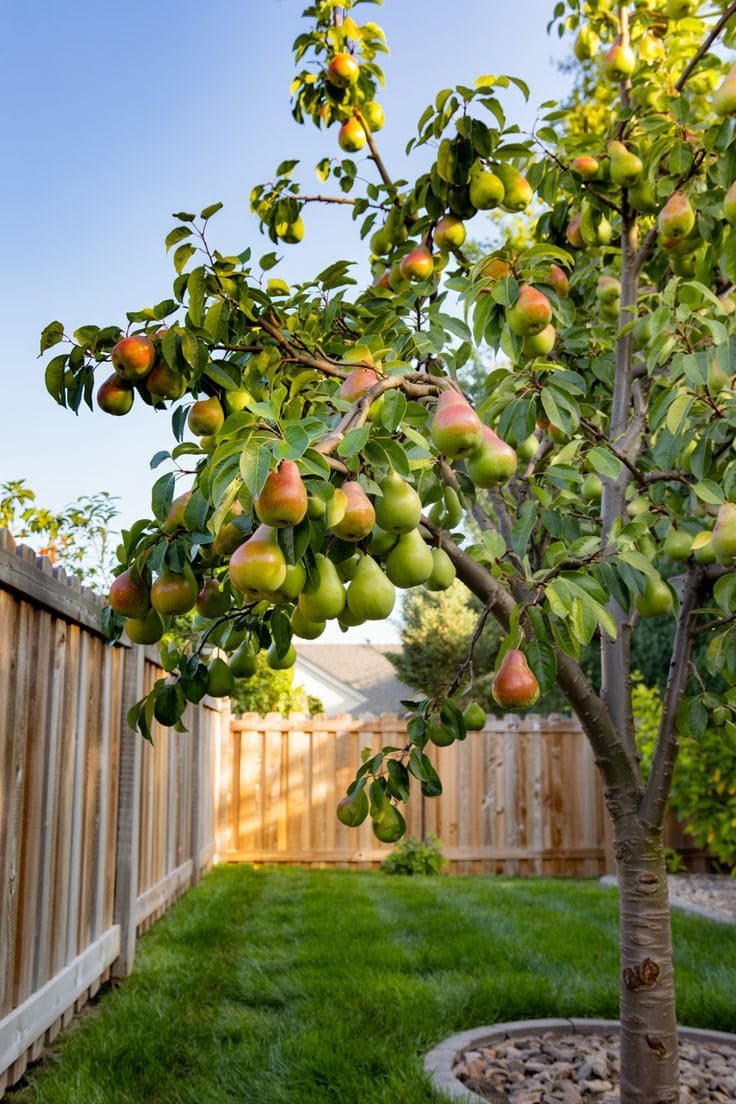
- Scientific Name: Pyrus
- Sunlight: Full sun
- Water Requirement: Moderate
- Mature Size: 15-20 feet tall, 10-15 feet wide
- When to Harvest: Late summer to fall
- USDA Hardiness Zones: 4-9
Pear trees, especially the ‘Bartlett’ variety, grow quickly and can be expected to produce fruit within 3-4 years of planting.
They are perfect for cooler climates, thriving in zones 4-9, and can tolerate a variety of soil types as long as they are well-drained.
Pear trees require full sun to achieve optimal growth, which leads to larger, juicier fruits. They need consistent watering during their growing season, especially in dry periods.
Pruning will help ensure strong growth and optimal fruiting. Pears are versatile, and the ‘Bartlett’ pear is a popular choice due to its excellent flavor and quick fruiting timeline.
4. Cherry Tree (Prunus avium)
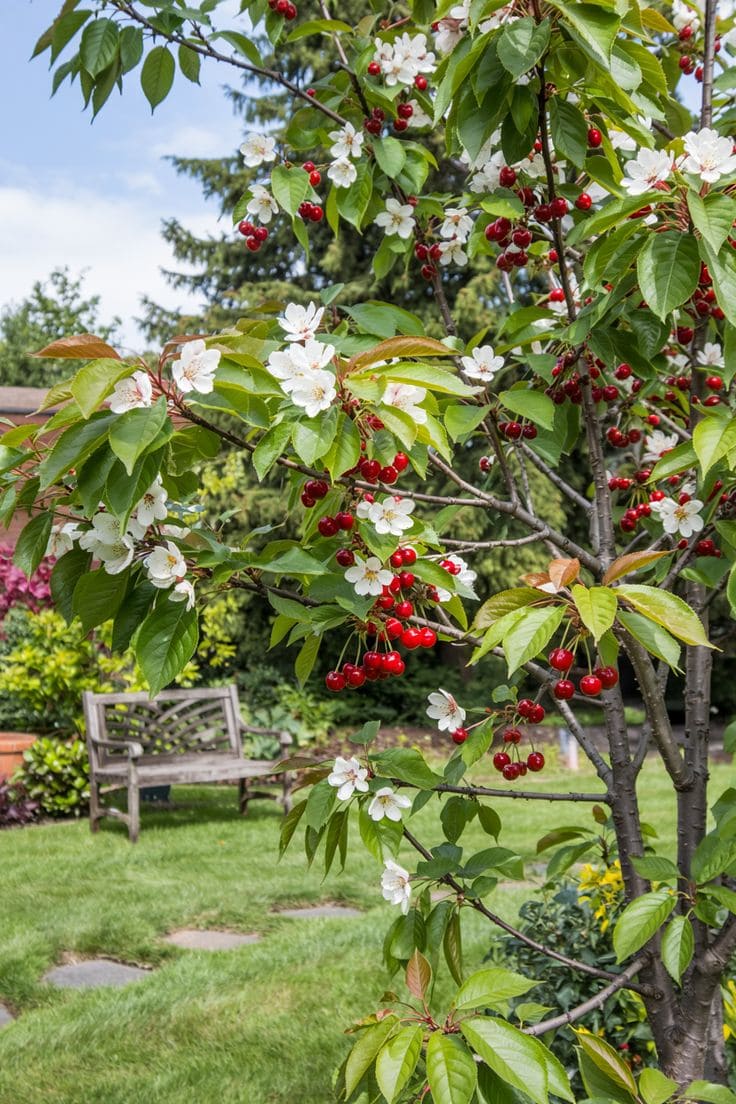
- Scientific Name: Prunus avium
- Sunlight: Full sun
- Water Requirement: Moderate
- Mature Size: 15-30 feet tall, 15-20 feet wide
- When to Harvest: Late spring to early summer
- USDA Hardiness Zones: 4-9
Cherry trees are known for their stunning blossoms, but they also grow quickly, with fruit ready to harvest within 3-4 years.
Sweet cherry trees like ‘Bing’ and ‘Rainier’ are not only fast-growing but also provide delicious, large fruits.
These trees require full sun and benefit from well-drained, slightly acidic soil.
While cherries have moderate water needs, they do best when their soil is not waterlogged, so ensure proper drainage.
Regular pruning will help maintain their shape and encourage fruit production. Whether for fresh eating or making preserves, a cherry tree is a great addition to your backyard orchard.
5. Plum Tree (Prunus domestica)
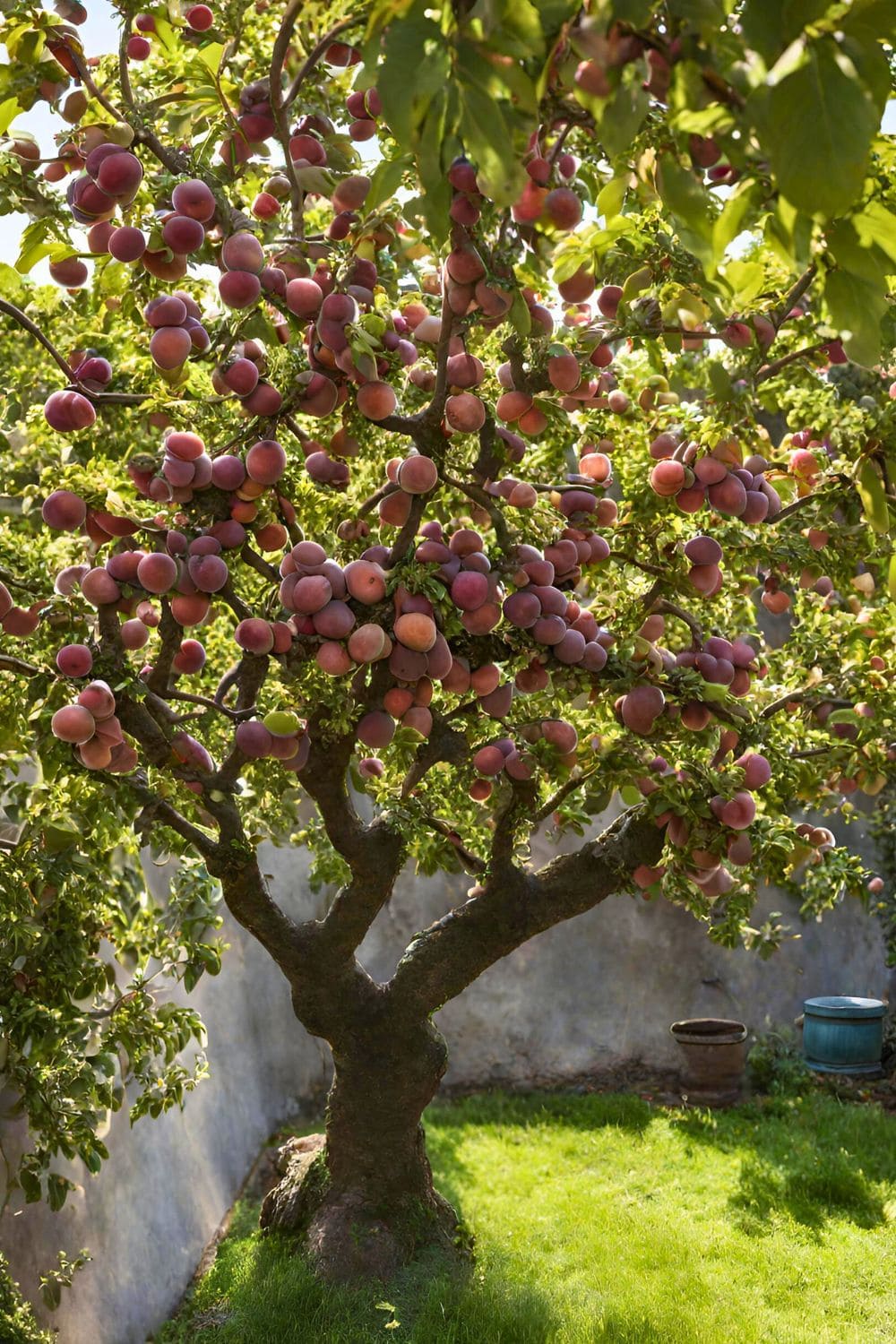
- Scientific Name: Prunus domestica
- Sunlight: Full sun
- Water Requirement: Moderate
- Mature Size: 15-20 feet tall, 12-15 feet wide
- When to Harvest: Summer to early fall
- USDA Hardiness Zones: 5-9
Plum trees are some of the fastest-growing fruit trees, often reaching maturity in just 3-5 years. With varieties like ‘Santa Rosa,’ they grow quickly and are easy to maintain.
Plums are an excellent choice for homeowners because they don’t require much space and yield a significant amount of fruit in a relatively short time.
They thrive in full sun and need moderate watering, particularly during dry spells. Pruning is important for maintaining their shape and encouraging strong fruiting branches.
Their sweet, tart flavor is perfect for making jams, jellies, or simply enjoying fresh from the tree.
6. Fig Tree (Ficus carica)
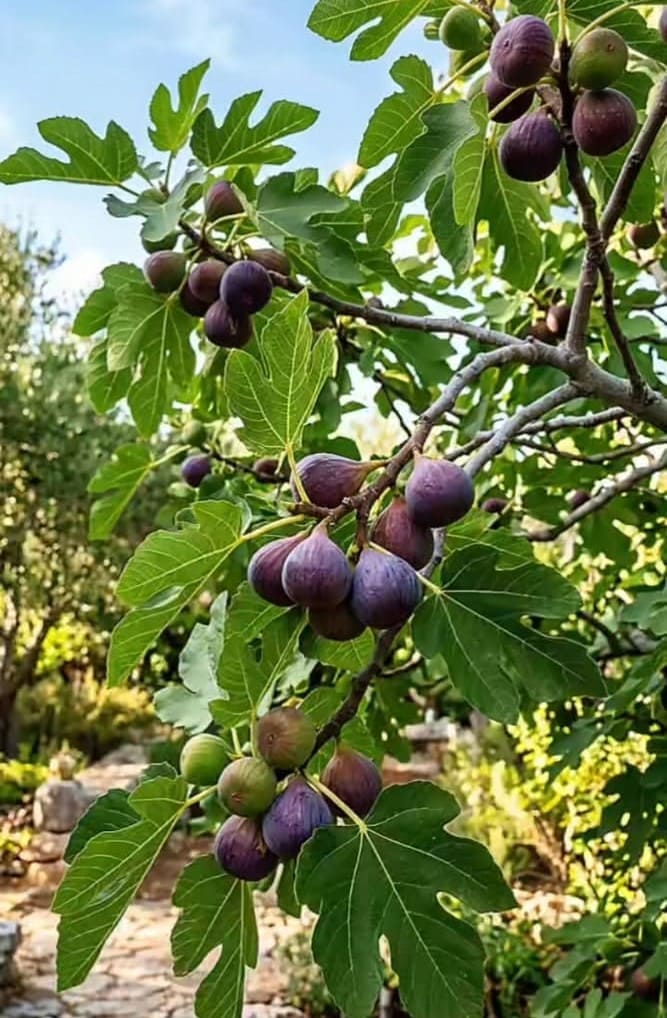
- Scientific Name: Ficus carica
- Sunlight: Full sun
- Water Requirement: Moderate
- Mature Size: 10-15 feet tall, 10-12 feet wide
- When to Harvest: Summer to early fall
- USDA Hardiness Zones: 8-11
Fig trees are a great choice for those seeking a quick-growing tree that bears fruit fast. They can start producing fruit within 2-3 years, especially if grown in optimal conditions.
Figs love full sunlight and well-drained, sandy soil. They are drought-tolerant once established but still require regular watering during dry spells to ensure healthy growth.
The ‘Black Mission’ fig is one of the most popular varieties due to its sweet flavor and rapid growth rate.
Figs also benefit from occasional pruning to maintain their shape and encourage a higher fruit yield.
7. Apricot Tree (Prunus armeniaca)
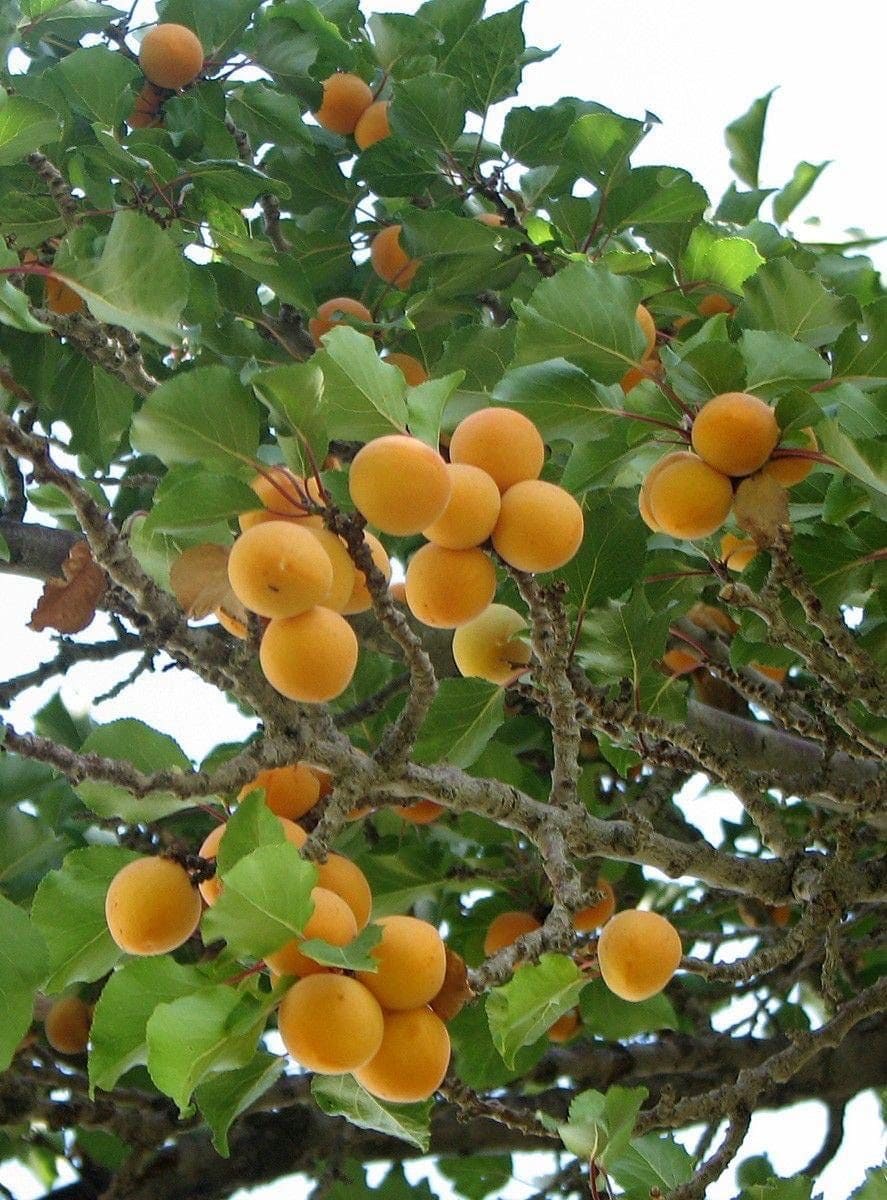
- Scientific Name: Prunus armeniaca
- Sunlight: Full sun
- Water Requirement: Moderate
- Mature Size: 12-20 feet tall, 12-15 feet wide
- When to Harvest: Early to mid-summer
- USDA Hardiness Zones: 5-9
Apricot trees are fast-growing, particularly varieties like ‘Tilton’ and ‘Katy.’
They can produce fruit in as little as 3 years, making them ideal for gardeners who want quick results. These trees prefer full sun and well-drained soil.
Apricots are relatively low-maintenance but require a bit of extra care when it comes to watering as overwatering can lead to root rot.
Pruning should be done in the dormant season to remove dead or damaged branches and encourage strong fruit production.
Apricots are delicious when eaten fresh, dried, or used in preserves.
8. Mulberry Tree (Morus alba)
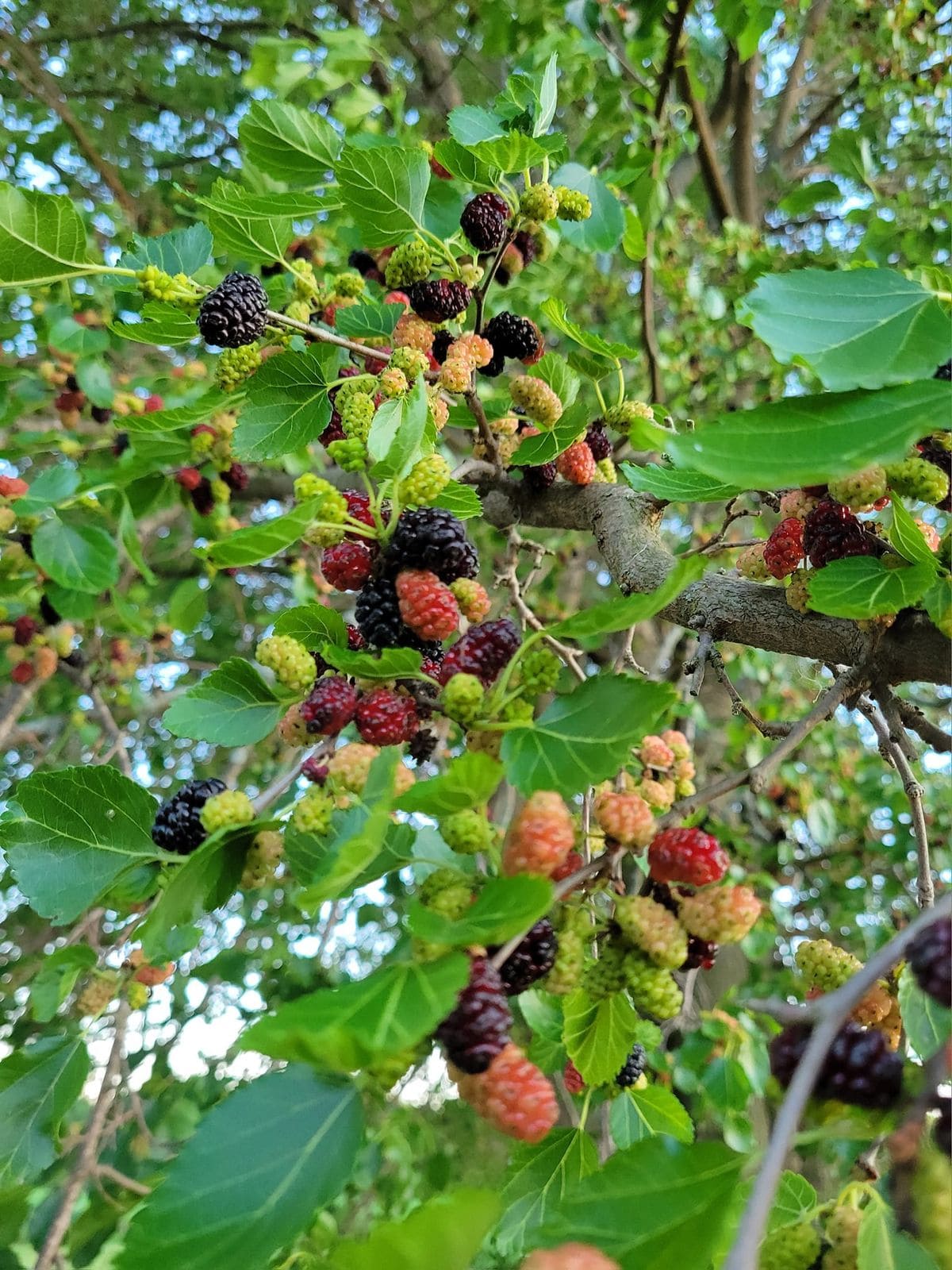
- Scientific Name: Morus alba
- Sunlight: Full sun
- Water Requirement: Moderate
- Mature Size: 30-50 feet tall, 30-50 feet wide
- When to Harvest: Late spring to summer
- USDA Hardiness Zones: 4-8
Mulberry trees are known for their fast-growing nature, often producing fruit in just 2-3 years. The ‘Illinois Everbearing’ variety is one of the most commonly grown and provides a generous fruit harvest. These trees thrive in full sun and need moderate water. Once established, mulberries are relatively drought-tolerant, though they should still receive consistent watering during dry spells. Mulberries are perfect for making jams, pies, or eating fresh off the tree.
9. Nectarine Tree (Prunus persica var. nucipersica)
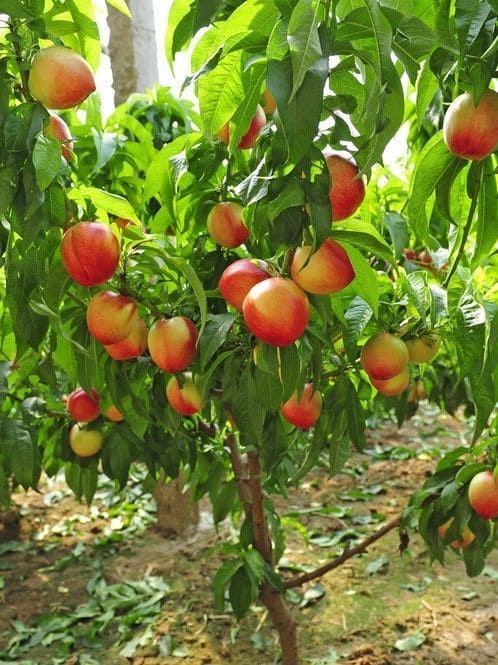
- Scientific Name: Prunus persica var. nucipersica
- Sunlight: Full sun
- Water Requirement: Moderate to high
- Mature Size: 12-20 feet tall, 12-15 feet wide
- When to Harvest: Mid to late summer
- USDA Hardiness Zones: 6-9
Nectarine trees are similar to peach trees but have smooth skins. They are fast growers, with most varieties starting to bear fruit in just 3-4 years.
They thrive in full sun and require moderate to high water to keep their roots healthy.
‘Fantasia’ nectarines are known for their quick growth and large, flavorful fruits. Regular pruning helps keep the tree healthy and encourages better fruiting.
Nectarines are perfect for snacking, baking, or making preserves.
10. Persimmon Tree (Diospyros persimmon)
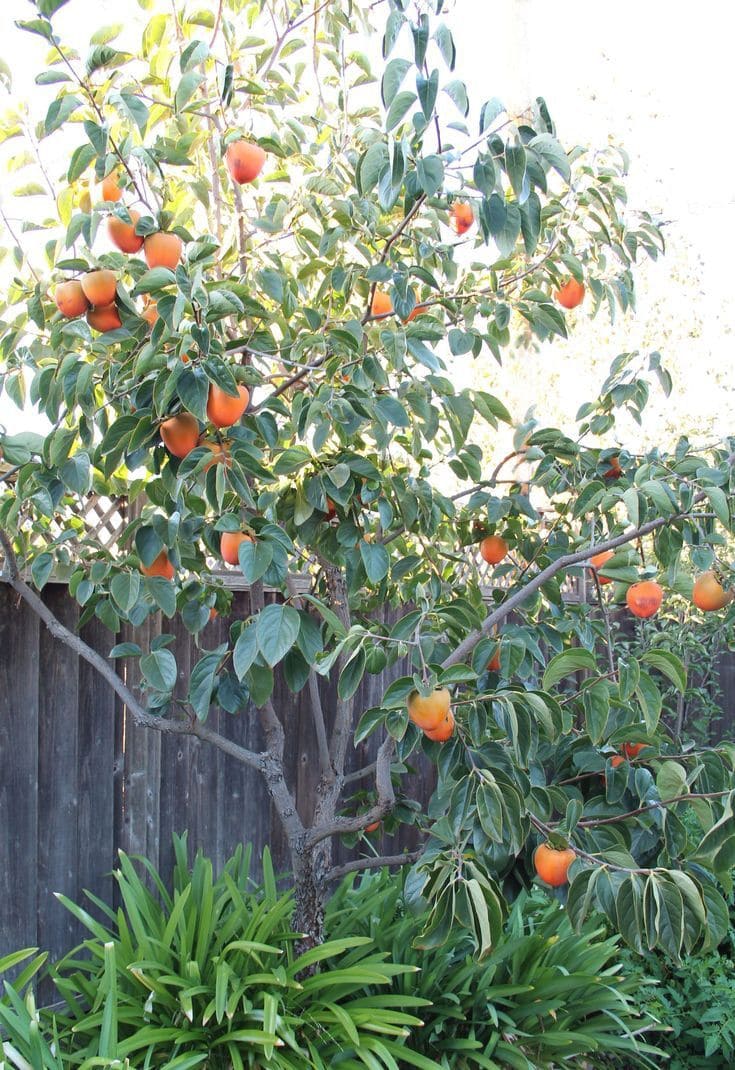
- Scientific Name: Diospyros persimmon
- Sunlight: Full sun
- Water Requirement: Moderate
- Mature Size: 20-30 feet tall, 15-20 feet wide
- When to Harvest: Fall
- USDA Hardiness Zones: 7-10
Persimmons are an exotic but fast-growing fruit tree that can yield fruit in as little as 3-4 years. These trees thrive in full sun and need well-drained soil with moderate watering.
The ‘Fuyu’ variety is a popular, non-astringent variety that grows quickly and bears sweet, flavorful fruit.
Pruning should be done to remove dead branches and encourage strong, healthy growth. Persimmons are great for fresh eating or used in desserts and jams.
11. Quince Tree (Cydonia oblonga)
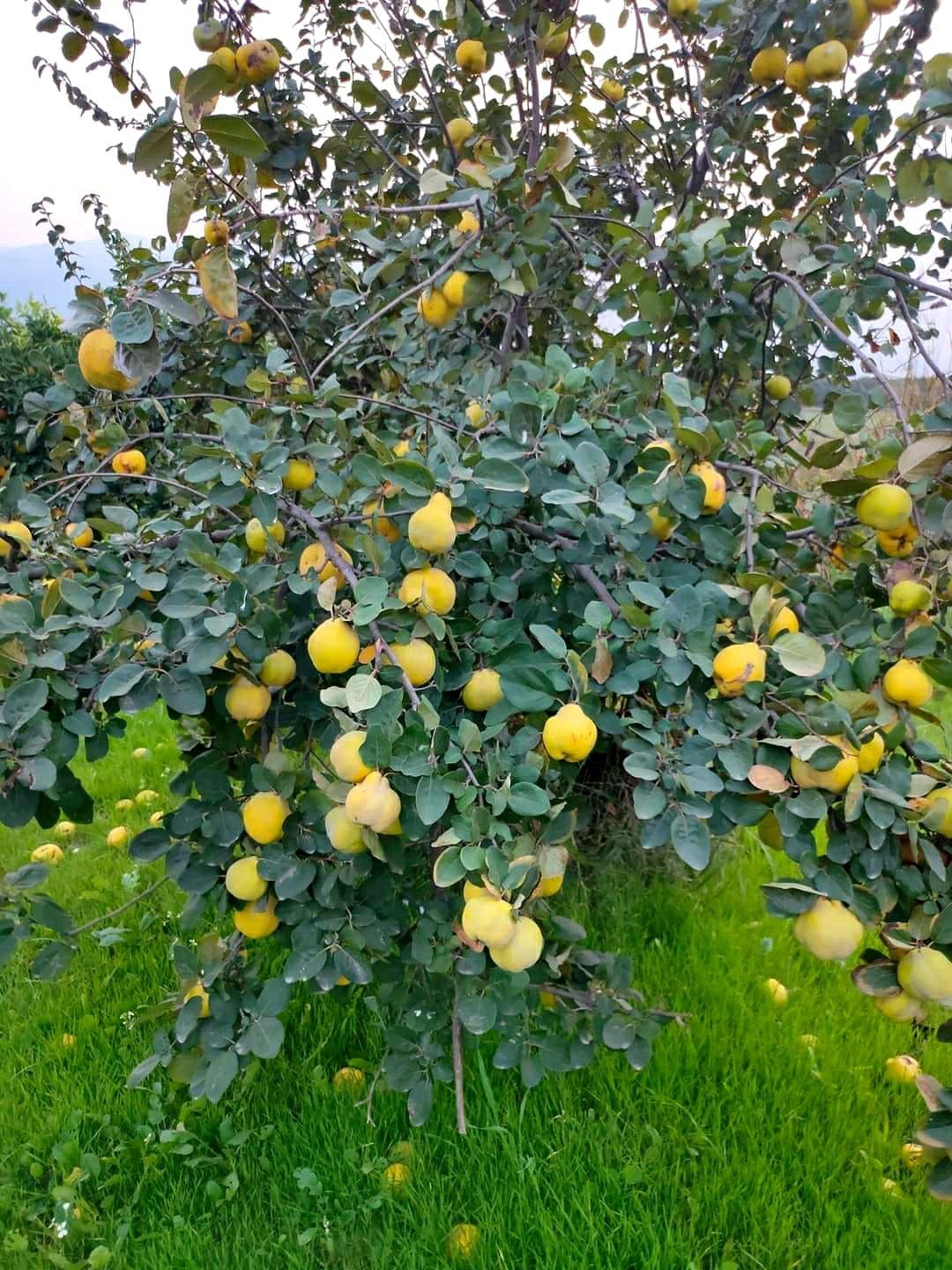
- Scientific Name: Cydonia oblonga
- Sunlight: Full sun
- Water Requirement: Moderate
- Mature Size: 12-20 feet tall, 10-12 feet wide
- When to Harvest: Late fall
- USDA Hardiness Zones: 5-9
Quince trees are a fast-growing addition to any orchard, producing fruit in 3-5 years.
This tree thrives in full sun and well-drained soil, making it an excellent option for gardeners who want to enjoy fragrant, hard, apple-like fruits.
Known for its tangy flavor, quinces are often used for making jams, jellies, and preserves.
They require moderate water but prefer slightly dry conditions over excessive moisture. A regular pruning regimen will help ensure the best shape and maximum fruit production.
The quince’s large white or pink blossoms are an added bonus for your garden, creating a stunning display before the fruit even appears.
12. Almond Tree (Prunus dulcis)
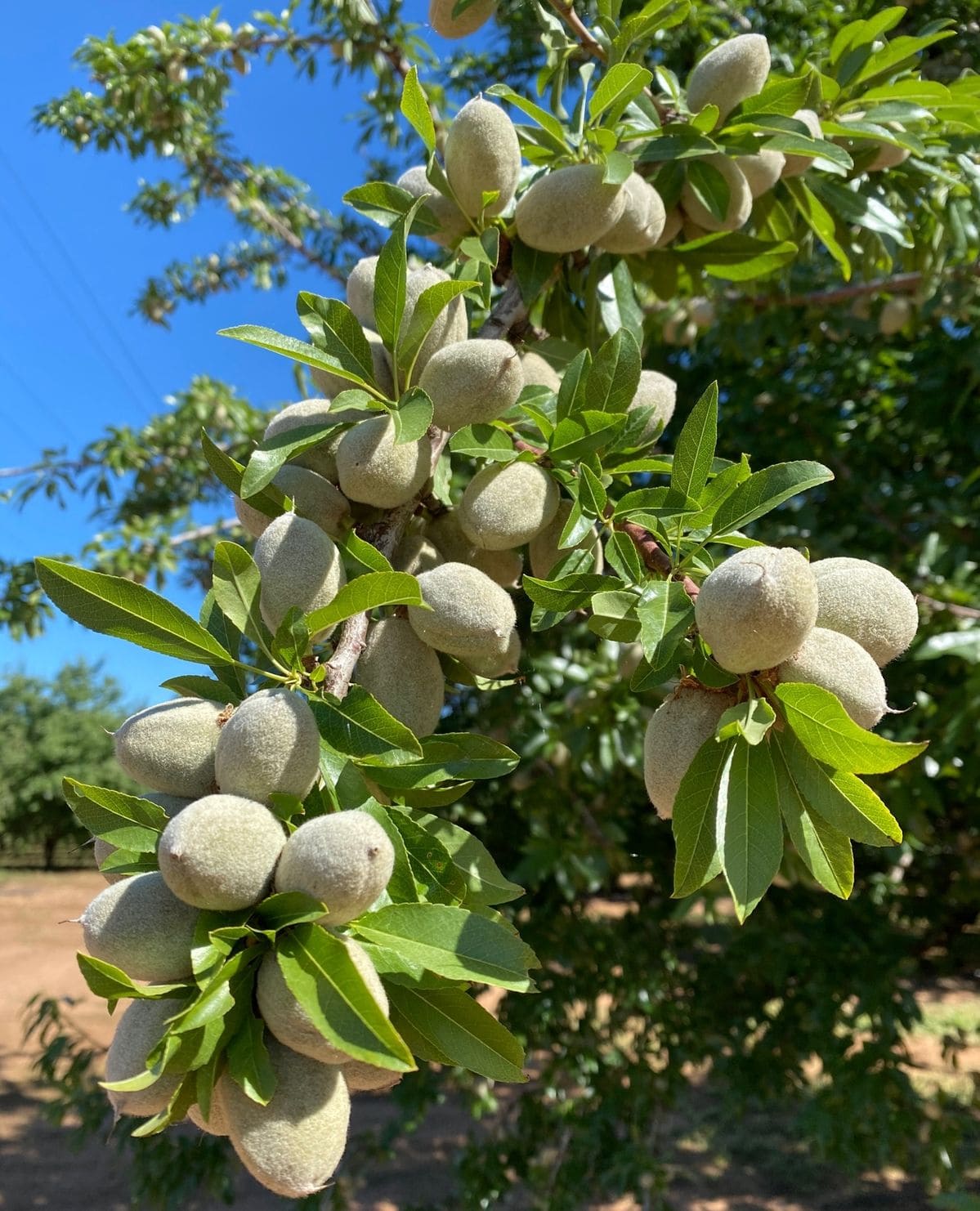
- Scientific Name: Prunus dulcis
- Sunlight: Full sun
- Water Requirement: Moderate
- Mature Size: 10-15 feet tall, 10-15 feet wide
- When to Harvest: Late summer to fall
- USDA Hardiness Zones: 7-9
Almond trees are fast-growing, typically starting to bear fruit within 3-5 years. They need full sunlight and well-drained, slightly acidic soil to flourish.
Almond trees are particularly well-suited to dry climates but do need regular watering to support their rapid growth.
One of the fastest-growing varieties is the ‘Tuono’ almond, known for its delicious nuts and quick yields.
Regular pruning helps improve the structure of the tree and reduces the risk of disease, ensuring that your almonds grow to their full potential.
These trees also require a specific number of chilling hours during winter to promote flowering, so they’re best suited to USDA zones 7-9.
Conclusion
Choosing fast-growing orchard trees is an excellent way to start enjoying homegrown fruit in a short amount of time.
Whether you’re looking for apples, peaches, or more exotic varieties like persimmons, there’s a tree on this list for every taste and climate.
With the right care and attention, you’ll be able to enjoy a bountiful harvest in just a few years.
So, go ahead, plant one of these trees in your backyard, and watch it grow into a fruitful haven in no time.