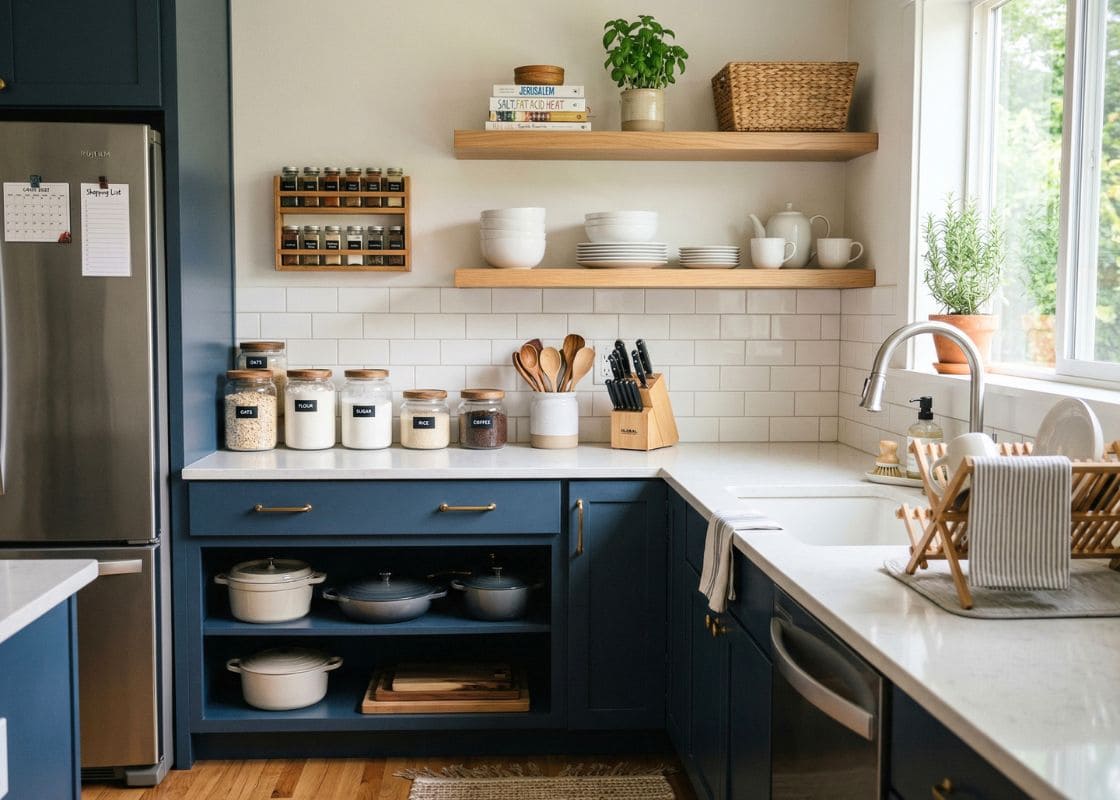
The kitchen is often referred to as the heart of the home. It’s the place where families gather, meals are prepared, and memories are made.
However, when your kitchen is cluttered, disorganized, or difficult to navigate, it can quickly become a source of stress.
An organized kitchen, on the other hand, makes cooking, cleaning, and daily life much easier.
In fact, the benefits of organizing your kitchen are far-reaching from saving time to reducing stress, increasing productivity, and even encouraging healthier eating habits.
Creating an organized kitchen isn’t just about tidying up, t’s about implementing thoughtful systems that allow your kitchen to run efficiently.
In this article, we explore some essential kitchen organizing rules that every home cook should know, providing specific strategies to help you turn your kitchen into a well-oiled machine.
1. Create Defined Zones Based on Task
When it comes to kitchen organization, one of the most important rules is to create distinct zones for specific tasks.
A kitchen is not just a place to cook, it’s a space where multiple tasks happen at once, from food prep to cooking, cleaning, and even socializing.
If everything is scattered all over the place, it can feel chaotic. By defining your kitchen into different zones based on the task, you’ll streamline your workflow and make it easier to access what you need.
Start by designating specific areas for food preparation, cooking, cleaning, and storage.
For instance, place all your cutting tools like knives, cutting boards, and measuring cups close to your prep area. Keep your stove or oven area near the pots, pans, and cooking utensils.
Your sink and dishwasher area should have easy access to cleaning supplies like dish soap, sponges, and towels.
The storage area, such as cabinets or drawers, should be organized with the items you use most often in easy-to-reach spots.
By grouping related items together, you eliminate the need to search for things while cooking, which helps you cook more efficiently.
2. Store Items Based on Frequency of Use
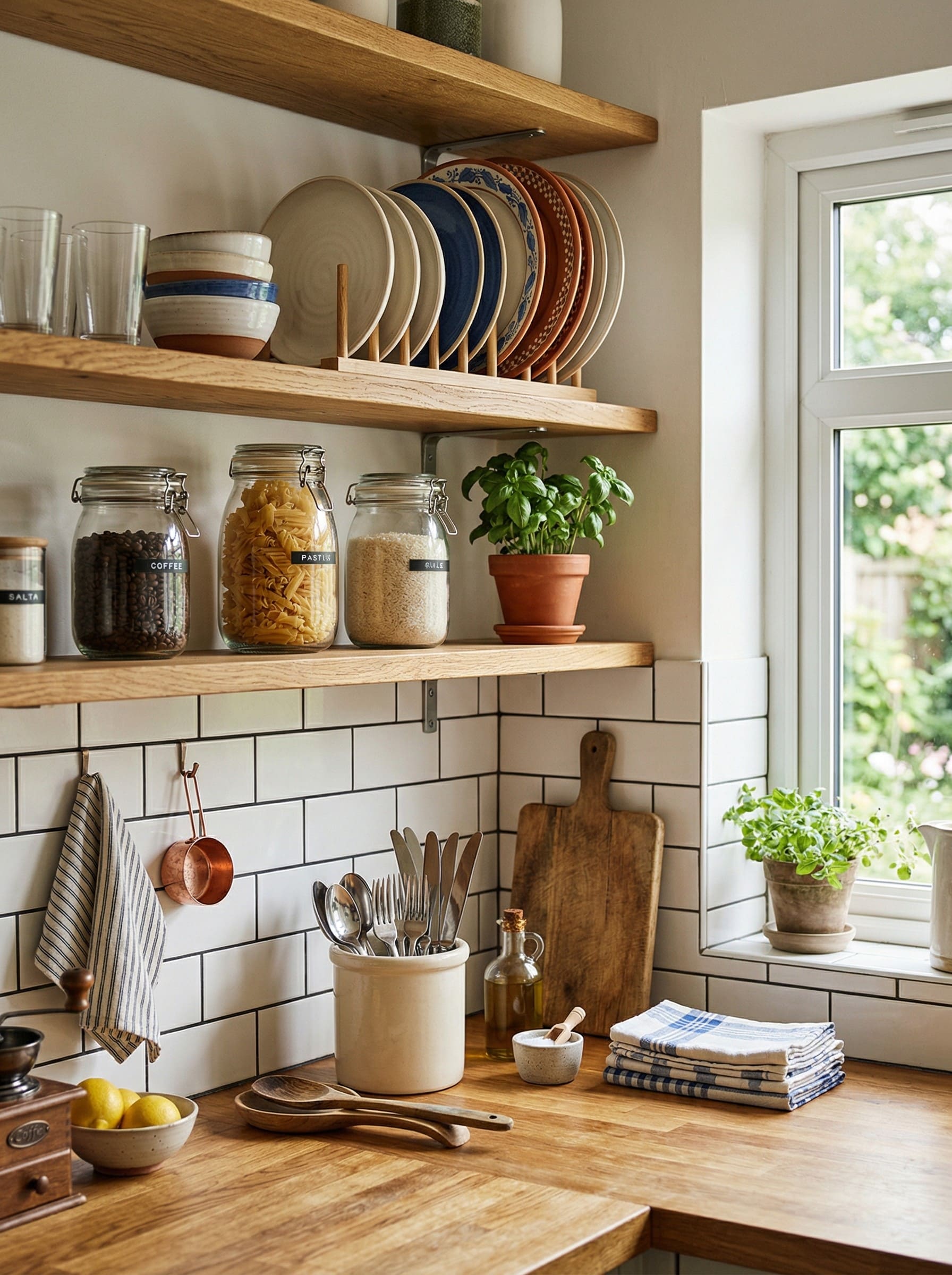
Another important organizing rule is to store items based on how often they are used. It might seem like common sense, but it’s easy to overlook.
Items that you use every day should be stored in the most accessible spots, while those you only need occasionally can be stored in less accessible places.
This simple rule can save you time and effort in the kitchen and help keep your space organized.
For example, your go-to utensils such as spatulas, tongs, and ladles should be kept in a drawer or container near the stove or prep area.
Similarly, your most frequently used pots, pans, and knives should be placed within easy reach of the cooking area.
Store less frequently used items, like specialty appliances (waffle makers, ice cream machines, etc.) or seasonal baking pans, in higher cabinets or less accessible corners.
The idea is to reduce clutter by ensuring that only the most necessary items are within immediate reach, while infrequently used items are stored away.
3. Keep Countertops Clear and Tidy
One of the simplest yet most effective kitchen organizing rules is to keep your countertops clutter-free.
A cluttered countertop can make the entire kitchen feel chaotic and messy, even if the rest of the space is organized. This can create stress, especially when cooking, as it’s harder to work in a crowded space.
Start by removing any unnecessary items from your countertops.
The only items that should be on your countertops are those that are essential to your daily cooking routine, like a coffee maker, cutting board, or a small jar of cooking utensils.
For example, if you have multiple appliances, such as blenders, toasters, or mixers, consider storing some of them in cabinets or drawers.
If you need to leave them out for daily use, try to keep them neat and organized, possibly using trays to group them together.
In addition, clear countertops allow for easy cleaning and make meal prep feel less overwhelming. The more space you have on your counters, the more enjoyable your cooking experience will be.
4. Use Clear Containers for Easy Identification
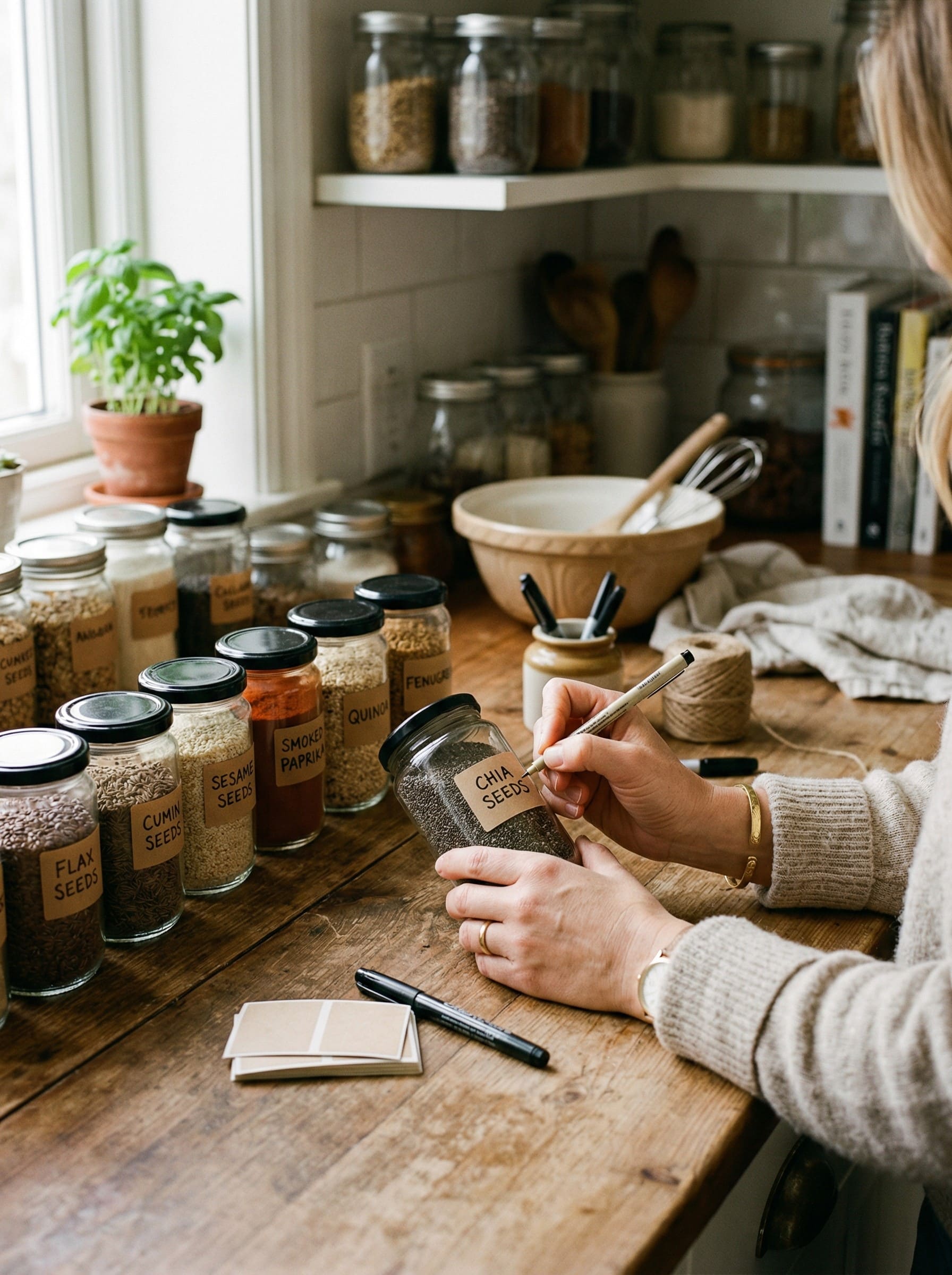
When it comes to pantry and food storage, clear containers are your best friend. They not only help you keep track of what you have, but they also allow you to store food in a way that makes it easier to access and use.
By using clear containers, you can quickly identify what’s inside without having to open and rummage through jars or bags.
Start by transferring dry foods like pasta, grains, and beans into clear glass or plastic containers.
These containers not only make your pantry look more organized but also help prevent food from going stale.
Label each container with the contents and expiration date to avoid confusion.
Additionally, clear containers allow you to monitor your food inventory, so you’re less likely to forget about items that are about to expire.
When it comes to the fridge or freezer, similar storage containers can be used to keep produce, meats, and leftovers fresh while also making it easy to find what you need.
5. Regularly Declutter and Reorganize
An organized kitchen requires regular maintenance. While you may have tidied up your kitchen once, it’s essential to stay on top of the clutter that naturally accumulates over time.
Setting aside a few minutes each day to put things back where they belong can help you maintain an organized space and avoid overwhelming clutter.
In addition to daily tidying, schedule regular decluttering sessions. Take some time every few months to go through your pantry, fridge, and cabinets, removing expired foods and items that you no longer use.
Similarly, check your kitchen tools and gadgets and consider donating or discarding items that are broken or rarely used.
Reorganizing your kitchen every so often can also help you improve efficiency, as you may discover new ways to store items or rearrange zones to suit your cooking habits better.
6. Maximize Vertical Space
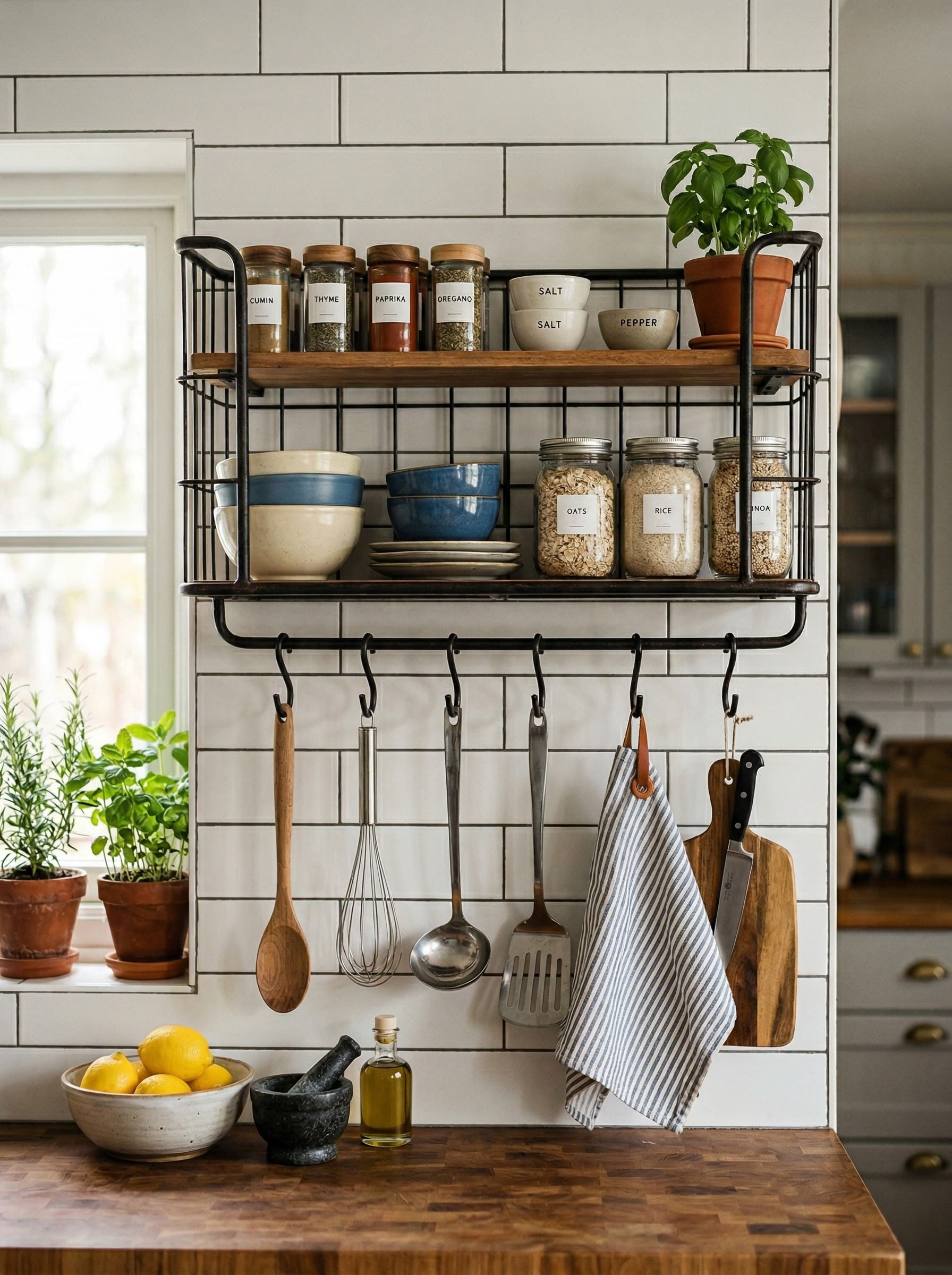
In most kitchens, vertical space is often underutilized. When you think about kitchen storage, the first place you probably think of is your cabinets and drawers.
But there’s a wealth of untapped space in the walls and even the ceiling. By using vertical space, you can store more without sacrificing your countertop or cabinet space.
Install floating shelves above the sink, stove, or countertop to store frequently used items or decorative pieces.
These shelves can hold anything from spice jars to small kitchen appliances, freeing up your work surfaces. Hanging racks or hooks can be used for utensils, pots, pans, or even mugs.
If you have a higher ceiling, consider adding hanging baskets or overhead storage for larger items like pots, pans, or even fruits and vegetables.
Using vertical space will help reduce clutter in lower areas of your kitchen and make everything more accessible.
7. Invest in Drawer Organizers
Drawer organizers are a game-changer for keeping kitchen tools and utensils neat and easy to find.
Without dividers, kitchen drawers can quickly become a mess of tangled utensils, measuring cups, and other small items. But by investing in dividers or drawer trays, you can keep everything in its place.
Consider organizing your kitchen drawers into sections for knives, forks, spoons, and other utensils. Use smaller dividers for items like measuring spoons, tongs, and peelers.
Additionally, you can use drawer organizers for kitchen gadgets, such as can openers, graters, and bottle openers.
When everything has a designated spot, you’ll be able to grab what you need without digging through a drawer of clutter.
8. Keep Trash and Recycling Close by
While this rule may seem simple, keeping your trash and recycling bins close by can greatly improve the flow of your kitchen.
Having designated spaces for waste is essential for maintaining an organized kitchen, and it’s important to have trash and recycling bins in convenient locations so that it’s easy to dispose of waste while cooking or cleaning up.
If space allows, place bins under the sink or in a pull-out drawer near the prep area.
If you have limited space, consider a compact, divided trash can that can separate recyclables and trash in one unit.
Keeping your kitchen waste system organized will help you stay on top of daily cleaning, reduce the chance of overflow, and make it easy to maintain a tidy space.
9. Keep Your Cleaning Supplies Accessible
Cleaning supplies should be easily accessible but stored neatly to avoid clutter. Instead of leaving cleaning products out on the countertop, store them in designated cabinets or shelves.
Keep a cleaning caddy under the sink or in a closet so that you can quickly grab what you need when it’s time to clean.
In addition to standard cleaning supplies like dish soap and sponges, consider keeping a baking soda and vinegar solution or all-purpose cleaner on hand for quick cleanups.
This will save you time, as everything you need will be within arm’s reach and neatly organized.
10. Focus on Regular Maintenance
Lastly, maintaining a clean and organized kitchen is a continual process. It’s not just about getting everything organized once and then forgetting about it.
Make a habit of tidying your kitchen after every meal, wiping down surfaces, and putting items back in their designated spots.
A few minutes of tidying every day prevents clutter from building up and ensures your kitchen remains efficient and enjoyable to work in.
Conclusion
Creating an organized kitchen may seem like a daunting task, but by following these must-know kitchen organizing rules, you can turn your kitchen into a functional, efficient, and stylish space.
From creating dedicated zones for specific tasks to maximizing vertical storage and maintaining a regular decluttering routine, each rule plays a crucial role in ensuring your kitchen runs smoothly.
Not only will an organized kitchen save you time and reduce stress, but it will also create a more enjoyable cooking environment.
By keeping your kitchen tidy and well-organized, you’ll be able to make the most of your space and enjoy the process of preparing meals.