If you read my last story, you probably remember how proud I felt about the onion bed that Ryan and I rescued after the flooding accident. The onions were growing strongly this season, and every time I walked past that raised bed, I felt a little rush of satisfaction knowing how far it had come.
One morning, as I made my usual visit to the garden, enjoying the quiet air before the heat arrived, I noticed something I had not seen before. A long, steady line of ants marched across the soil, far more than the usual few that wander through a healthy garden.
At first, I smiled because I believed they were simply part of the natural balance of the garden, and I didn’t want to disturb them. But when I followed their path and saw that they led straight into the onion bed, I paused long enough to feel a small worry begin to rise.
I knelt beside the raised bed, watching them disappear into tiny openings in the soil, and although I tried to trust my initial thought that ants belong in a well-balanced garden, something about the number of them felt unusual.
I brushed aside a little mulch and saw that the ants were not only moving through the bed but building small mounds right along the roots.
When I Realized the Ants Were Causing Real Trouble
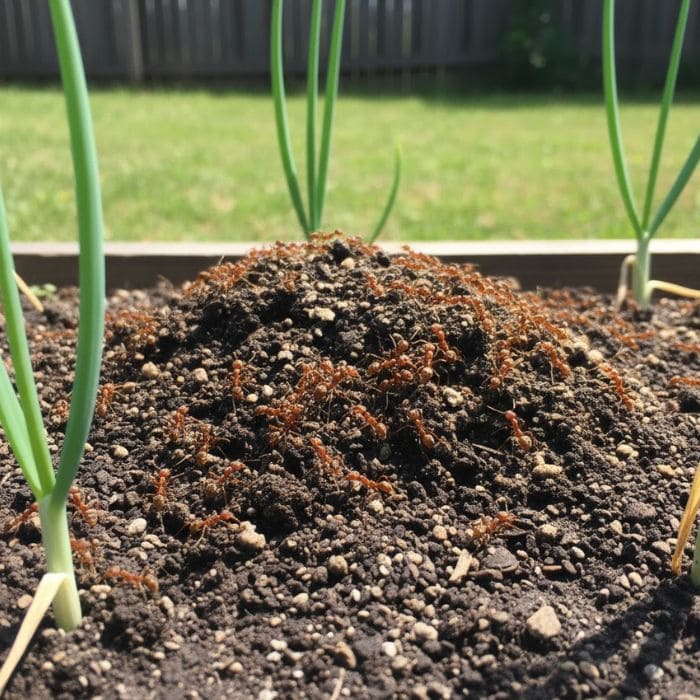
At first, their presence didn’t worry me, but after a few days of checking on the onions, I noticed that the top layer of soil looked disturbed and slightly raised in places where the ants had been tunneling.
As I took a closer look, I saw that their tunnels were drying out the soil faster than usual, causing small pockets where moisture could not reach the roots evenly.
The onions closest to the ant mounds began to lean slightly, as if the base no longer had steady support, and that was when I understood the real problem.
The ants were not eating the onions, but their tunneling was damaging the root zone and weakening the structure of the bed.
A Visit to the Local Market and My First Attempt at a Solution
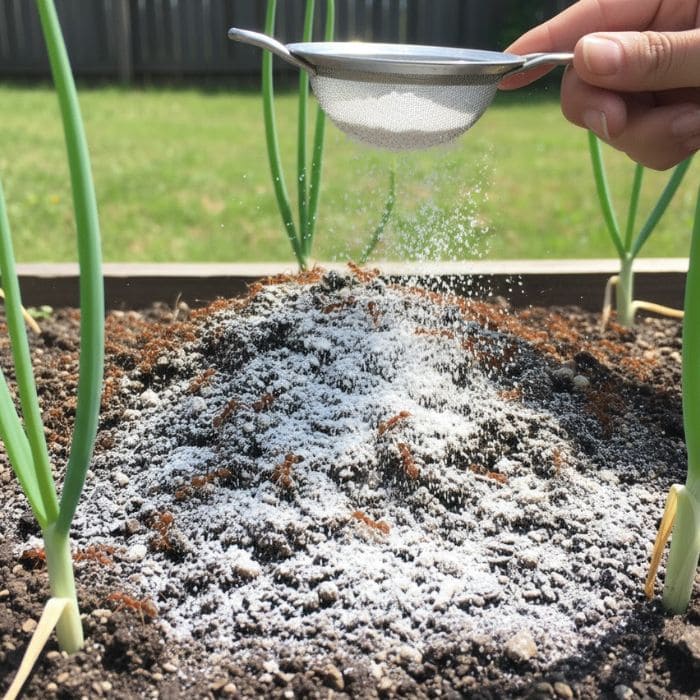
I stopped by a small shop in the local market to ask for advice. The seller, who is known for helping many gardeners in our area, suggested that I try Diatomaceous Earth, explaining that it is often effective for managing ants because it dries out their bodies as they move across it.
I appreciated the suggestion, and since it is considered a natural product, I thought it was worth trying.
When I got home, I sprinkled a thin layer of Diatomaceous Earth around the edges of the raised bed and lightly over the areas where the ants were most active.
I checked the bed again the next morning, but to be honest, nothing changed. The ants simply walked around the powder, forming a new path without seeming bothered by it.
I tried once more the next day, making sure the soil was completely dry before applying it, but even then, it hardly made any difference. It might work well in some gardens, but it didn’t do much for mine.
Choosing a Natural Method That Finally Worked

Since I avoid chemicals as much as possible, I wanted a solution that matched my belief in gentle, natural methods.
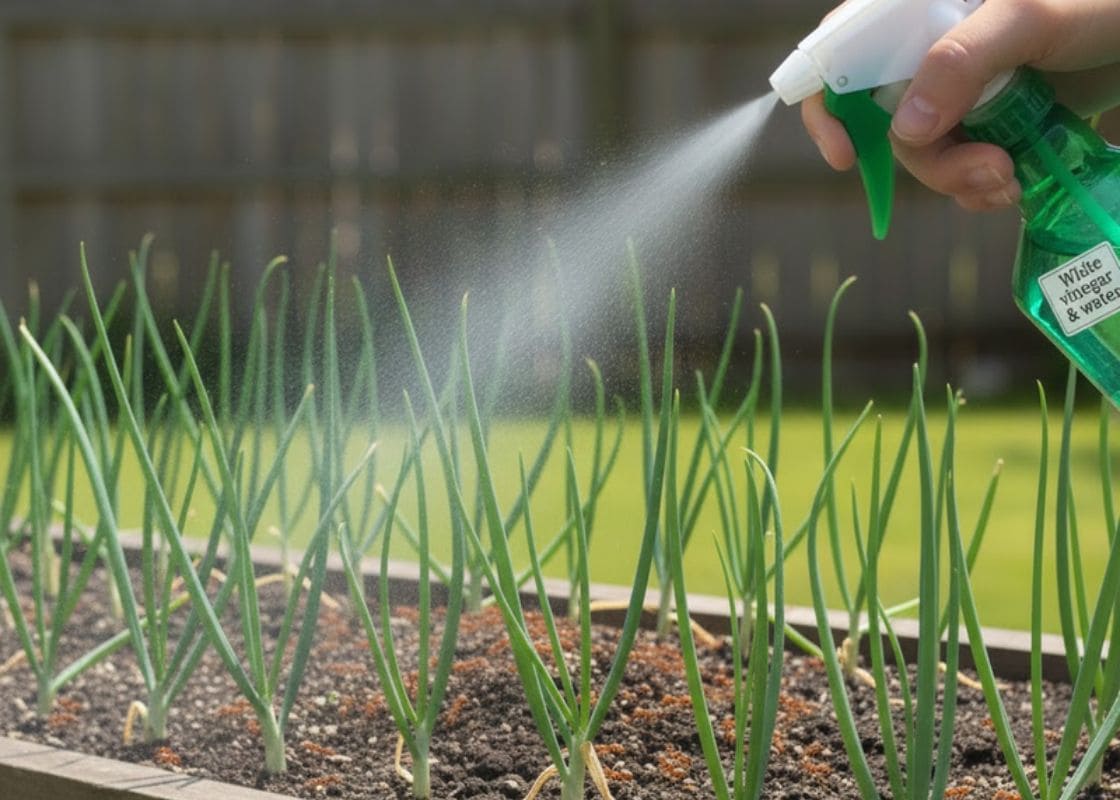
I decided to try a simple mixture that many gardeners recommend: equal parts white vinegar and water. The smell alone usually encourages ants to move elsewhere, and vinegar breaks up the scent trails they follow so they cannot fully rebuild their colony in the same place.
I mixed the solution in a small handheld spray bottle and waited for the late afternoon when the sun was softer. I gently lifted the mulch and sprayed the mixture along the tunnels, around the mounds, and across the edges of the raised bed.
I didn’t soak the soil; I only sprayed enough to disturb the ant activity without harming the plants. The next morning, when I visited the garden, the ants had already begun to relocate, and the tunnels looked abandoned.
I continued the light spraying for three days in a row, making sure I never drenched the bed, and by the end of the week the activity had almost completely stopped.
A Gentle Reminder From the Garden Itself
Seeing the onion bed steady and calm again made me realize how often small problems can hide beneath the surface until something leads us right to them.
The ants didn’t arrive to destroy anything; they simply made use of the space they found, and the garden reminded me that balance sometimes needs a little support.
I’m grateful that I caught the problem early and that I could handle it with a natural method that felt true to my values.