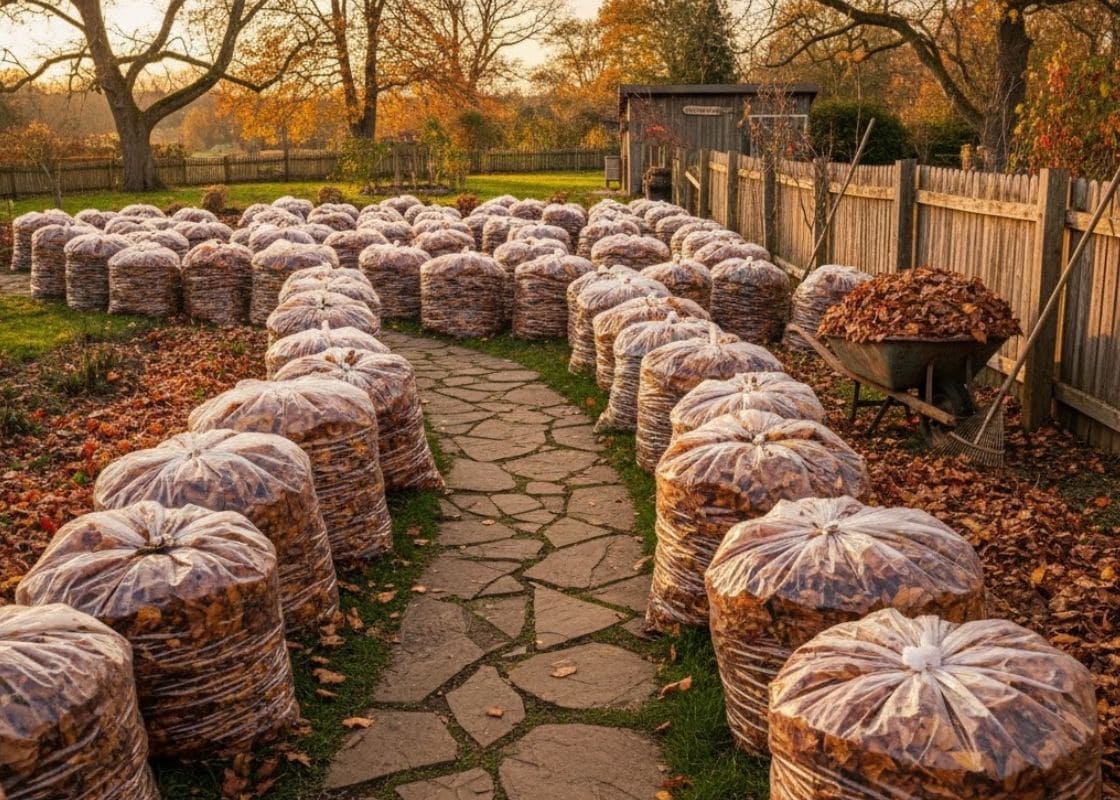
When fall arrives on our farm, it brings color, scent, and that quiet feeling that the season is turning, but it also brings an overwhelming amount of work that most people never see in photos.
Because we grow apples, peaches, cherries, and other orchard trees, and also have large shade trees like oak spread across the land, leaves don’t fall neatly in one place.
They cover everything. Beds disappear overnight, paths vanish, and even areas I cleaned the day before look untouched by morning.
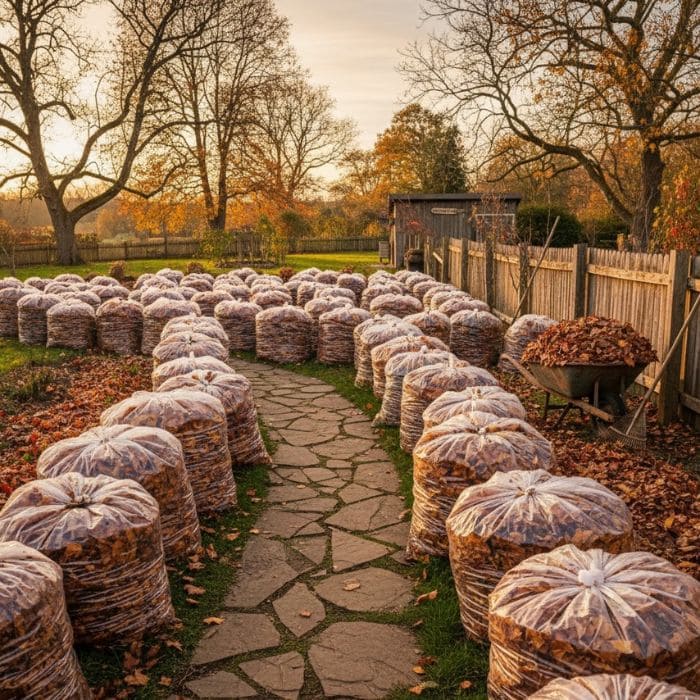
There are days when I collect close to two hundred bags of fallen leaves, and every time I stack them up, I’m reminded how easy it would be to load them into the truck and drive them straight to the landfill, just to make the problem disappear.
I used to do that without thinking. Over time, though, I learned that those leaves are not waste at all.
They are one of the most valuable resources the land gives me each year, and once I started using them differently, fall stopped feeling like a season of cleanup and started feeling like a season of preparation.
1. Turning Fall Leaves Into Long-Lasting Mulch for Trees and Beds
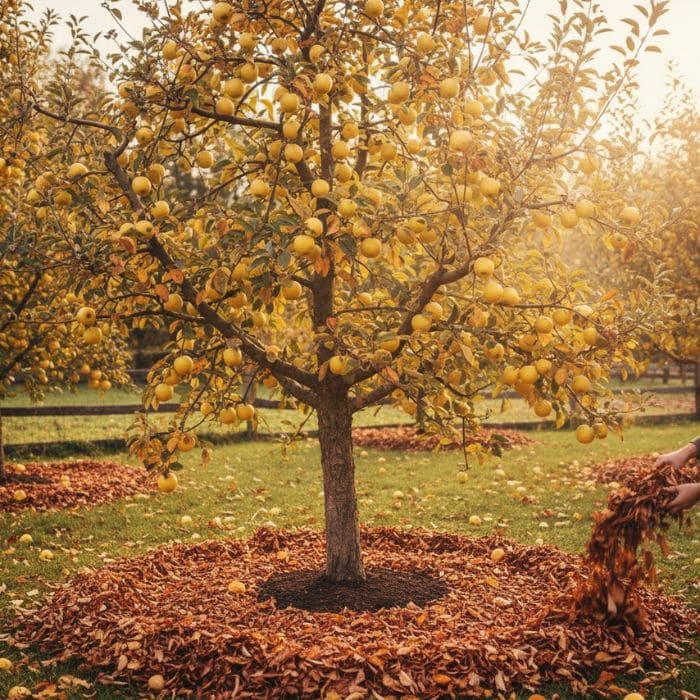
The most immediate way I use fall leaves is as mulch, but I’ve learned that not all mulching is equal. Early on, I simply piled leaves wherever they seemed useful, and sometimes that caused more problems than benefits. Now I apply them with intention.
Around fruit trees like apples, peaches, and cherries, I spread leaves in a wide circle that extends beyond the drip line, while always keeping a small gap around the trunk to prevent moisture buildup and rot.
This layer protects roots from temperature swings during winter, reduces erosion during heavy fall and winter rains, and slowly feeds the tree as the leaves break down.
In vegetable beds, I prefer shredded or partially broken leaves, because whole leaves can mat together and block air and water.
A loose layer, about four to six inches deep, keeps soil moisture stable, suppresses winter weeds, and prevents the soil surface from compacting under snow and rain.
If you notice leaves forming a solid mat, gently fluff them with a rake to improve airflow and prevent mold.
2. Building Leaf Compost That Works With Time, Not Against It
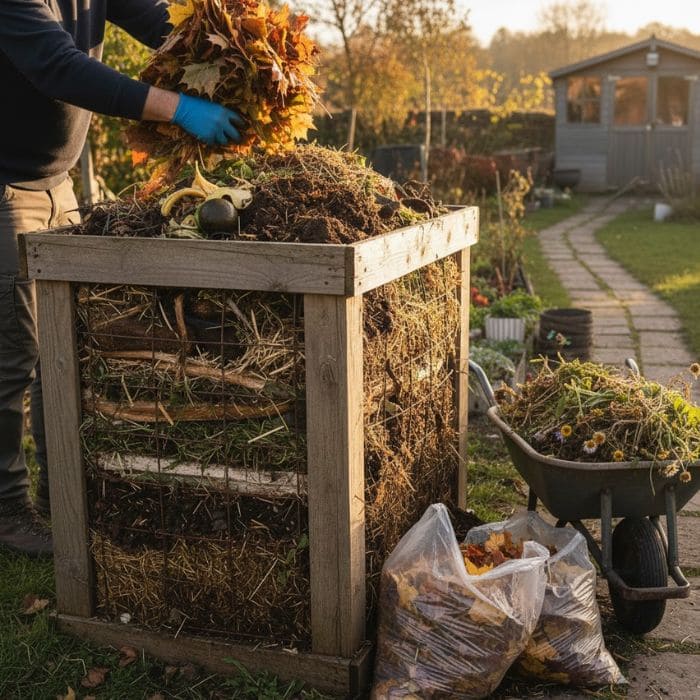
A large portion of our fall leaves goes into compost, but I no longer try to manage leaf compost too tightly. Leaves are naturally high in carbon, and instead of worrying about exact ratios, I focus on layering and patience.
I build large piles using leaves as the main ingredient, adding kitchen scraps, garden trimmings, and occasional manure to balance things out.
Oak leaves, which many people avoid because they break down slowly, are actually excellent compost material when given enough time and mixed with softer leaves from orchard trees.
I turn these piles only a few times a year, usually when the center feels too compacted or when moisture needs to be redistributed. By the next growing season, the pile becomes dark, crumbly compost that smells like forest soil rather than decay.
Notice: Leaf compost takes longer than typical green-heavy compost, so I plan for a one-year cycle and never rush it.
3. Protecting Empty Beds Through Winter With Leaf Cover
One of the most important roles fall leaves play on our farm is protecting soil during winter. Bare soil is vulnerable. Rain compacts it, nutrients wash away, and microbial life slows dramatically.
After harvesting vegetables, I cover empty beds with a thick layer of leaves, sometimes mixed with straw if I have it available. This creates a natural insulating blanket that protects soil structure, supports beneficial microbes, and prevents early spring weeds from gaining a foothold.
When spring arrives, I don’t remove the leaves completely. I pull them aside where I plant and leave the rest to continue feeding the soil as they break down.
My personal tip: If spring feels slow or cold, leaving leaves in place a little longer can help soil warm gradually without drying out.
4. Feeding Soil Life Where I Rarely Dig
Some areas of the farm are meant to stay quiet. Under oak trees, along fence lines, and in less-managed orchard spaces, I leave leaves almost exactly where they fall. These areas mimic a forest floor, and over time, the soil beneath becomes incredibly rich.
Worms thrive under these leaf layers, fungi establish networks, and moisture stays balanced even during dry spells. When I eventually dig near these zones, the soil is noticeably darker, looser, and more alive than areas that are regularly cleared.
This hidden soil life benefits the entire farm, improving nutrient cycling and water retention without any extra work from me.
5. Creating Temporary Paths and Ground Cover During Wet Months
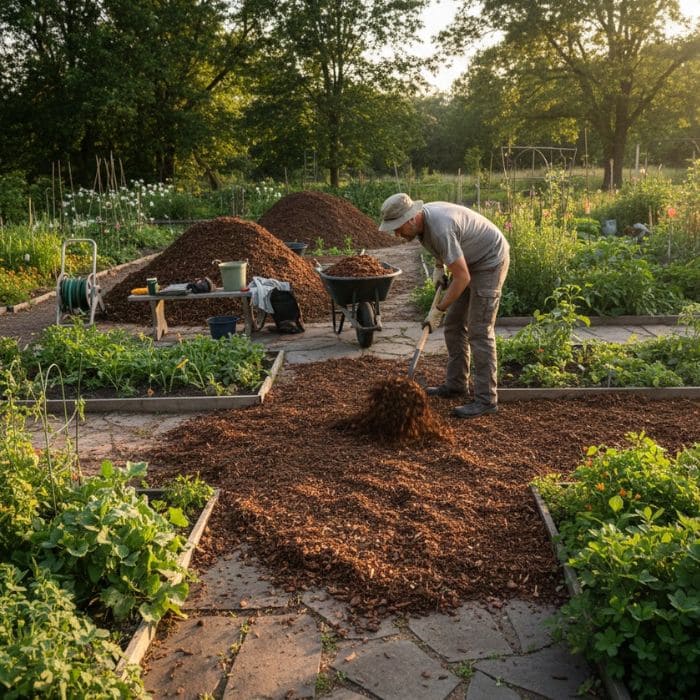
Not all leaves belong in beds or compost piles. In high-traffic areas where mud becomes a problem during fall and winter, I use leaves to create temporary paths.
I spread a thick layer over walkways and between beds, which prevents slipping, reduces soil compaction, and keeps boots from sinking into wet ground. These leaf paths slowly break down over time and can be raked into beds or compost piles when no longer needed.
It’s a simple solution that keeps the farm functional during wet months while quietly returning organic matter to the soil.
I No Longer See Fall Leaves as a Chore
There was a time when fall leaves felt endless and exhausting, something that had to be dealt with quickly before winter arrived.
Now I see them as one of the most generous gifts the land offers. Leaves are free, abundant, and perfectly adapted to the environment they come from.