
When I first started raising chickens, I believed that expanding the flock would be one of the easiest parts of homesteading. You buy new birds, bring them home, and eventually everyone settles in.
After two years of living with chickens every single day, I now understand how unrealistic that thought was.
Chickens are not casual about relationships. They live by structure, hierarchy, and routine, and when something new appears, especially a new bird, the flock notices immediately.
By the time my flock had grown to more than three times its original size, I had already seen enough small conflicts and stress signals to know that introductions deserved careful planning, not rushed decisions.
I began with Isa Brown chickens, which are calm, dependable layers with fairly gentle personalities.
Later, I added white broiler chickens, which are larger-bodied, eat differently, move more slowly, and unintentionally intimidate smaller birds. Mixing those two types without preparation would have been unfair to both sides.
Why I Never Put New Chickens Directly Into the Main Coop
The first rule I now follow without exception is this: new chickens never go straight into the main coop. Doing that forces immediate competition for space, food, and status, and the weakest birds always suffer first.
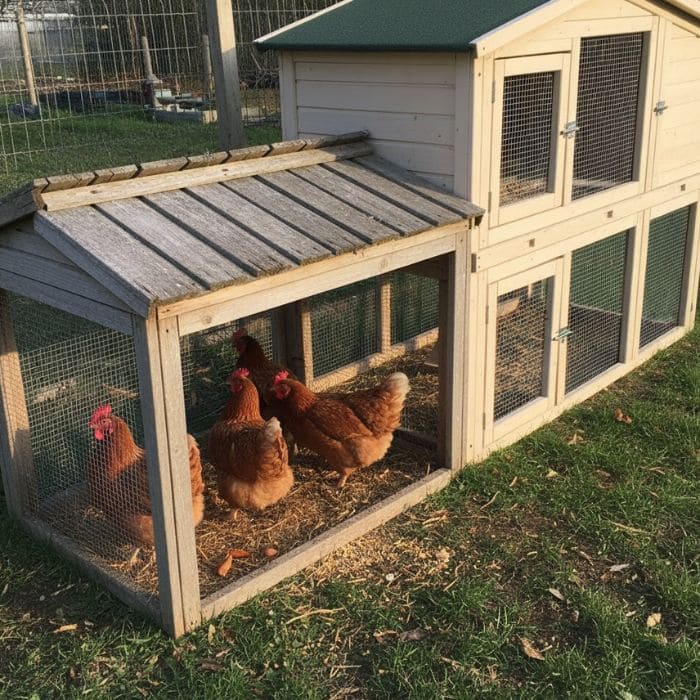
Instead, I used a rabbit coop that we had stored away and never actually used. It turned out to be perfect for introductions.
I placed it right next to the main chicken coop, close enough that the birds could see each other clearly, hear the same sounds, and experience the same daily rhythms, but separated by wire so no one could peck or chase.
The rabbit coop measured about 4 feet long, 2 feet wide, and 3 feet tall, which gave the new chickens enough room to move, stretch, perch, and rest without feeling trapped.
I added clean bedding, a small roost bar, fresh water, and shade, because comfort matters just as much as safety during this stage.
This setup allowed the new birds to adjust to the environment first, which is something many people overlook.
How Long the Separation Period Should Really Last
In most cases, one to two weeks is enough time for chickens to become familiar with each other’s presence. During that period, the existing flock loses interest in the newcomers, and the newcomers learn the daily routine without being overwhelmed.
In our situation, life interrupted the plan. Ryan and I traveled to Europe for nearly a month, which extended the separation far beyond what I usually recommend.
While it didn’t cause harm, I don’t think it improved the outcome either. Chickens adapt quickly, and after a certain point, extra time doesn’t add much benefit.
If you’re home and able to observe behavior daily, one to two weeks is ideal.
Using Food to Build Trust Before Physical Contact
Chickens remember experiences, especially emotional ones. If their first interactions involve stress or competition, acceptance takes much longer. I wanted their first shared experiences to feel neutral or positive.
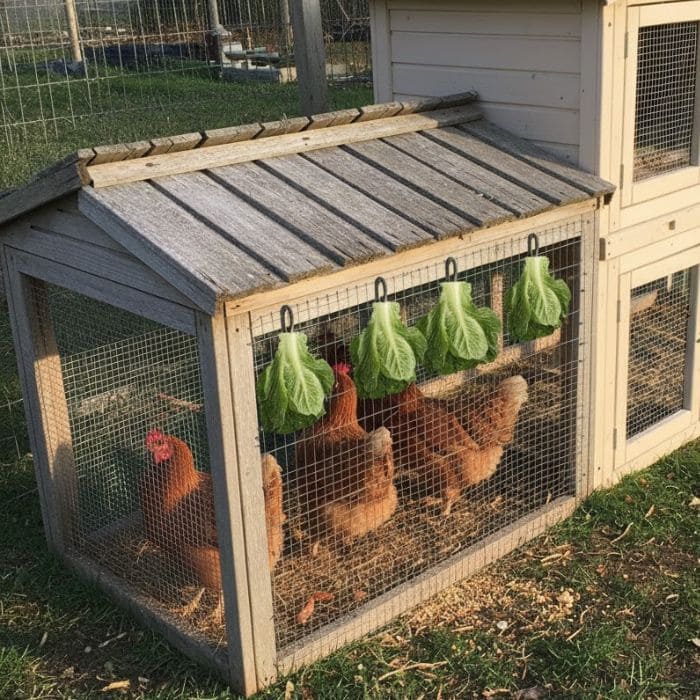
One of the simplest and most effective things I did was hang lettuce heads along the shared fence line, positioning them so both flocks could peck at the same lettuce from opposite sides. This created a calm, shared activity without direct contact.
Instead of posturing or staring aggressively, the birds focused on eating. Over time, I noticed less pacing along the fence and more relaxed body language.
I repeated this occasionally with other treats, but never overdid it. Consistency mattered more than variety.
Supporting the Flock Internally With Diet Supplementation
Stress affects chickens internally before it shows outwardly. During the separation and introduction period, I focused heavily on immune and digestive support.
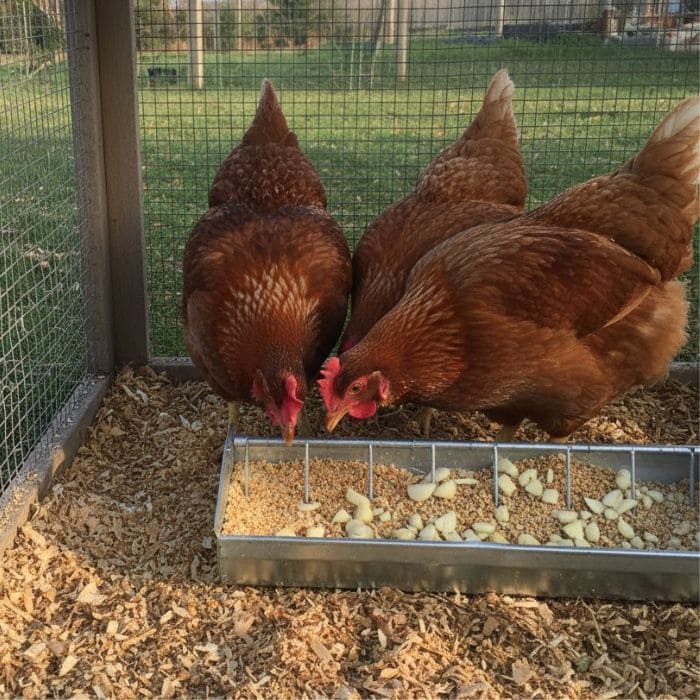
I added finely chopped fresh garlic to the daily feed for both flocks. Garlic supports respiratory health, helps deter internal parasites, and provides mild antibacterial benefits, which are especially important when birds are adjusting to change.
I mixed the garlic evenly so no one bird consumed too much, and within a few days, the chickens accepted it without hesitation.
When garlic wasn’t available, I rotated in oregano, which supports immune function, thyme, which helps respiratory balance, and parsley, which provides minerals and vitamins. I never used all herbs at once as rotation kept things balanced.
Why Nightfall Is the Safest Time to Combine Flocks
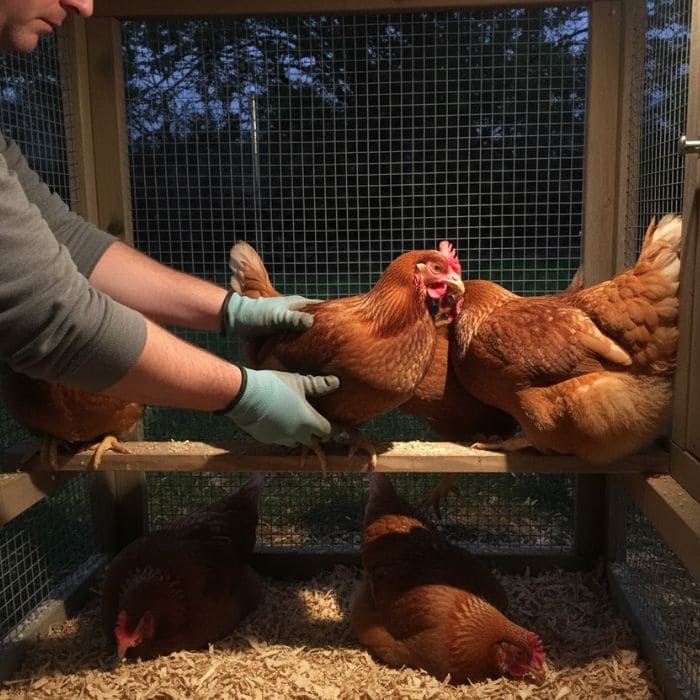
When the time came to move the new chickens into the main coop, I waited until full darkness, when all birds were already settled on the roost bars. Chickens have very poor night vision, which makes them less reactive and less territorial.
I gently lifted the new birds and placed them on the roost bar near but not directly between established hens. I avoided forcing close contact and allowed space where possible.
By the time morning came, they had already spent the night together, which softened the shock of sharing space.
Why Being Present at Dawn Is Non-Negotiable
The most important part of the entire process happens at sunrise. Dawn is when chickens reassert hierarchy, and this is when problems, if they’re going to happen, usually appear.
I was outside early, watching closely. Some pecking happened. Some chasing happened. That is normal and expected. What I watched for were warning signs like repeated targeting, cornering, or refusal to let a bird access food or water.
Luckily, none of that happened. The prior separation, shared food experiences, and calm introduction paid off.
What the Flock Looks Like Now
Today, my mixed flock moves together comfortably. Isa Browns and white broilers share space, food, and routines without constant tension. There is still a hierarchy, but it is stable rather than aggressive.
Egg production remained steady during and after the introduction, which told me stress levels stayed manageable. Feather condition remained good. No birds were injured.
Most days now, you wouldn’t know which chickens arrived first and which came later.