Raising chickens has taught me many things, but one of the most important lessons is that even the healthiest flock will face problems at some point.
Chickens live outdoors, interact constantly, and hide discomfort incredibly well, so by the time something looks wrong, it has often been developing quietly for days.
Over the years, I’ve dealt with swollen feet, limping, dirty vents, egg-related stress, heat exhaustion, minor infections, and birds that simply didn’t behave like themselves without an obvious reason.
When you spend time with your flock every day, you begin to recognize subtle changes. A hen that stays behind when others rush to food, a bird that stands slightly puffed up, or one that chooses to sit rather than scratch are all small signs that something needs attention.
One of the first things I reach for in those moments is not medicine or chemicals, but something simple that has proven its value again and again: an Epsom salt bath.
How I First Came Across Epsom Salt Baths for Chickens
I didn’t grow up knowing about this method, and I didn’t learn it from a book. I first discovered Epsom salt baths late one evening, worried about a hen that suddenly refused to put weight on one leg.
I searched online, reading through forums, small homesteading blogs, and shared experiences from people who had raised chickens far longer than I had.
What stood out was how often the same advice appeared, repeated not as a miracle cure, but as a gentle first step. At first, I was unsure as it seemed almost too basic. But when you raise animals, you quickly learn that simple does not mean ineffective.
After using Epsom salt baths many times since then, I consider them a core part of my chicken care routine whenever a bird shows signs of discomfort.
Why Epsom Salt Works in Simple Terms
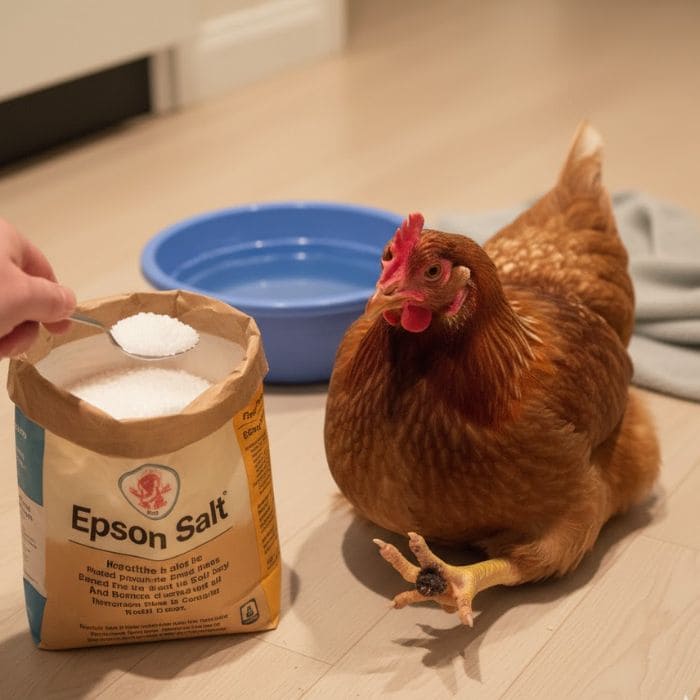
Epsom salt is magnesium sulfate, and when dissolved in warm water, it creates a soak that helps relax muscles, reduce inflammation, soften tissue, and improve circulation.
For chickens, this combination is especially helpful because many common issues involve swelling, stiffness, or stress rather than deep infection.
Warm water increases blood flow, which helps the body begin healing naturally, while magnesium supports muscle relaxation and can ease tension. The soak also softens the skin and scales on the feet, making it easier to clean wounds, remove debris, or assess conditions like bumblefoot.
Just as importantly, the bath forces the chicken to rest. Sick or uncomfortable birds often keep moving, even when they shouldn’t, and the soak creates a calm pause that allows the body to reset.
The Exact Recipe I Always Use

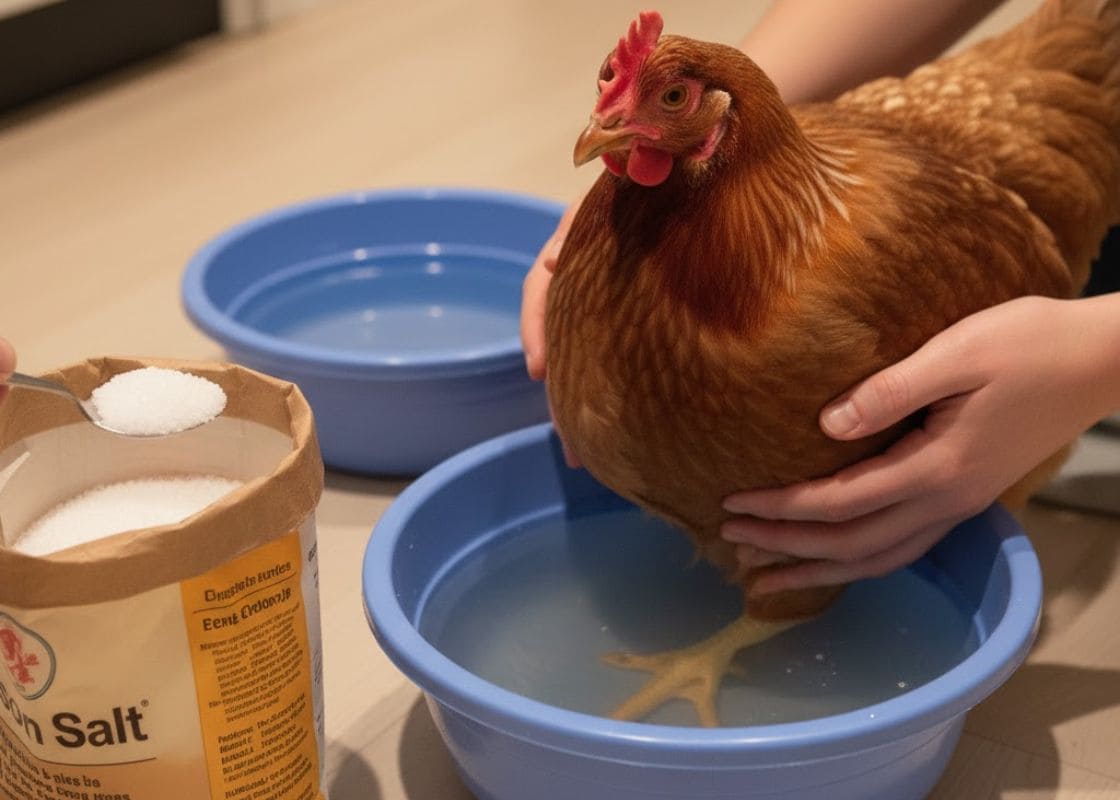
I use ½ cup of Epsom salt per gallon of warm water, mixed thoroughly until fully dissolved.
The water should feel comfortably warm to your hand, similar to bathwater, never hot, because chickens are sensitive to temperature changes and can become stressed if the water is too warm.
I soak the chicken for 10 to 15 minutes, depending on her condition and how relaxed she becomes during the process. I never exceed that time, because longer soaking can chill the bird or cause unnecessary stress.
How I Set Up the Bath to Reduce Stress
Preparation matters as much as the soak itself. I always choose a quiet, enclosed area away from the rest of the flock, because noise and movement increase stress.
I use a clean bucket or shallow tub that allows the affected area, usually the legs, feet, or lower body, to be submerged while keeping the chest, wings, and head safely above water.
I support the chicken gently the entire time, keeping one hand under her body so she never feels like she’s floating or slipping. Chickens respond strongly to calm handling, and I’ve noticed that if I stay relaxed, they settle much more quickly.
Most birds resist for the first minute or two, then slowly relax. Some close their eyes. Others lower their wings slightly.
Situations Where I Use Epsom Salt Baths Most Often
I don’t use Epsom salt baths for every issue, but there are specific situations where they’ve been especially helpful.
I use them for swollen feet or joints, early signs of bumblefoot, minor leg or foot injuries, egg-binding stress, dirty or irritated vent areas, and general lethargy when no obvious injury is visible.
I’ve also used them after extreme heat, long transport, or bullying incidents, when a bird clearly needs relief and rest.
The bath doesn’t fix everything, but it often reduces swelling, improves movement, and helps me assess what’s really going on once the bird is calmer.
What I Do Immediately After the Bath

After soaking, I lift the chicken out carefully and wrap her in a clean, dry towel.
Drying is not optional, especially in cooler weather, because wet feathers can cause chilling quickly. I pat gently rather than rubbing, paying attention to the feet, vent area, and lower feathers.
Once dry, I usually keep the chicken separated from the flock for a short period in a warm, quiet space with fresh water and easy access to food. This gives her body time to absorb the benefits of the soak without being pushed back into normal activity too quickly.
If the issue involves the feet or skin, I inspect the area carefully after soaking. Softened tissue makes it easier to clean, apply ointment, or identify problems that were hidden before.
How Often I Repeat the Treatment
For mild issues, one soak is often enough to see improvement within a day. For swelling or persistent discomfort, I may repeat the soak once daily for two to three days, watching closely for changes in appetite, posture, and movement.
If there is no improvement or if symptoms worsen, I stop and reassess. Epsom salt baths are supportive care, not a replacement for proper diagnosis when something serious is happening.
I Keep Coming Back to This Simple Method
Raising chickens means accepting that things will go wrong sometimes, even when you care deeply and do your best.
The difference lies in how you respond. This simple bath has helped me support my flock through many small illnesses and discomforts, often reducing pain, stress, and recovery time.
And every time I see a hen relax into that warm water, I’m reminded that good animal care doesn’t always come from complicated solutions, but from understanding, patience, and a willingness to act early and gently.