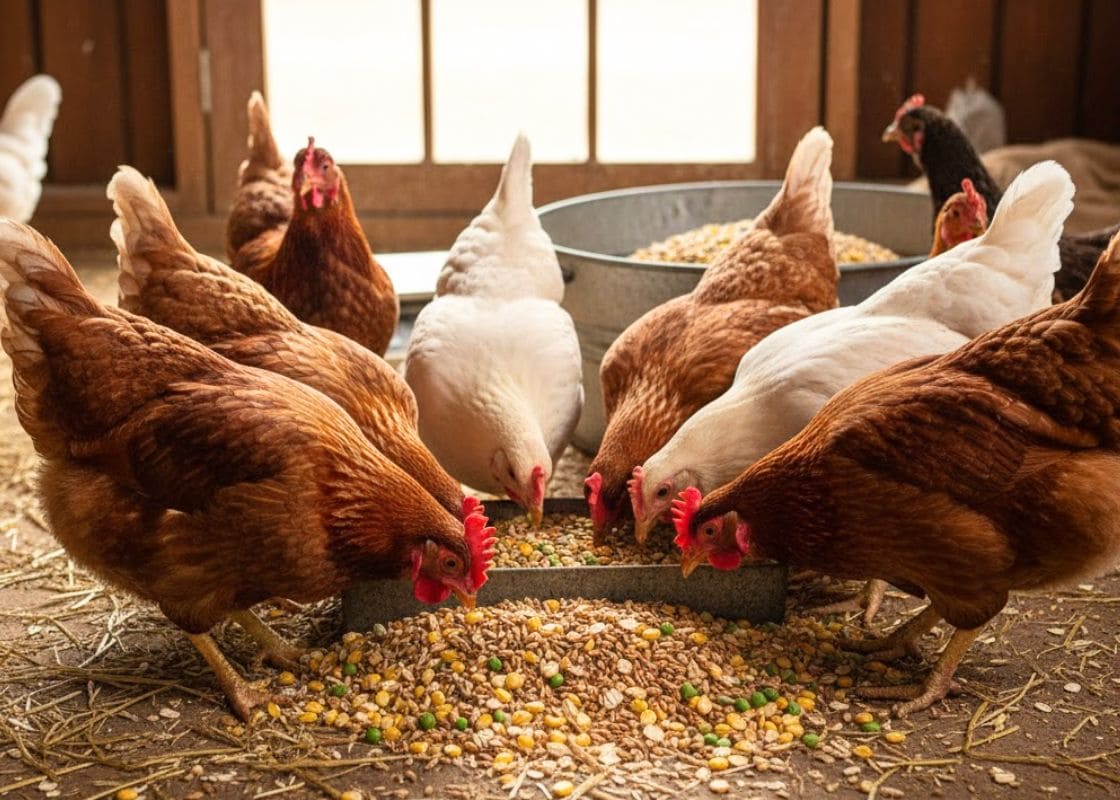
There was a period during and after the COVID-19 pandemic when eggs stopped feeling like a small, ordinary grocery item and started feeling unpredictable.
I remember walking through supermarkets two years ago, seeing egg prices posted and then changed again weeks later. At the beginning of that year, eggs were still relatively affordable, around $2.50 per dozen, but as avian flu spread and supply chains tightened, prices climbed quickly.
By the end of the year, it wasn’t unusual to see eggs priced between $5 and $6 per dozen, sometimes higher, and often with limits on how many cartons you could buy.
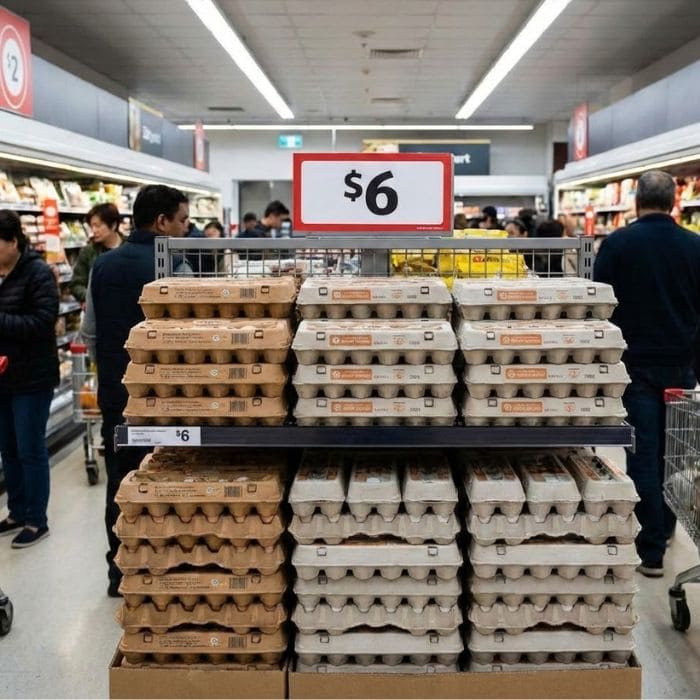
What unsettled me wasn’t just the price. It was the inconsistency. Some weeks shelves were half empty. Other weeks, the cartons looked old, shells thin, yolks pale. Eggs are something we eat almost every morning, and suddenly they felt unreliable.
That was when homesteading stopped being a long-term dream and started feeling like a practical direction we needed to move toward.
Why Chickens Made Sense for Our Farm
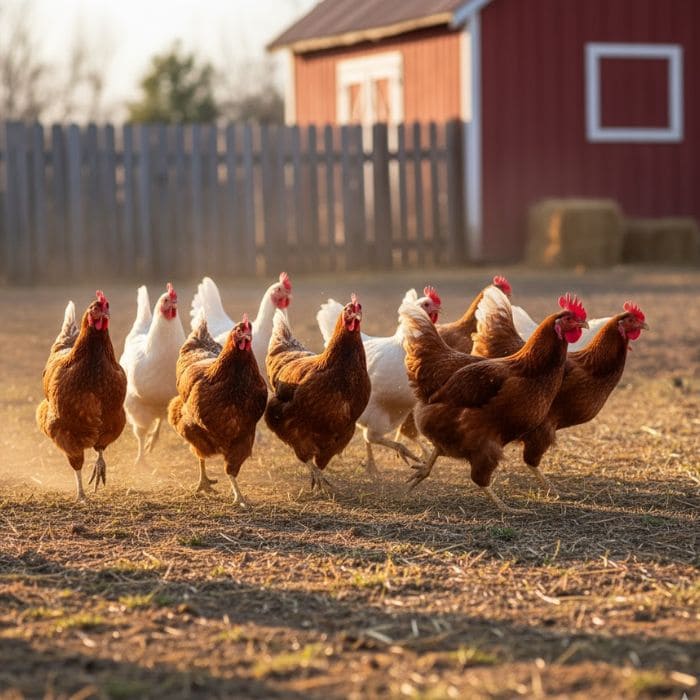
When we moved here and began shaping the farm, chickens felt like the most reasonable place to start. Eggs are versatile, filling, and deeply woven into our daily routine. Breakfast at our house almost always includes eggs in some form, and having a reliable source felt grounding.
I started small on purpose. I raised six chickens at first, thinking that was manageable while I learned. One didn’t survive, and that loss stayed with me longer than I expected.
It wasn’t dramatic, but it made me realize how much I didn’t know yet about temperature, stress, and daily observation. I slowed down after that and paid closer attention.
Over time, the flock grew naturally as my understanding improved. Today, we keep just over twenty chickens, enough to meet our needs without overwhelming the space or the work required to care for them properly.
The Problem I Didn’t Expect to Be So Important: Feed
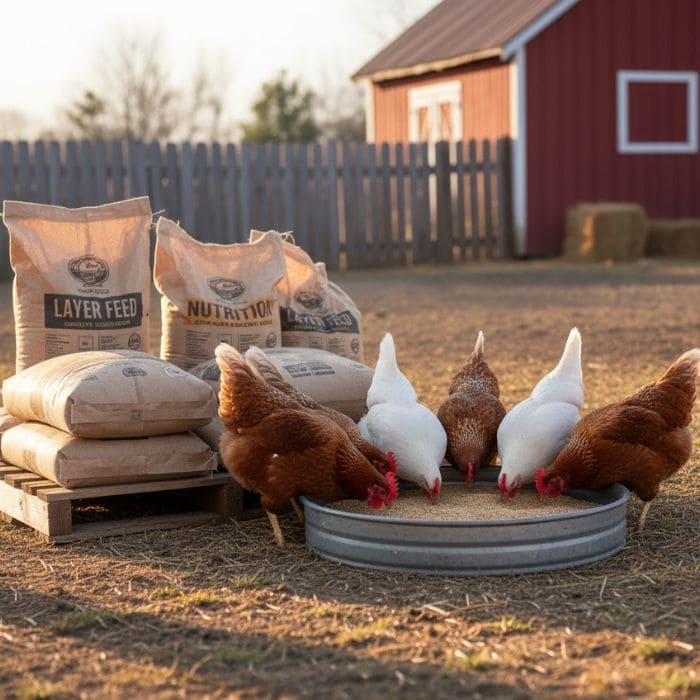
What surprised me most about raising chickens wasn’t the coop, the predators, or even the weather, it was feed. Feed turned out to be the single biggest factor affecting egg quality, consistency, and overall flock health.
At first, I relied on packaged chicken feed from farm stores and large retailers. The bags looked reassuring, labeled “layer feed” or “complete nutrition,” and I trusted that meant everything was covered. But gradually, I started noticing patterns that didn’t sit right with me.
Egg production fluctuated even when daylight was consistent. Shells varied, some strong, others fragile enough to crack in my hand. Yolks were often pale, almost washed out.
A few hens developed loose droppings, and some feathers lost their shine. Nothing was severe enough to be alarming, but taken together, it felt like something was missing.
When I looked more closely at the ingredient lists, I saw fillers, vague grain blends, and protein sources that weren’t clearly identified. Some feeds relied heavily on soy or processed byproducts, and others smelled stale long before the bag was empty.
Why I Started Making My Own Organic Chicken Feed
If eggs were going to be part of our food security, then the feed needed to be something I understood completely. I wanted to know what went into it, where it came from, and how it affected the chickens over time.
After researching, adjusting, and testing, I settled on a grain-based organic feed blend that balanced energy, protein, fiber, and minerals using whole ingredients.
This recipe makes 25 pounds of feed, which works well for my flock size without sitting too long in storage. Here is the exact blend I use:
- 7.5 pounds of corn for energy and steady laying
- 7.5 pounds of peas as a plant-based protein source that supports egg production
- 5 pounds of wheat for carbohydrates and essential nutrients
- 2.5 pounds of oats to add fiber and support digestion
- 2.5 pounds of barley for gut health and variety
- 0.2 ounces of fish meal to supply essential amino acids and deepen yolk color
- 1 ounce of diatomaceous earth, used carefully to support internal health
How I Prepare and Store the Feed
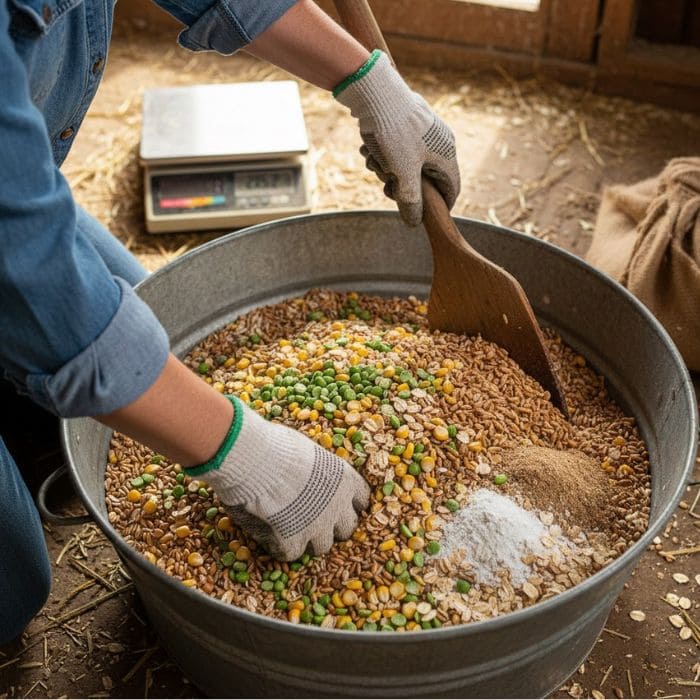
I mix everything in a large, clean container, taking time to blend thoroughly so no single grain settles at the bottom. Chickens are selective eaters, and uneven mixing leads to wasted nutrition.
Once mixed, I store the feed in sealed containers in a cool, dry place, protected from moisture and rodents. I don’t make more than I can use within a reasonable period, because freshness affects both smell and nutrition.
Supplements I Always Offer Separately
Even with a complete feed, I never skip supplements. Oyster shells are always available free-choice so hens can regulate their own calcium intake, which directly affects shell strength.
Grit is equally important, especially when feeding whole grains, because it allows chickens to digest food properly. I’ve noticed that when grit is missing, feed efficiency drops and droppings change almost immediately.
Optional Practices That Made a Noticeable Difference
Two practices improved results further once the basic feed was established.
Occasionally, I sprout grains, especially during colder months when fresh greens are limited. Sprouted grains are easier to digest and visibly excite the flock.
I also ferment the feed from time to time, which improves nutrient absorption and reduces waste. Chickens eat slightly less but seem more satisfied when fermented feed is part of the routine.
Whenever possible, I source grains locally. It lowers cost, supports nearby farmers, and gives me confidence in ingredient quality.
The Results I See in Egg Quality and Quantity
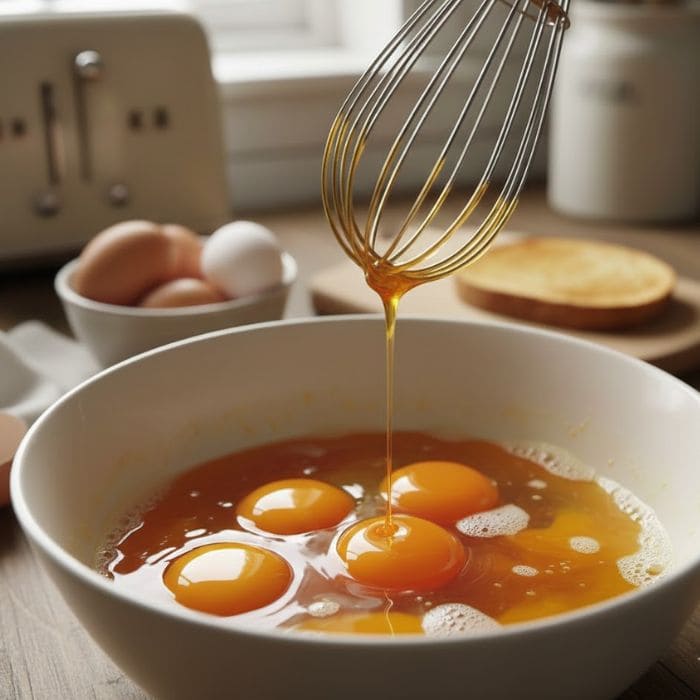
The change wasn’t instant, but it was consistent. Egg production stabilized, even during seasonal transitions. Shells became thicker and more uniform. Yolks deepened to a rich golden color instead of pale yellow, and the eggs held their shape better when cooked.
On average, the flock now produces 14 to 18 eggs per day, depending on weather and daylight. That comfortably supplies our household, with extra to share. The eggs store well, taste fuller, and feel more substantial in every way.