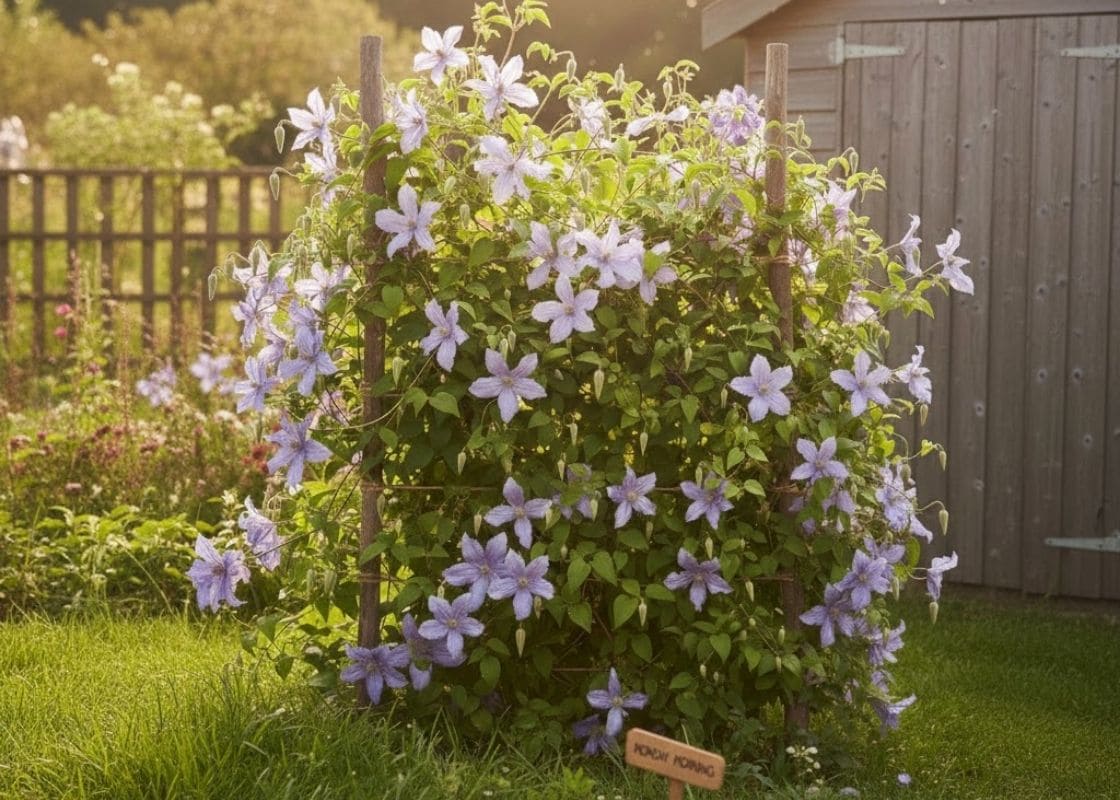
For a long time, I believed trellises belonged to other gardeners. The confident ones, or the ones with perfectly straight rows, matching tools, and gardens that looked planned instead of slowly figured out.
In my head, a trellis was always something expensive and complicated, made of metal panels or carefully cut wood, the kind of project that required measuring twice and still getting it wrong.
So I avoided them. I let my clematis grow the way it wanted, trailing sideways, leaning on nearby plants, grabbing the fence when it could.
The Morning I Finally Changed My Mind

Last week, on Monday morning, I stood in the garden longer than usual, coffee cooling in my hand while I watched the clematis sway in the breeze.
A long stem had fallen forward overnight, resting awkwardly on the soil. I lifted it gently and felt how flexible and eager it was, like it was searching for something to hold on to.
After that I realized the trellis just needed to give the plant a direction.
Building the Simplest Trellis I Could Imagine
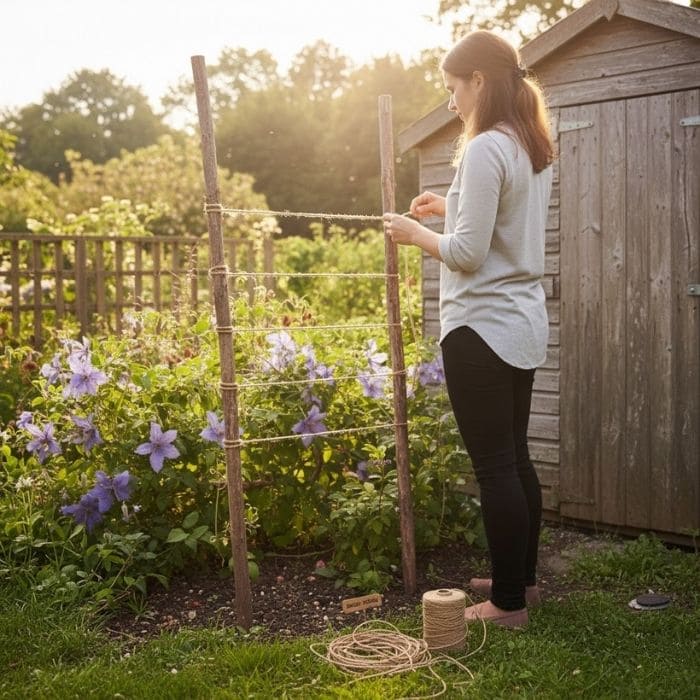
I walked to the shed and used what I already had. Two wooden stakes, weathered and slightly uneven, and a roll of garden twine that had been sitting untouched for months.
I pushed the stakes into the soil about a foot apart, pressing them down until they felt steady in my hands. Then I tied the twine between them, starting close to the ground and working upward.
Each line was spaced roughly six inches apart, not because I measured, but because it looked right to my eyes. The knots were simple and the twine was not pulled tight.
The whole thing took maybe twenty minutes, including the time I stopped to look at it from different angles.
Helping the Clematis Find Its Way
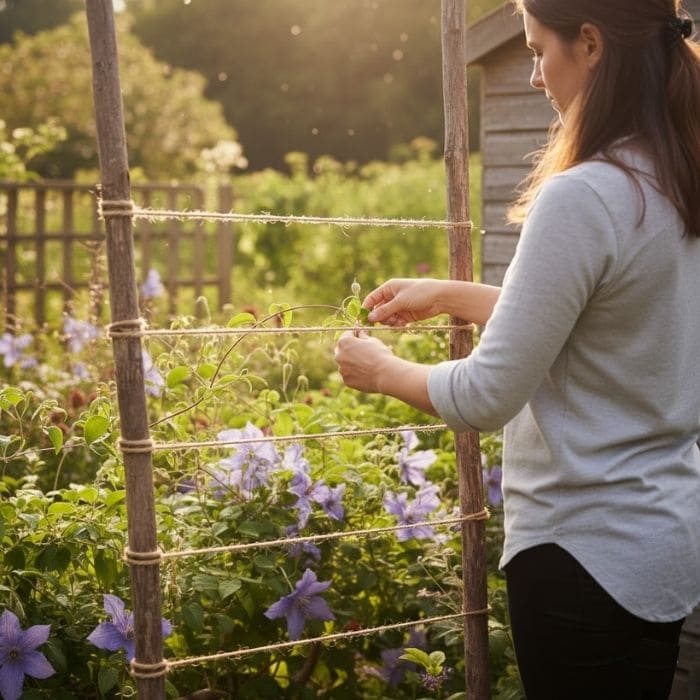
I gently guided a few stems toward the twine, looping them loosely so they could move freely. Clematis does not want to be forced. It wants something light to wrap around, something that lets it decide how to climb.
I tied nothing tightly. I told myself this was not about control, but about invitation.
Within days, the plant responded. Thin tendrils curled around the twine as if they had been waiting for it all along.
Each morning, I noticed small changes. A stem that had leaned left now climbed upward. New growth appeared where there had been hesitation before. It felt like watching confidence grow, leaf by leaf.
How the Garden Started to Feel Different
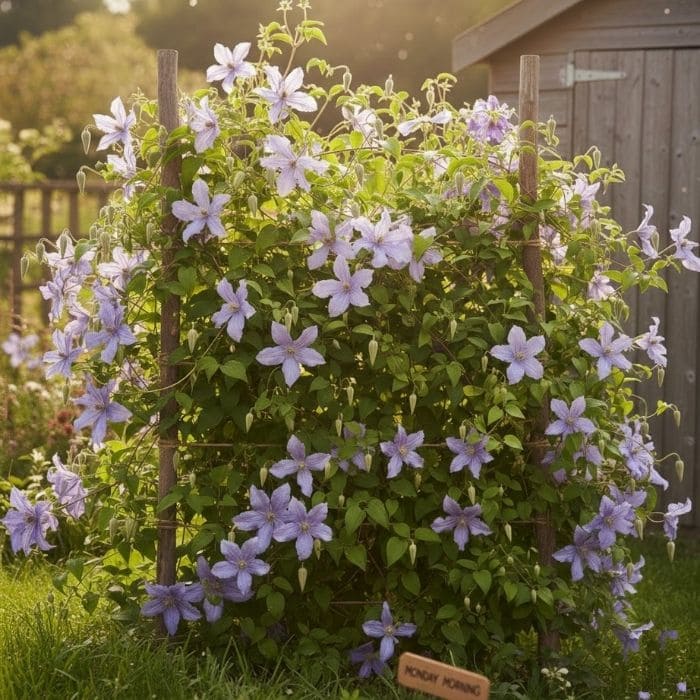
As the clematis climbed, the whole corner of the garden changed. It felt taller and more intentional.
The flowers appeared higher, catching better light, and the leaves looked healthier and more relaxed. I found myself lingering there longer than usual, not to fix anything, but simply to watch.
There is a quiet happiness that comes from giving a plant exactly what it needs without overcomplicating things.
The trellis gave the clematis structure, but it also gave me a sense of calm. Gardening with a trellis turned into something deeply satisfying, not because it looked impressive, but because it felt right.
A Few Small Things That Made a Big Difference
I placed the trellis where the clematis could enjoy morning sun and gentle afternoon shade, which helped the blooms last longer. I added a light layer of mulch at the base to keep the roots cool, something clematis truly appreciates. Other than that, I mostly stayed out of the way.
The biggest lesson was learning when to stop doing. Once the trellis was there, the plant knew what to do better than I did.