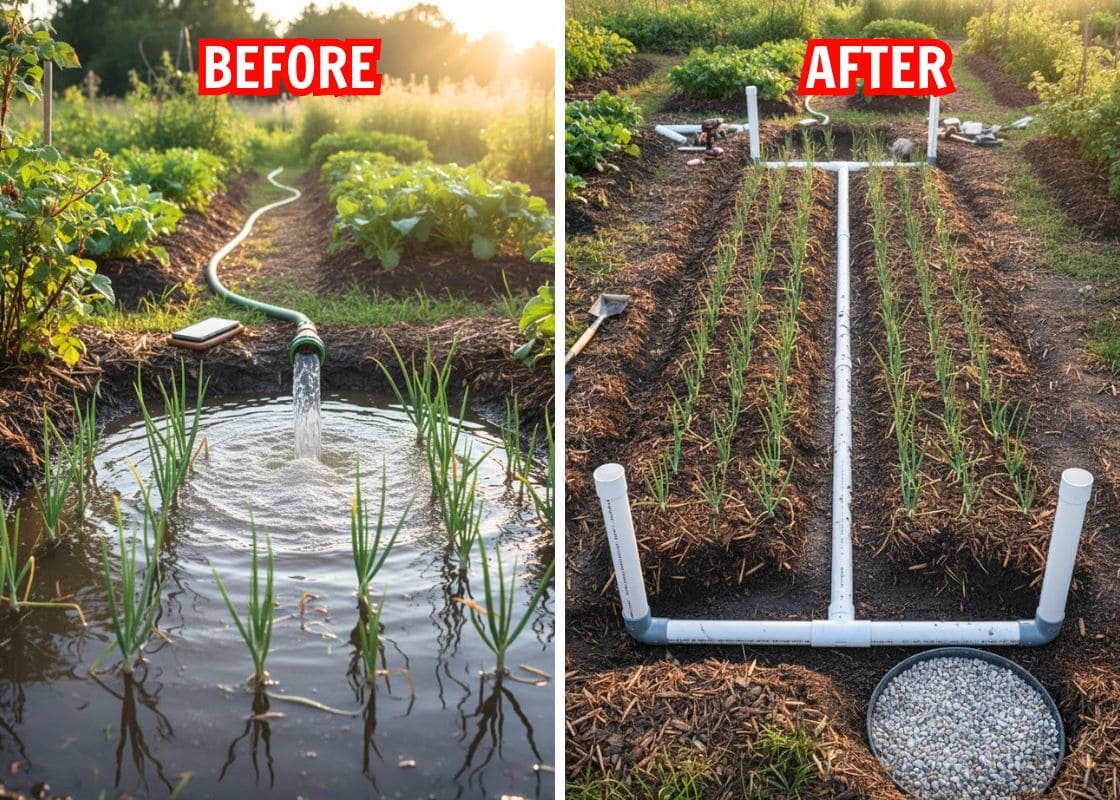
When we planted our first onion bed on the farm, I felt strangely proud of it. Maybe it was the promise of those neat rows or the memory of watching my grandmother braid onions in her kitchen, but something about caring for onions made me feel connected to the past in a deeper way.
I checked the soil every morning, watched for new green shoots, and felt myself settle into a rhythm that only gardening can create.
One afternoon, after watering the berry patch, I placed the hose down for a moment to answer a message on my phone.
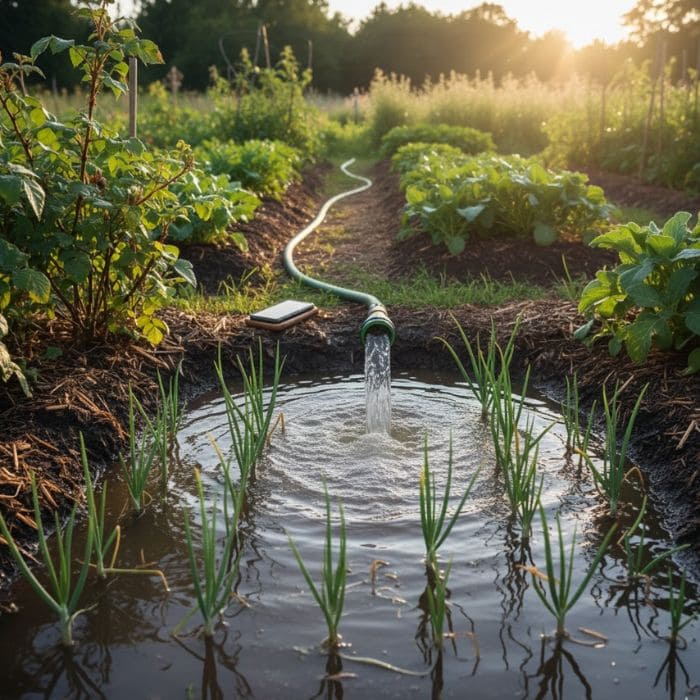
When I returned, I remembered stepping inside the house for just a minute, assuming nothing dramatic could happen in such a short time. But when I came back outside, the quiet drip had turned into a steady overflow, and the hose had rolled slightly downhill and settled directly into the onion bed.
Water pooled across the surface like a shallow pond. My beautiful onions, the ones I had just thinned and mulched, were half submerged.
Searching for a Solution Before Things Got Worse
Panic turned into problem-solving faster than I expected. I grabbed my phone again, but this time to search for ideas.
I typed in things like “flooded onion bed fix,” “emergency drainage for gardens,” “drainage DIY,” and within minutes I found a video explaining how a simple, low-cost PVC pipe system could pull excess water away from beds.
The concept was straightforward: use drilled PVC pipes inserted vertically into the soil to create a pathway for water to escape downward, then connect them to a buried horizontal pipe that channels water away from the bed. It sounded almost too simple, but it felt like something we could try immediately.
I showed the idea to my husband, Ryan, and without hesitation he grabbed the keys to the shed and said, “We can do this today.”
Gathering the Materials
We collected everything we needed from the barn and the hardware store in town:
- One 10-foot PVC pipe, 2-inch diameter
- One 6-foot PVC pipe, 1-inch diameter
- PVC elbow connector, 2-inch
- Hand drill with ¼-inch drill bit
- Shovel
- Level
- Landscaping fabric scraps
- Gravel (about ½ a bucket, roughly 12-15 pounds)
The measurements were important, especially the 2-inch pipe, because narrower pipes can clog easily in clay soil. We learned that detail from a gardening forum while drinking cold tea over the kitchen table.
Building the Drainage System
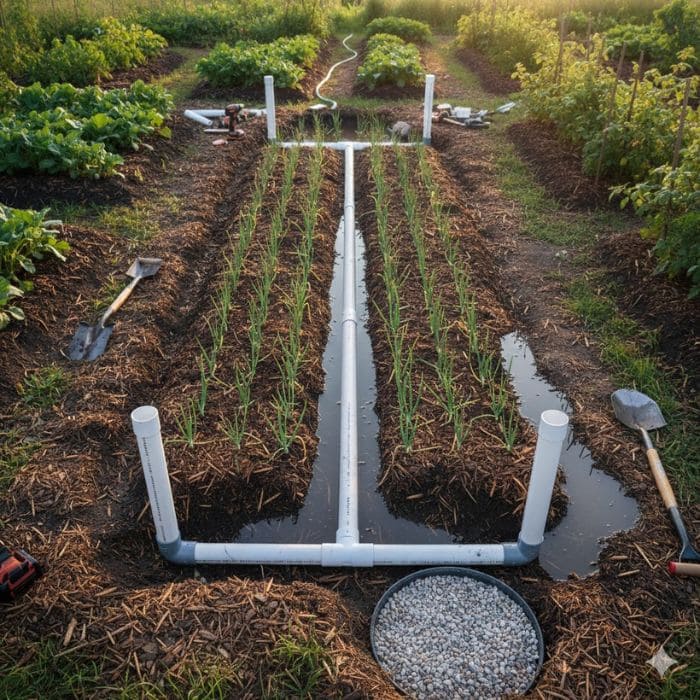
We started by drilling holes into the long 10-foot pipe. Ryan spaced the holes about 2 inches apart on all sides so the water could enter from anywhere. We created three vertical wells by cutting three pieces of the smaller 1-inch pipe into 18-inch sections.
These vertical pipes were the key. They acted as little escape routes for the water beneath the onion bed, guiding excess water downward and into the main horizontal pipe. Each vertical pipe got about 12 small drilled holes, mostly near the bottom half.
We dug three narrow holes with one at each end of the bed and another in the center and inserted the vertical pipes. Then we buried the horizontal pipe along the outer edge of the bed, connecting it to each vertical well using the elbow connector.
We gave the pipe a very slight angle, about ½ inch drop for every 4 feet, so gravity could do its job and move water away.
At the very end of the drainage line, we dug a shallow pit and filled it with gravel to create a place for the water to disperse. We covered everything with soil, laid a thin layer of mulch, and stepped back hoping the system would work.
What Happened Next
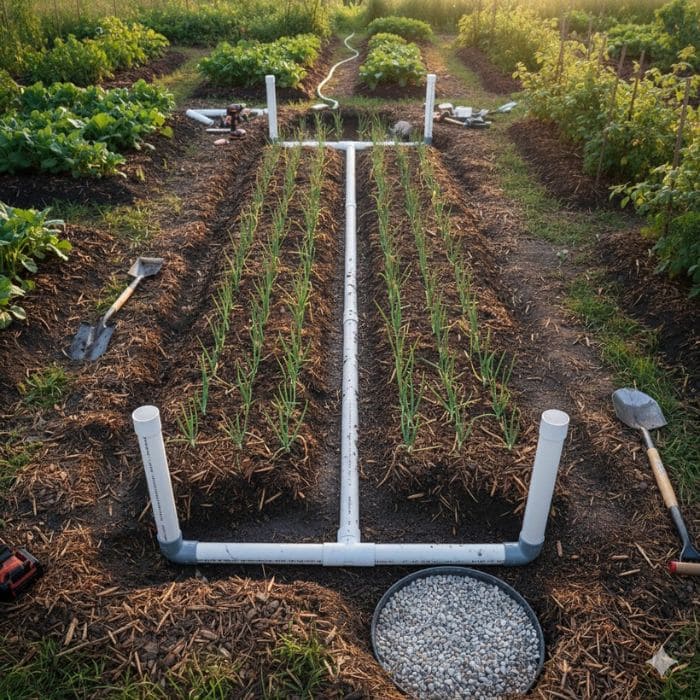
Within an hour, I noticed the first change. The glossy water sitting on the soil surface began disappearing, slowly but steadily, as if the bed were quietly exhaling.
By evening, the soil still looked dark and heavy, but there were no puddles. The next morning, the onion stalks stood firmer than I expected, the green brighter than the day before.
Clay soil holds moisture for a long time, so it took a few days before the bed felt balanced again, but the system worked far better than I imagined when I first saw the disaster.