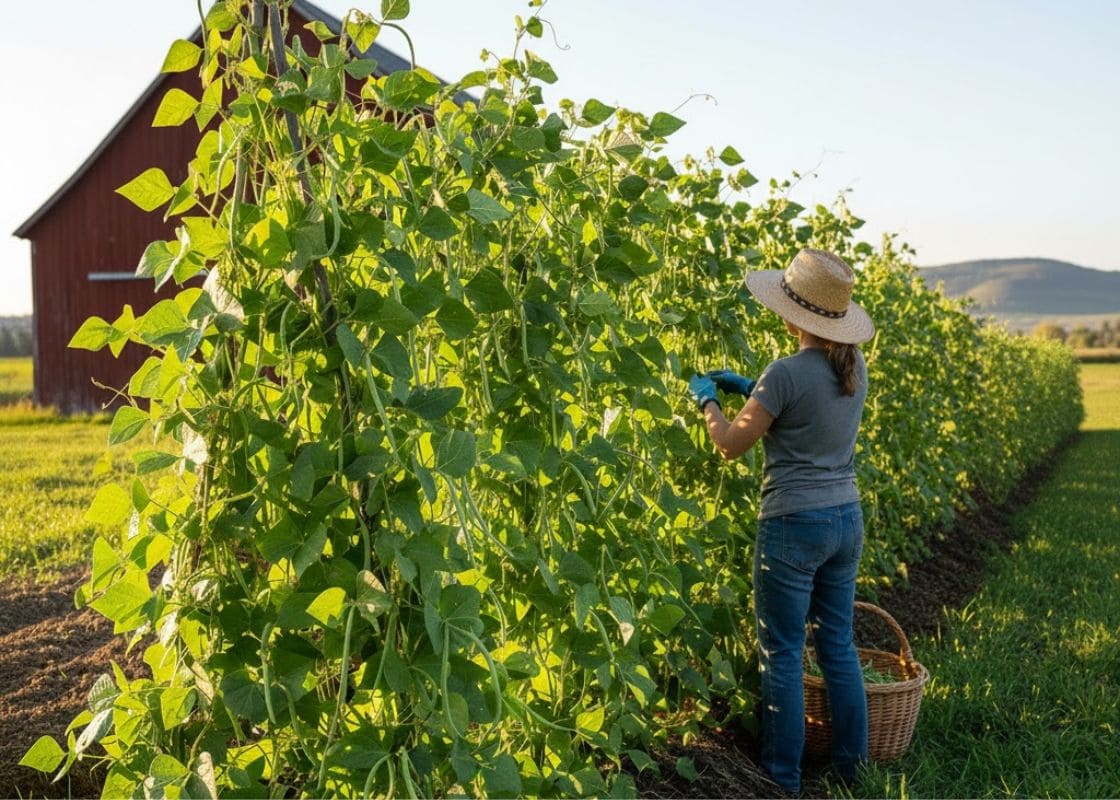
Behind our barn, just a few steps past the water buckets and the spot where the goats like to settle in during warm afternoons, there is a long strip of soil that puzzled me from the first time.
The barn sits in a quiet corner of the property, and because the animals walk around that area every day, the ground stays somewhat packed down, though I didn’t expect it to behave as strangely as it did.
Whenever I pushed my fingers into the soil, it felt heavy and tight, and after a rain it turned sticky and thick, only to dry into a hard layer that almost resisted a shovel.
I planted three different times, hoping each season would teach me something new, and even though these attempts brought more frustration than harvest.
Attempt One: Lettuce That Barely Sprouted Before Giving Up
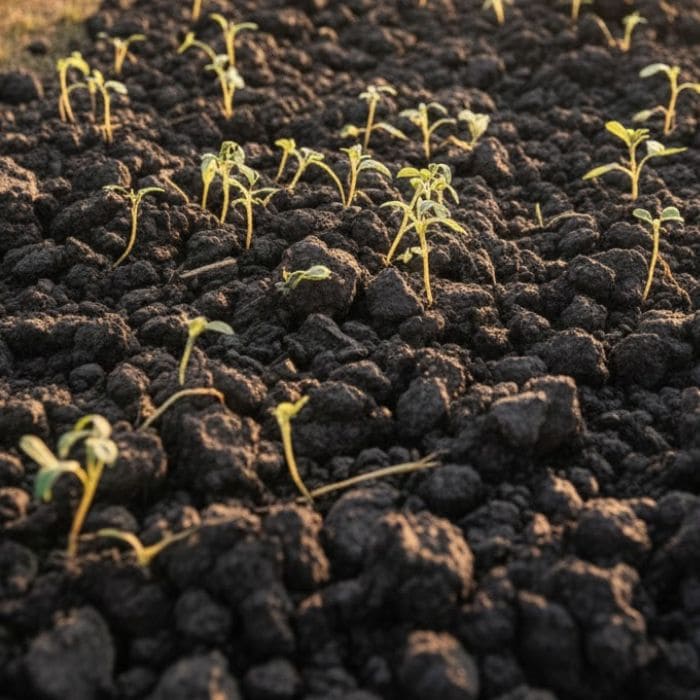
During our first spring on the farm, I chose lettuce for this patch because it seemed like a gentle beginning, and I thought the shallow roots might handle the soil better than something heavier.
I loosened the soil as much as I could, added a thin layer of compost, watered with care, and checked the rows every morning with a quiet sense of excitement.
A few seeds sprouted, but the seedlings stayed so small and pale that I knew something wasn’t right. They never reached the stage where the true leaves formed, and gradually they dried up until the bed looked empty again.
I told myself that maybe it wasn’t the soil and that I had started too early in the season.
Attempt Two: Marigolds That Struggled From the Moment They Were Planted
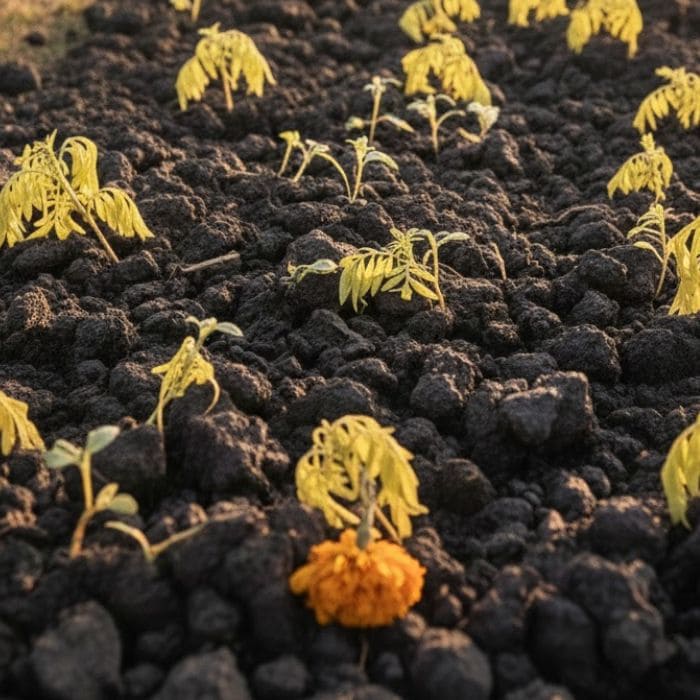
Later that summer, I tried marigolds because they usually grow well even in difficult areas, and I imagined their bright colors softening that rough patch of land.
I planted strong transplants, added more compost, and spaced the plants with enough room to breathe. Within a week, their leaves yellowed, the stems softened, and they slowly collapsed into the soil as if the roots simply refused to settle in.
At that point, I realized this wasn’t a matter of timing or watering. The problem was deeper, and the soil itself was resisting.
Attempt Three: Kale That Sprouted Well but Stopped Growing Completely
The following spring, I gave myself one more try before stepping away. I planted kale because it usually tolerates poor soil better than most vegetables, and for a brief moment, I thought I had finally found something that would work.
The seeds sprouted quickly and evenly, and I remember feeling relieved as I watched the first true leaves begin to appear. But the growth stopped just as soon as it started, and the tiny plants stayed stiff and small, refusing to widen or stretch upward no matter how gently I tended them.
A light April wind pushed many of the seedlings sideways, and although I tried to support them, they never recovered enough to continue growing.
I stood there, quietly frustrated, and said to myself, “Believe it or not, I truly tried with this piece of land.”
A Full Year of Rest for Both the Soil and My Patience
During that year, I focused on other parts of the farm and let this patch fade into the background of daily chores.
The animals wandered across it without any pattern, the rain softened it and shaped faint ripples in the surface, and the leaves from the nearby trees settled into it during the fall, creating a thin natural blanket.
Slowly, the frustration I’d felt around that area softened, and I walked by it without feeling the urge to fix it or force it to produce something.
Then, one afternoon, while carrying a feed bucket to the goats, I noticed that the soil looked different. The surface had cracked in a natural pattern after drying in the sun, and something about the texture made me stop and look a little longer.
It wasn’t softer, exactly, but it looked less tight, as if time had loosened something inside the ground that my tools never could.
A Trip to the City, a Chance Discovery, and a New Idea
Around that time, Ryan and I took a short trip into the city to pick up some supplies. While he walked toward the hardware aisle to find a few fittings he needed, I wandered into a small bookstore nearby, the kind that keeps gardening shelves tucked between cookbooks and travel guides.
It was a book titled “The Quiet Soil: How to Heal the Toughest Ground” by Eleanor Marsh, a gardener who wrote in a simple, honest way about her own struggles with stubborn soil patches on her land.
The chapter that caught my attention talked about deep trench composting, not as a trendy technique but as a slow, patient way to change soil from the inside instead of trying to fix only the top layer.
As I read through the explanation, I felt an immediate connection because every problem she described matched the very issues I had faced behind the barn.
How I Set Up the Deep Trench Composting System
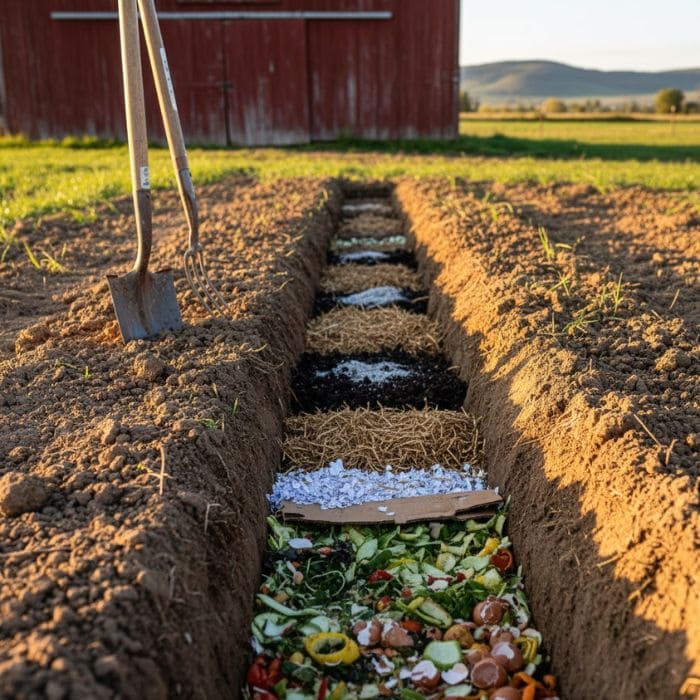
I marked a section about ten feet long and two feet wide along the side of the barn where the early sun reaches.
Using a shovel and a digging fork, I opened a trench that was roughly fourteen to sixteen inches deep, breaking through the compacted layer that had made planting so difficult in the past.
Into this trench, I placed a layer of kitchen scraps about four inches deep with vegetable peels, fruit pieces, and crushed eggshells followed by two inches of shredded cardboard and paper, then three inches of used barn bedding mixed with goat manure, which we always have plenty of after cleaning the barn each week.
I sprinkled a small amount of wood ash on top for minerals, then added back about four inches of the original soil to start the natural breakdown process.
I watered everything until it was evenly moist, then left the trench untouched for two full weeks, giving the materials time to settle and begin turning into something useful for the soil.
After the waiting period, I planted beans, choosing them because they are steady growers and usually do well in areas that are still rebuilding their strength. I spaced the seeds about six inches apart and tried not to expect too much.
A Patch That Finally Began to Change
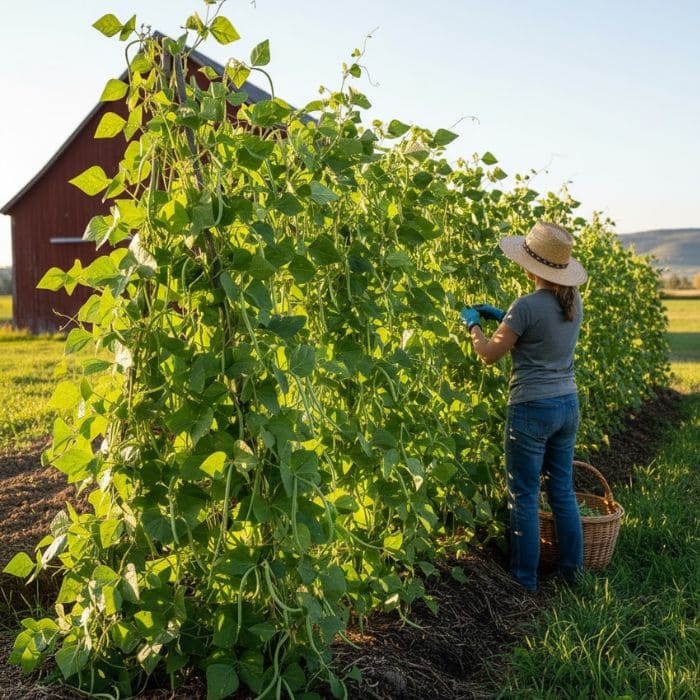
When the seedlings appeared, they looked stronger than anything I had planted there before, and their leaves opened wider with each passing week.
The deep trench composting didn’t create instant success, but it changed the soil slowly and steadily, giving the roots a space to breathe and stretch in a way they never could in the earlier attempts.
By the middle of the season, I was harvesting beans regularly, and each time I carried a small handful back to the house, I felt a quiet sense of relief and gratitude that this once-difficult patch had finally offered something back.