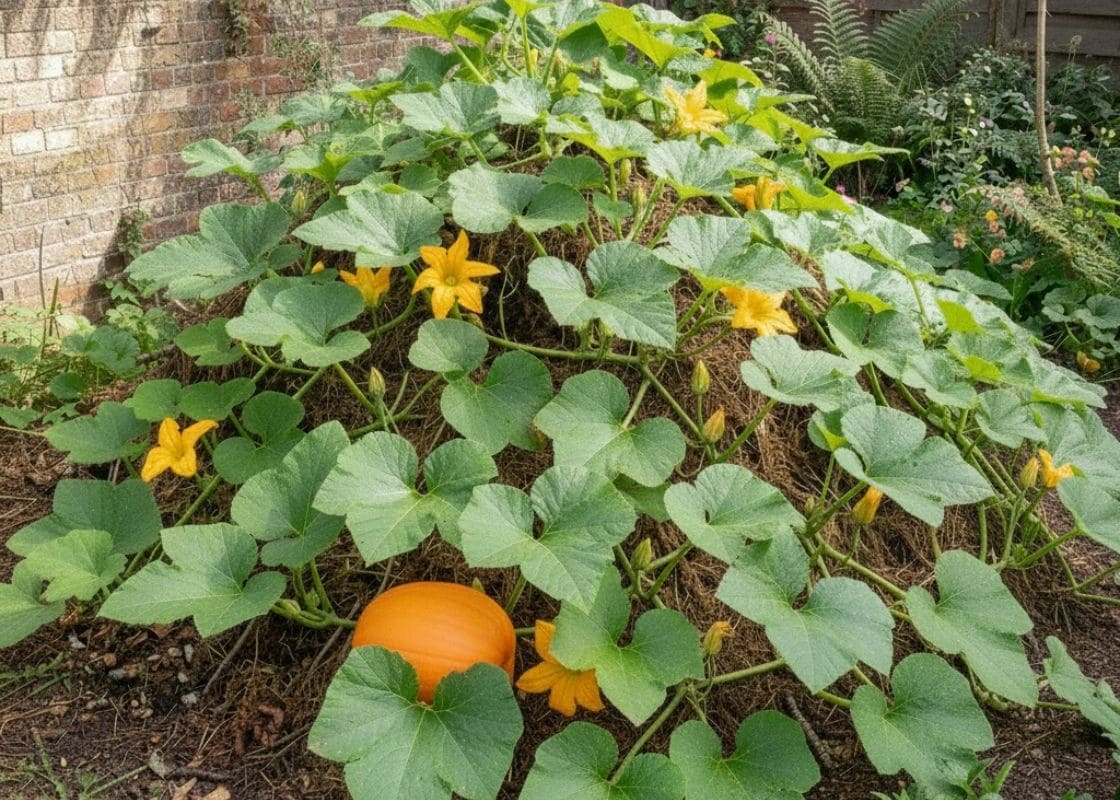
Today I feel especially happy as I sit down to write this story because it reminds me how gardening continues to surprise me in ways I never expect.
I have a compost pile tucked into the quiet corner of my garden, and I usually visit it without much thought, just adding kitchen scraps or trimming leftovers whenever I have some in my hands.
I never planted anything there intentionally, and I honestly didn’t expect anything to grow in that pile because my main goal was simply to let the compost break down slowly so I could use it later to enrich the soil.
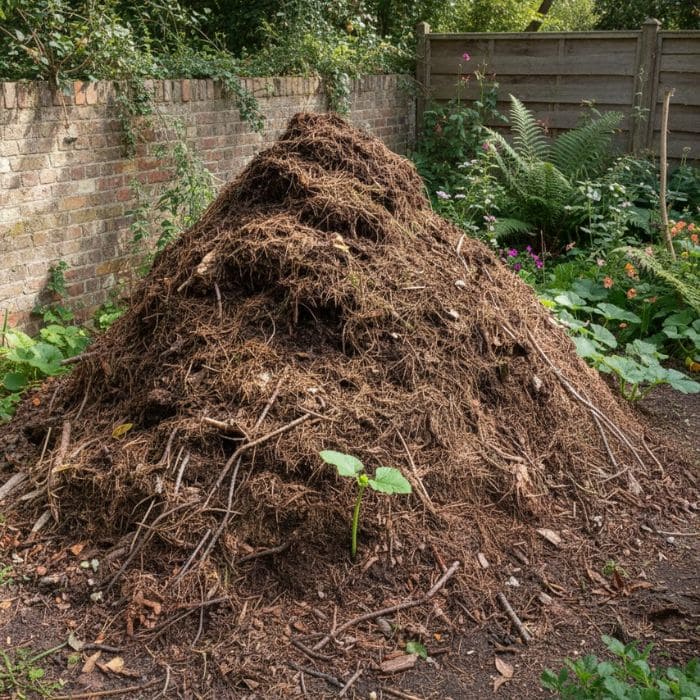
A few weeks ago, I walked past the compost pile and noticed a small green shoot pushing its way through the surface.
At first, I thought it might be a weed or some volunteer squash that sometimes appears after summer, but as the leaves grew larger and the vines began to stretch out, I realized it was something much more exciting.
It was a pumpkin vine, healthy and strong, growing straight out of the compost pile as if it had been waiting for the right moment to show up.
I stood there smiling because I had never placed a pumpkin seed in that pile, and I couldn’t help feeling like the garden had given me a small gift.
Maybe the seed came from kitchen scraps I tossed into the compost without thinking, or maybe a bird dropped it there while searching for food. To be honest, I don’t know, and I don’t really need to know.
What I Usually Add to My Compost Pile
Since many readers often ask what I put into my compost and how I maintain it, I want to share the simple materials that make up my pile:
- Fruit and vegetable scraps
- Crushed eggshells
- Coffee grounds
- Dry leaves from the yard
- Small sticks or dried stems for airflow
- Grass clippings in thin layers
- Shredded cardboard or paper
I give the pile time to rest and break down naturally. I don’t stir it as often as some gardeners do, yet it still produces rich, dark compost over time.
My personal tip:
I always recommend adding banana peels because they break down quickly and are full of potassium, which is wonderful for many garden plants.
They help create nutrient-rich compost that supports strong stems and healthy fruit development later on.
Caring for a Pumpkin Vine I Never Planned to Grow
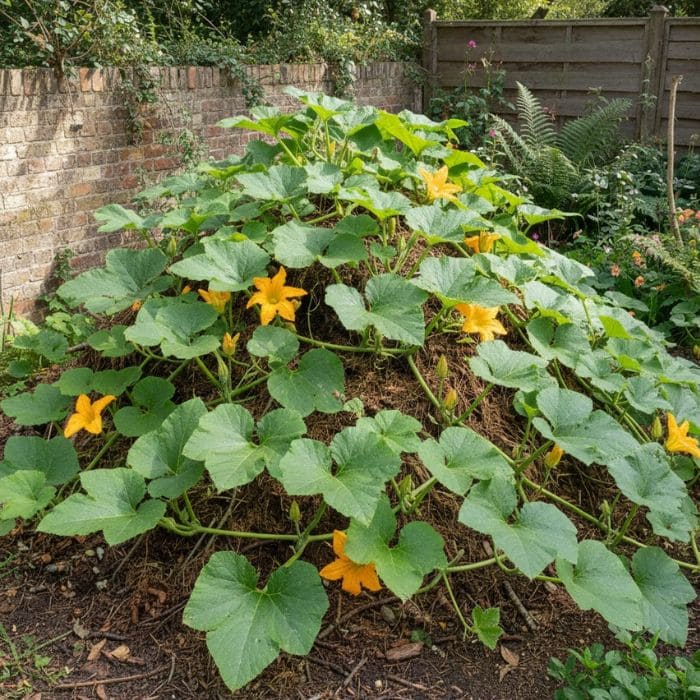
Once I realized I had a pumpkin vine spreading across the ground, I decided to help it along even though this was not part of my garden plan for the season.
The vine stretched farther each week, weaving between the beds and curling around anything it could reach. I gently guided it so it wouldn’t choke other plants, and I added a small amount of compost around the base to support the root growth.
Pumpkins need consistent moisture, so I watered the vine deeply at the base rather than from above.
I also checked the flowers regularly because pumpkins produce both male and female flowers, and for fruit to form, they need to be pollinated.
Most of the time bees handle this naturally, but if I noticed slow progress, I gently hand-pollinated by brushing a male flower lightly into a female flower to help nature along.
My personal tip:
If you want pumpkins for Halloween, try to support the vine early by giving it good soil and steady watering because pumpkins take time to grow large and firm.
Once the fruits begin to form, place a small piece of cardboard or straw beneath each one to keep the base dry and prevent rot.
And if your goal is carving pumpkins, choose the fruits that form earlier in the season and allow them to ripen slowly until fall.
Seeing the Results Felt Like Watching a Gift Grow Larger Each Day
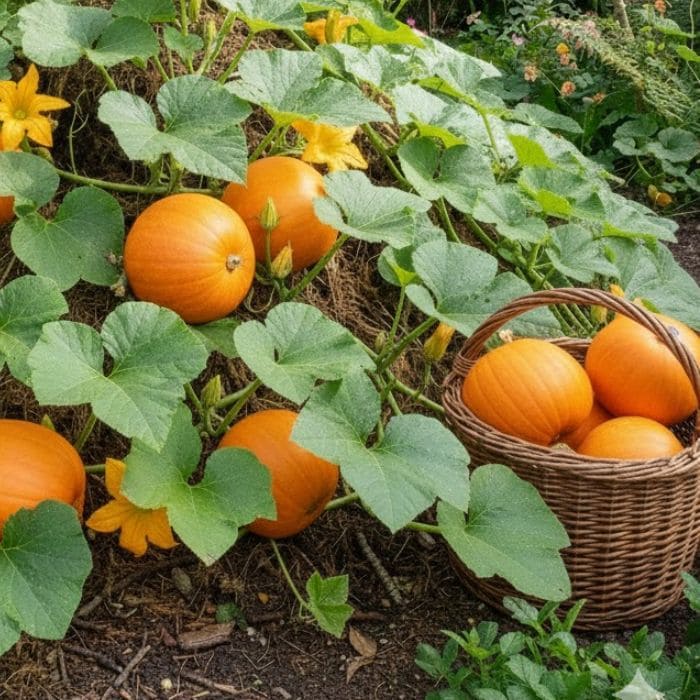
As the weeks passed, small round pumpkins appeared beneath the wide leaves, and it felt like discovering little treasures each time I visited the garden.
The pumpkins continued to grow, and the vine stretched farther than I expected, reaching almost halfway across the garden until I finally learned how powerful a compost-grown plant can be.
Every fruit that formed reminded me of how nature often works quietly behind the scenes, turning simple scraps into something meaningful and beautiful.
This volunteer pumpkin vine taught me that not everything in the garden needs to be planned, and sometimes the unexpected moments bring the most joy.
I never intended to grow pumpkins this season, yet here I am watching them grow from a corner that I once thought of as just a pile for leftovers.
And now, when fall arrives, I will have homegrown pumpkins ready for cooking, decorating, and maybe one or two carved for Halloween nights on the porch.