Last winter was the first time Ryan and I truly felt what a generous harvest looks like when the land decides to give more than you expect.
We began pulling carrots from the ground on a cold morning, thinking it would be a small, satisfying task before lunch, but every row seemed to hold another surprise.
The carrots were thick, long, and bright, their orange color even deeper because of the cool soil, and by the time we finished harvesting, our baskets were so full that carrying them back to the house felt like a workout.

At first, the feeling was pure happiness. We laughed, lined the carrots across the kitchen counter, and admired how much food had come from one small part of the garden.
We cooked with them constantly, adding them to soups, roasting them with herbs, and slicing them fresh for meals, but even after days of eating carrots in every form, the pile barely seemed smaller.
I shared a large bundle with Isabella, who shook her head in disbelief and told me she had never seen so many carrots from one garden bed, yet even after giving them away, there were still far more than we could possibly use before winter deepened.
That was when joy quietly turned into concern, because I knew how easily carrots can soften, dry out, or rot if they are not stored properly, and I didn’t want this harvest to disappear after all the time and care that went into growing it.
Why the Idea of a Root Cellar Suddenly Made Sense
Around that same time, one idea kept appearing wherever I looked. On Instagram, people were sharing photos of wooden boxes filled with carrots and beets resting peacefully in dark spaces.
In Facebook gardening groups, friends talked about pulling vegetables from storage months after harvest as if they had just come from the soil.
Everyone seemed to be talking about root cellars, explaining how steady cold, darkness, and moisture could preserve root vegetables through the entire winter.
I had always imagined a root cellar as something built into an old farmhouse, not something I could create myself, but the more I read, the more I understood that a root cellar is really about conditions, not appearance.
Carrots want a place that stays cold but not frozen, dark but not damp, and steady without sudden temperature swings.
A Cold Drive, a Recycling Yard, and a Phone Call I Didn’t Expect
One afternoon, bundled against the cold, I drove to a recycling and collection yard nearby, hoping to find an old refrigerator that someone no longer wanted.
I walked between rows of discarded appliances, opening doors and checking seals, but nothing available that day felt right. I felt disappointed as I spoke with the manager, explaining my idea and wondering if I was already too late.
He listened carefully, then surprised me by saying he would keep an eye out and call me if something suitable came in. I thanked him, not expecting much, and drove home thinking I might need to come up with another plan.
The next day, my phone rang. It was him.
He had just received an older refrigerator with a solid door, intact shelves, and no interest from repair shops, and he remembered exactly what I needed it for.
Setting Up a Simple Root Cellar With What We Had
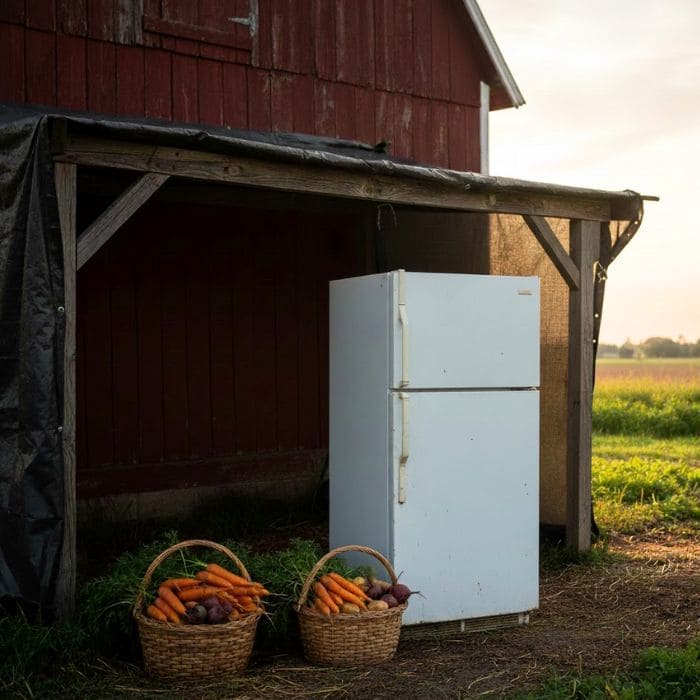
When we brought the refrigerator home, Ryan helped me place it in a shaded spot near the barn where the temperature stayed naturally cool throughout winter but was protected from harsh wind.
I unplugged it completely, removed the plastic drawers, and washed the inside with warm water and vinegar to remove any lingering smells.
The refrigerator measured about 62 inches tall, 28 inches wide, and 30 inches deep, which turned out to be perfect for storing our harvest.
As I sorted the carrots, I weighed them and realized we had just over 48 pounds, which finally explained why the kitchen felt so crowded.
Preparing the Carrots the Right Way
I handled the carrots gently because storage begins with preparation.
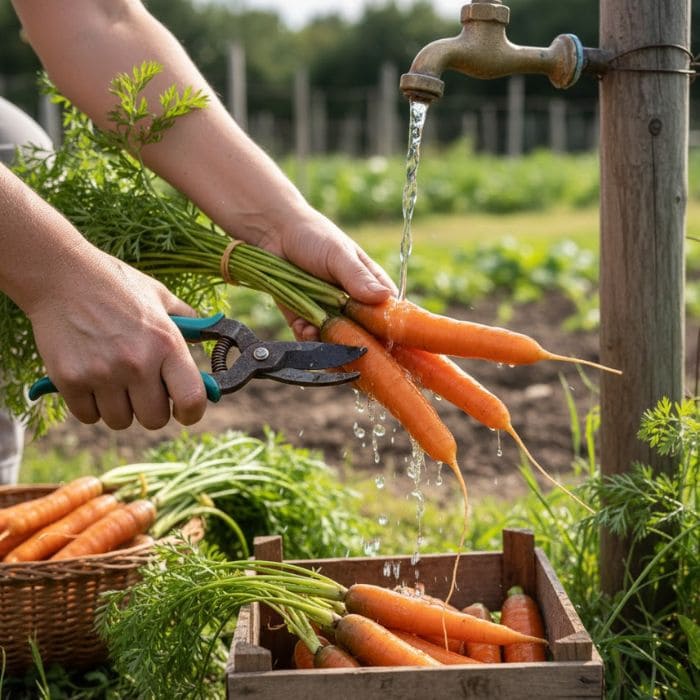
I brushed off excess soil instead of washing them, trimmed the green tops down to about half an inch, and set aside any carrots with cracks or damage for immediate use. Only firm, healthy carrots went into storage.
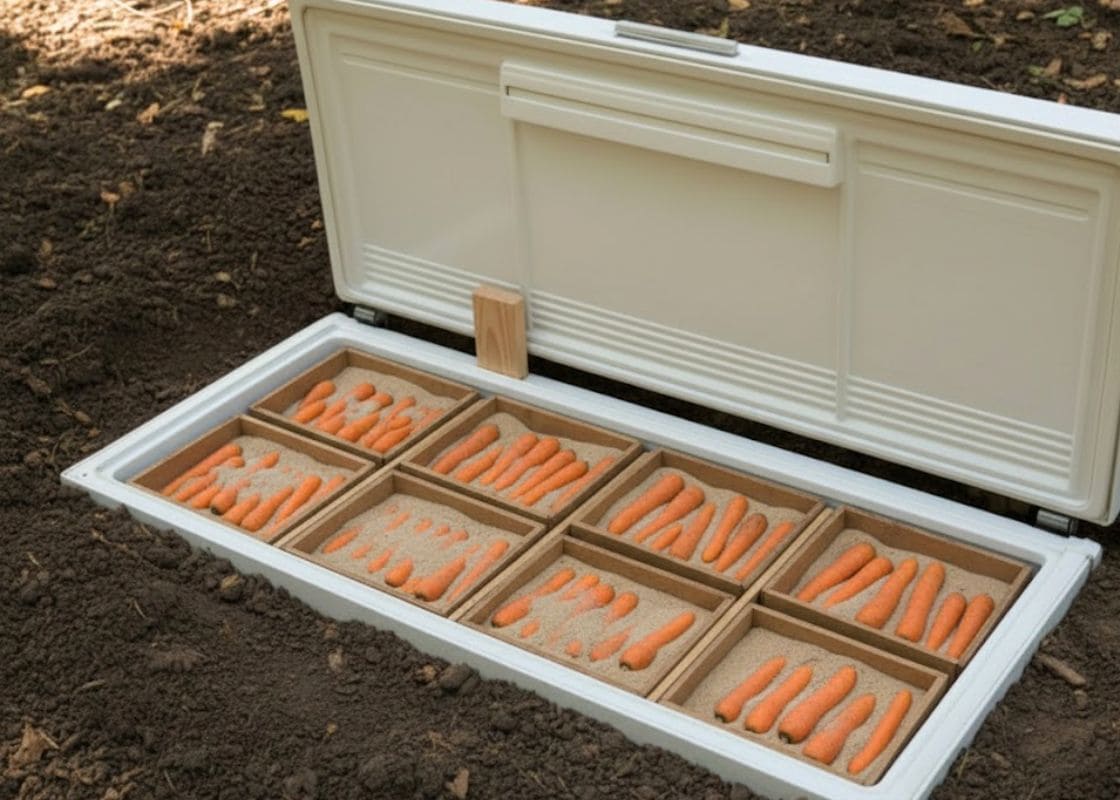
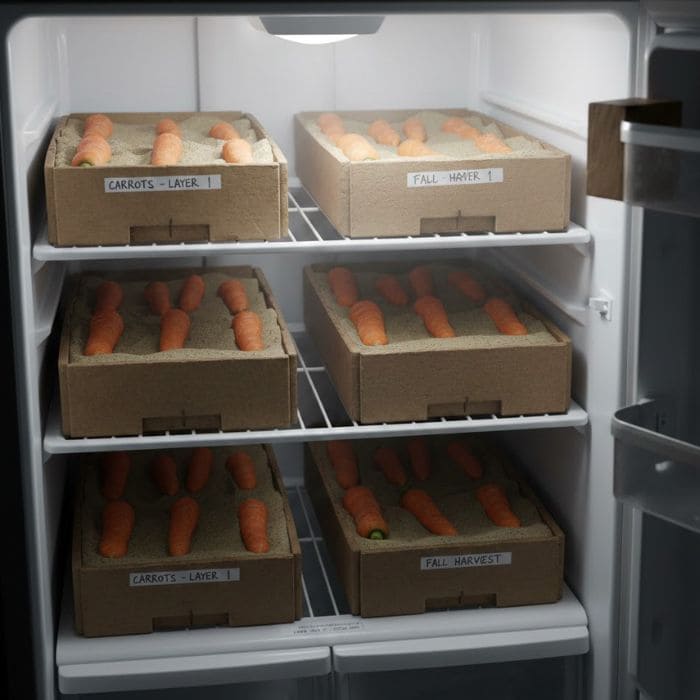
I used shallow wooden crates and cardboard boxes about 4 to 5 inches deep, lining each one with slightly damp sand.
Then I placed the carrots in a single layer so they didn’t touch, then covered them lightly with more sand. Each box held around 10 to 12 pounds, which made it easy to lift and inspect them later.
Inside the refrigerator, I stacked the boxes with space between them so air could move slowly. I kept the door slightly open using a small wooden block, which helped prevent condensation while still keeping the inside dark.
The temperature stayed between 34 and 40 degrees, even during the coldest nights, and that steady range made all the difference.
How Long the Carrots Lasted and What That Taught Me
The results surprised me more than I expected. Those carrots stayed crisp and sweet for four to five months, and even toward the end of winter, they tasted fresh enough to eat raw.
Every few weeks, I checked the boxes, removed any carrots that softened, and lightly misted the sand if it felt too dry.
By early spring, we were still pulling carrots from storage, and it felt almost magical to cook with food we had grown months earlier.
The root cellar didn’t just save our harvest; it changed how I think about growing food, reminding me that storage is just as important as planting and harvesting.
From Winter Storage to Easter Decorations
By the time Easter arrived, a small bundle of carrots remained, and instead of cooking them all, I decided to use some for decorating.
I washed them gently, leaving a bit of their natural shape, and tied them with twine and small sprigs of greenery.
They became part of our Easter table, tucked into baskets and laid beside simple place settings, adding a quiet, natural beauty that store-bought decorations never quite capture.