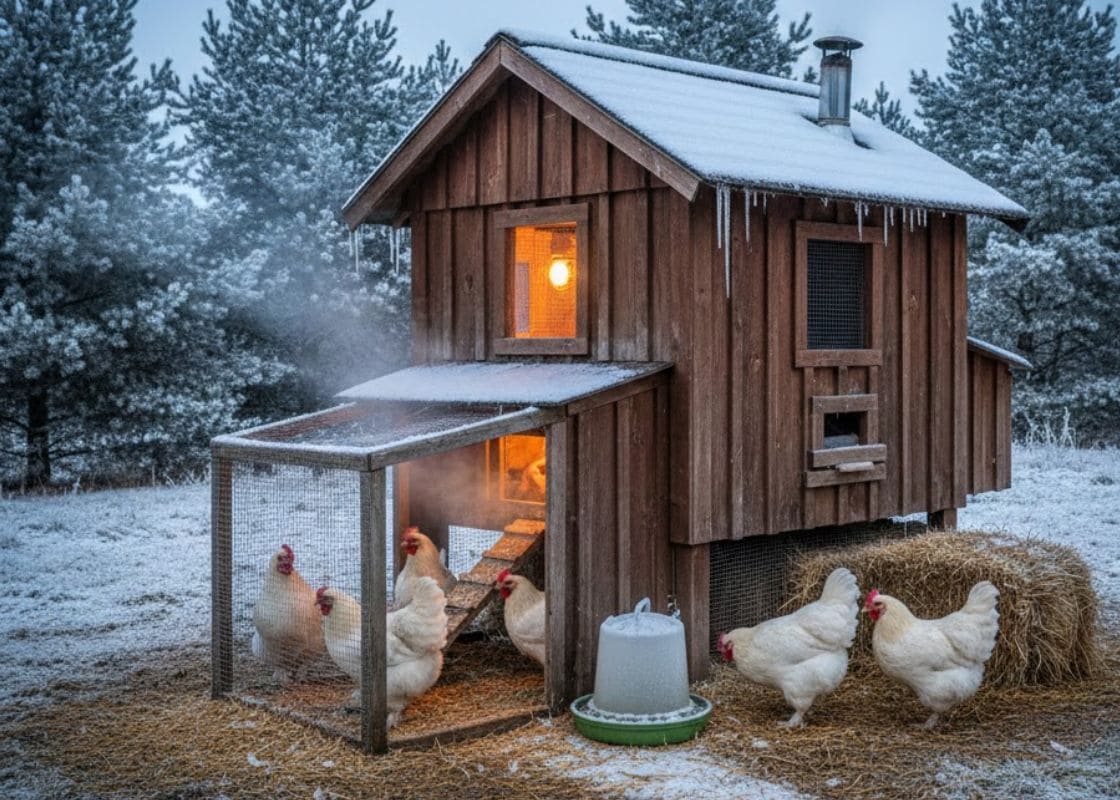
After I shared my last post about my chicken flock, one comment stayed with me longer than the others. A follower wrote, “I often get problems with my chickens in winter.” It was a simple sentence, but it carried a lot of truth.
To be honest, winter is also the season when I see the most difficulty with my flock, even now, after years of experience.
Winter in West Virginia is challenging in ways that many chicken keepers underestimate, especially if they are used to dry cold or short winters.
Here, winter often means temperatures dropping into the mid-teens or lower, combined with high humidity, freezing rain, wet snow, and constant wind that changes direction throughout the day.
Because of that comment, I wanted to share what has truly helped my flock get through winter here, not theories or perfect setups, but real adjustments I make every year when the temperature drops..
1. Draft Control at Roost Level Is More Important Than Adding Heat
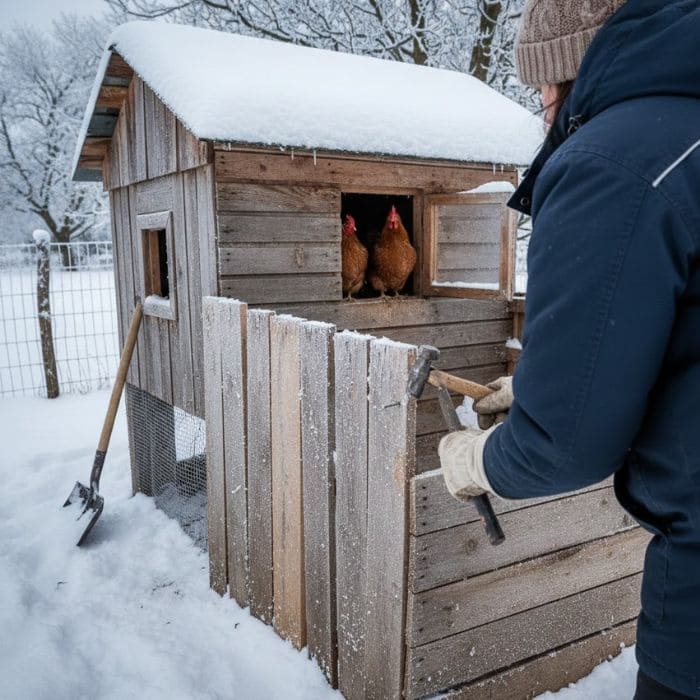
Most winter chicken problems begin with airflow, not temperature. Chickens are very good at producing their own body heat, especially when roosting close together.
What causes trouble is moving air at body level, which strips heat from feathers even when temperatures aren’t extreme.
Before winter arrives, I stand inside the coop on a windy day and place my hand at the exact height of the roost bars, where the chickens’ backs and heads rest. If I can feel air moving across my skin, that same air is chilling the birds overnight.
I block those draft paths using solid materials such as plywood, wooden panels, or rigid insulation boards, focusing only on the windward sides.
I never block ventilation near the roofline, because moisture must escape upward. A coop that traps moisture will feel colder than one that allows humid air to leave.
A common mistake is sealing the coop completely or using loose plastic that flaps. Both create unstable airflow and stress the birds.
2. Bedding Depth and Dryness Act as Ground Insulation
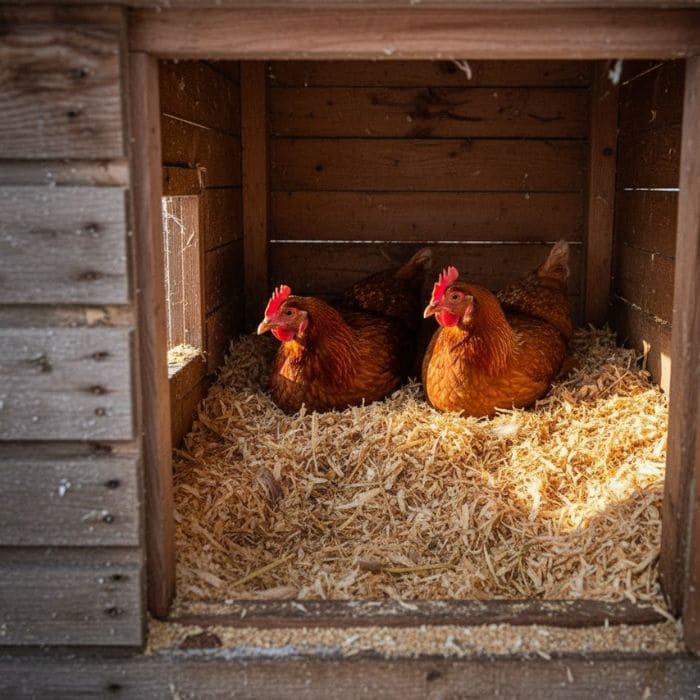
In winter, bedding is no longer just for cleanliness, it becomes insulation. Cold settles near the floor, and chickens lose heat rapidly through their feet if bedding is thin or damp.
I aim for 4 to 6 inches of dry bedding, usually pine shavings or chopped straw. This depth creates an insulating layer that traps warmth and absorbs moisture. However, deep bedding only works if it stays dry.
I check bedding daily under roosts, because droppings contain moisture that accumulates overnight. Even small wet areas can raise humidity levels inside the coop and increase the risk of frostbite.
Wet bedding is removed immediately, even if it means replacing it more often in winter. I also keep water containers out of the sleeping area at night. Spilled water turns bedding into a cold sponge by morning.
3. Roost Design Directly Affects Foot Health and Warmth
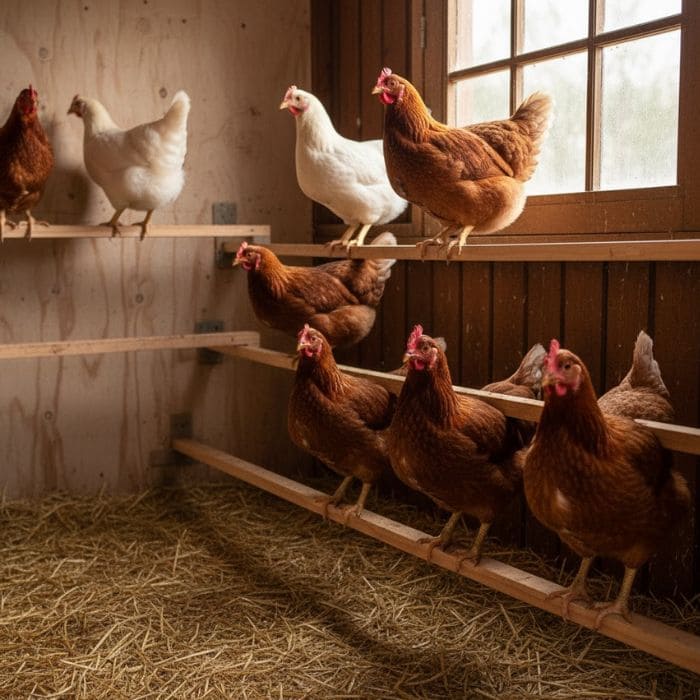
Roosts are one of the most overlooked winter details. I use flat roost bars, about 2 to 3 inches wide, rather than round poles. Flat surfaces allow chickens to sit fully on their feet and tuck their toes under their bodies, using belly feathers to keep feet warm.
Round roosts leave toes exposed, which increases frostbite risk in damp cold conditions.
Roosts are placed 18 to 24 inches above the floor, high enough to avoid cold air pooling near the ground, but not so high that birds injure themselves jumping down.
I also space roosts so chickens can sit close together, because shared body heat makes a noticeable difference during long cold nights.
Tips: Avoid placing roosts directly in line with doors or vents, even if those openings seem minor.
4. Feeding Adjustments Must Match Winter Energy Needs

Chickens burn more calories in winter simply to stay warm. If feed intake doesn’t increase slightly, birds lose condition even if they appear healthy.
I make sure feed is always available during daylight hours, and I pay special attention to late-afternoon feeding, ideally one to two hours before dusk. Digestion produces internal heat, so going to roost with a full crop helps chickens maintain warmth overnight.
I increase whole grains during winter, especially cracked corn, because it takes longer to digest and generates more heat. This is not about overfeeding, but about adjusting timing and composition.
When temperatures drop below 20°F, I consistently observe increased feed consumption, and I allow that increase instead of restricting portions.
5. Water Management Prevents More Problems Than Most People Realize
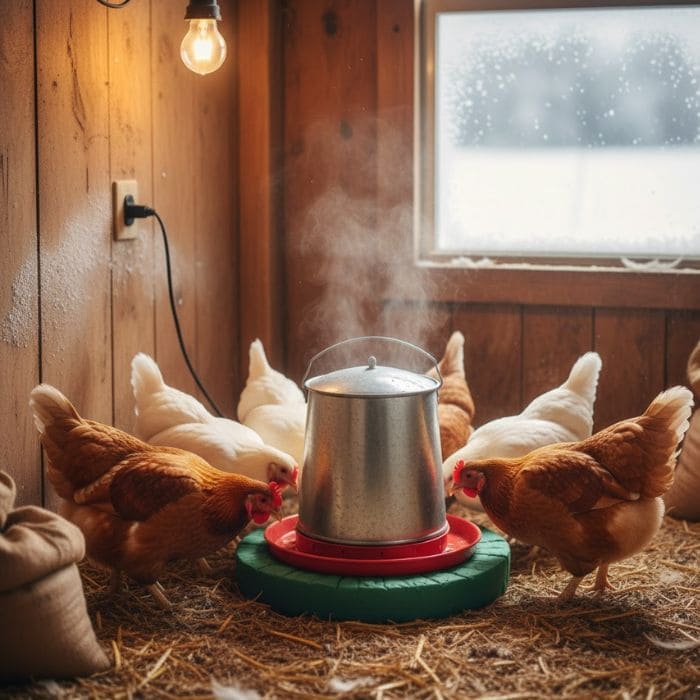
Frozen water is one of the fastest ways winter stress appears. Chickens that don’t drink enough water eat less, digest poorly, and lay inconsistently.
I use simple heated water bases that keep water just above freezing without overheating. Complicated systems fail more often than simple ones in cold weather.
I check water at least twice daily when temperatures are below freezing, because even a few hours without water causes dehydration stress. I also refresh water frequently, rather than letting it sit all day in cold conditions.
Water is placed outside the roosting area so spilled water doesn’t increase humidity inside the coop overnight. Snow is never a substitute for water, no matter how cold it gets.
6. Allowing Seasonal Rest Supports Long-Term Health
Winter is not the season I push productivity. Short daylight naturally reduces egg production, and I allow that cycle to happen.
Artificial lighting can increase laying, but it also increases nutritional demand and stress during the most challenging season.
Instead, I focus on body condition, feather quality, and behavior. Chickens that rest during winter return to production stronger when daylight increases, and I see fewer health problems overall.